Summary: what is B2B marketing?
B2B (business-to-business) marketing targets the people in a company who evaluate and purchase. It's defined by few buyers, high prices, group decisions, and long buying cycles, so the focus isn't mass exposure. It's targeting the right companies and roles, answering technical questions with expert content, tracking where each prospect is in the marketing funnel, and finally handing well-defined opportunities to sales to close.

B2B vs. B2C
| Comparison | B2C (business-to-consumer) | B2B |
|---|---|---|
| Number of buyers | Many; anyone | Few; tens to hundreds |
| Who decides | One person | A buying team |
| Buying cycle | Minutes to days | Months to over a year |
| Reasons to buy | Taste, emotion, price | Specs, risk, total cost, supply |
| Effective content | Image, promos, buzz | Specs, cases, tests, guides |
| How it's measured | Sales, conversion | Opportunities, meetings, quotes |
B2B strategy in 5 steps

Define ideal customers and accounts
First, write down "which companies need your product most": industry, process, size, region. Then list the companies that fit as target accounts; ads, content, and sales visits all revolve around this list.
Map the buying team
In the same company, the person who raises the need, the one who evaluates specs, the one who holds the budget, and the one who signs off are often different people. Each role cares about different things, so prepare content for each separately.
Content for each stage
People still looking for causes need explanatory articles; people comparing options need spec comparisons and case studies; people ready to buy need quotes, lead times, and service terms.
Pick channels
Catch people who are searching with Google; reach decision-makers who haven't started looking through LinkedIn and trade shows; keep reminding people who've already engaged through newsletters and retargeting.
Set metrics and handoff rules
Agree in advance on "which leads go to sales," for example a clear need, matching specs, and a budget and timeline. Without that standard, marketing and sales end up blaming each other for lead quality.
Common tactics

Website and SEO
An inquiry-focused site plus helpful articles builds organic traffic. More: industrial websites
GEO
Get ChatGPT and Gemini to mention you correctly. More: What is GEO
Google search ads
Catch people searching for solutions, targeted by region and language. More: How much do search ads cost
LinkedIn ads and outreach
Target by company, industry, title, seniority. More: LinkedIn guide
Trade shows
B2B's busiest meeting place: book before, grade after. More: post-show review
Cold email
One-to-one emails: why them, what you solve. More: cold email examples
The funnel: target account to quote
The B2B marketing funnel divides prospects' journey from "first contact" to "quote" into stages, with each stage filtering some out. Managing by funnel shows you which stage is the bottleneck, rather than just looking at total clicks.
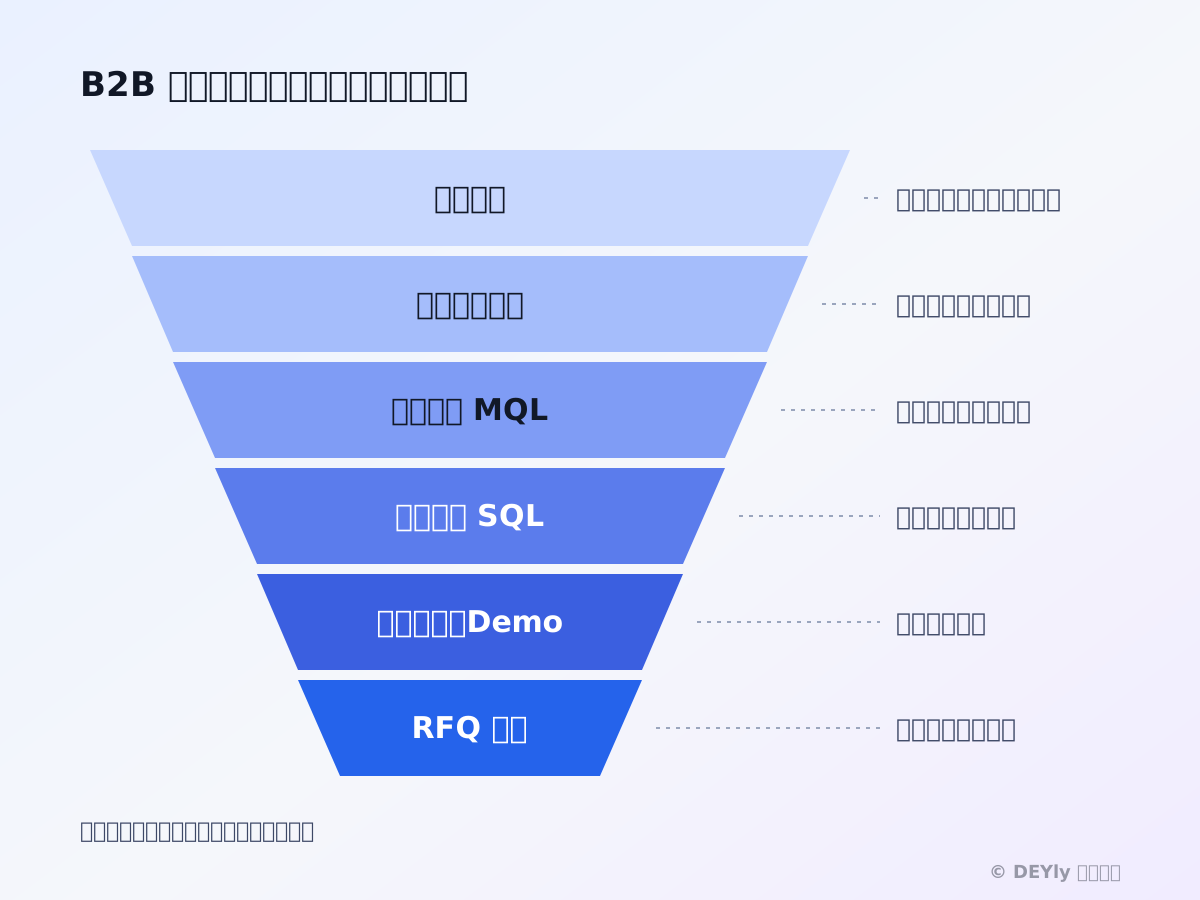
| Stage | Definition | Owner | Metric |
|---|---|---|---|
| Target accounts | Fit your ideal profile | Marketing + sales | Companies listed |
| Engaged accounts | Read, clicked, visited | Marketing | Engaged accounts |
| MQL | Left details, qualified | Marketing | Leads, cost per lead |
| SQL | Confirmed need, matching specs, a timeline | Sales | Opportunities, conversion |
| Meeting / demo | Technical evaluation | Sales + engineering | Meetings |
| RFQ | Formal quote requested | Sales | Quotes, value |
Companies define MQL and SQL differently; what matters is that marketing and sales use the same standard.
What's different for equipment

- Specs sell→Specs, conditions, limits
- Mistakes are costly→Cases, tests, standards
- Many deciders→Content per role
- Shows still matter→Digital before and after
- Inquiries are technical→Experts answer first
For a fuller approach, see How to market industrial products: 5 priorities.
FAQ
What is B2B marketing?
B2B marketing is business-to-business marketing, aimed at the people in a company who evaluate and purchase. It's defined by few buyers, high prices, group decisions, and long buying cycles; the focus is targeting the right companies and roles, answering questions with expert content, and using the marketing funnel to track where each prospect is.
B2B vs. B2C
B2C has many buyers, usually one decision-maker, and short cycles, relying on brand image and promotions. B2B has few buyers, group decisions, and long cycles, relying on specs, case studies, and test reports, and success is measured by qualified opportunities and quotes, not clicks and impressions.
How do you build a B2B marketing strategy?
Five steps: define your ideal customer and target accounts, understand the roles on the buying team, prepare content for each buying stage, choose the right channels, and set funnel metrics with handoff criteria agreed with sales.
What tactics does B2B marketing use?
Common tactics include an inquiry-focused website with SEO, GEO (generative engine optimization), Google search ads, LinkedIn ads and outreach, trade shows, and one-to-one cold email. Equipment and industrial products usually catch people looking for solutions with Google, then reach target accounts through LinkedIn and trade shows.
What is the B2B marketing funnel?
The B2B marketing funnel divides prospects' journey from first contact to quote into stages: target accounts, engaged accounts, marketing qualified leads (MQL), sales qualified opportunities (SQL), technical meetings or demos, and RFQs. The funnel shows which stage is the bottleneck.