Automotive Display Assembly & Inspection LineAlignment, screw driving, six-side inspection and data reporting, linked into one line
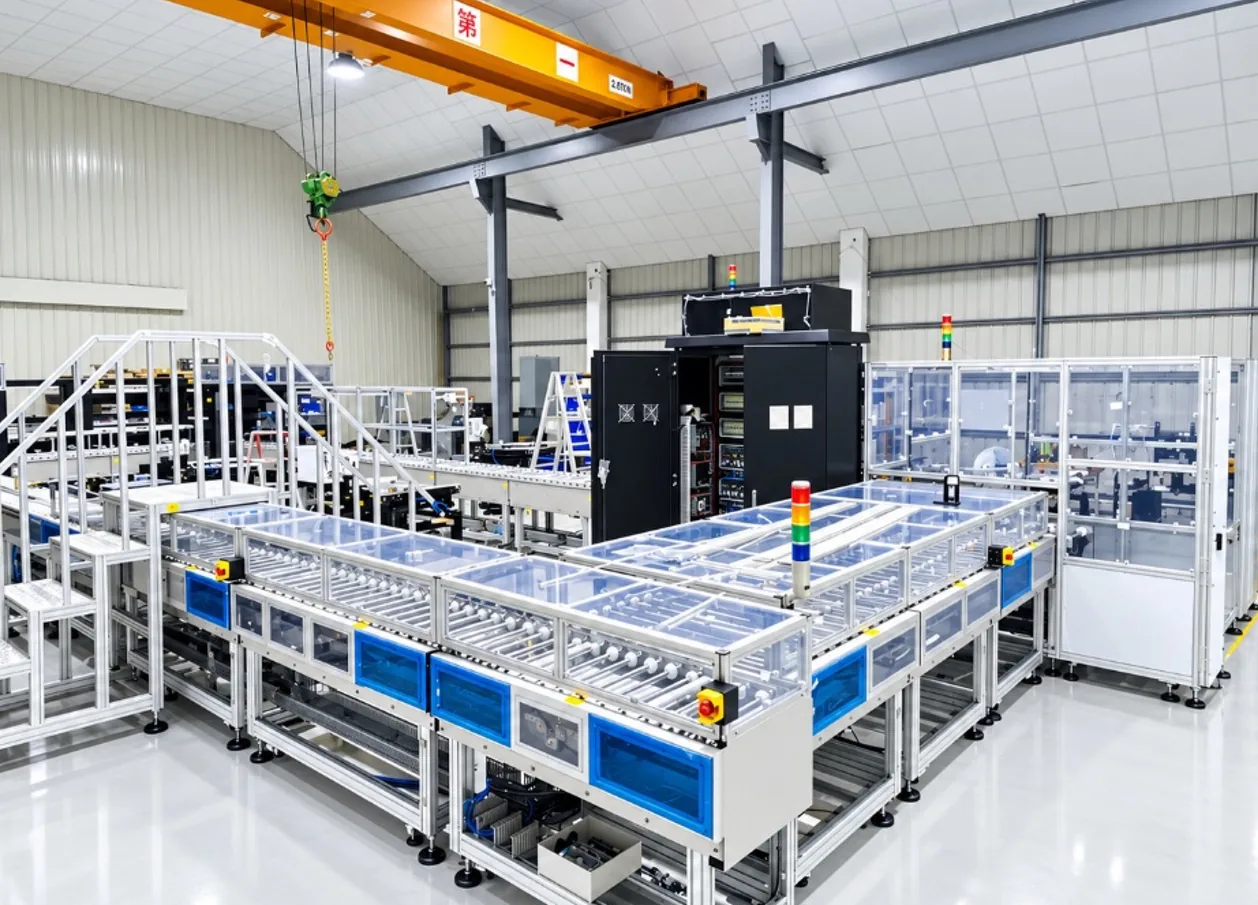
The Automotive Display Assembly & Inspection Line assembles and inspects curved automotive display panels: a roller conveyor links the stations; after CCD vision alignment, back-plate screws are driven automatically and torque values reported to the system; after assembly, a six-side optical inspection runs and images and results are uploaded together, building a quality record for every panel. References include dedicated curved-panel automation lines for three European luxury car brands.
ESG: S + GSDG 9Industry & InnovationSDG 8Decent WorkOur ESG approach →
- Proven benefits
- Repetitive work such as screw driving and visual inspection moves to the equipment (S); screw torque, inspection images and results are uploaded to the system, so every panel has a quality record (G).
- Limits
- UPH and conveyor length are specs from a delivered line; actual values depend on panel size and station layout. Quality record content is defined by the customer's system.
Line stationsWhich stations does a curved panel pass through on the line?
- 01Panel infeedRoller conveyor feeds in and links the stations
- 02CCD optical inspectionProduct alignment, optical inspection, defect judgment
- 03Back-plate alignmentCCD precisely positions the curved panel and back plate
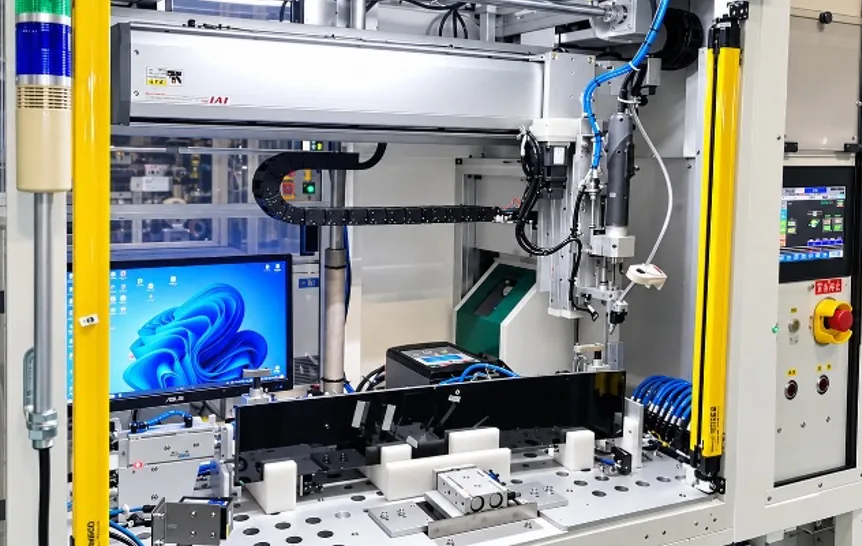
- 04Automatic screw drivingAutomatic fastening; torque and other data reported to the system
- 05Six-side optical inspectionMulti-angle inspection after assembly, images uploaded
- 06Data reporting and outfeedResults, images and fastening data build the record
TraceabilityWhy record the torque of every screw on an automotive display?
When an automotive part has a problem, you need to trace which batch, which station and what conditions produced it; automakers' supply chains generally require traceability (for example, under the IATF 16949 quality management system). This line uploads screw torque, inspection images and pass/fail results automatically, so every panel has a searchable quality record — no more manual transcription.
Fastening data
Torque and other fastening data for every screw reported automatically.
Inspection images
Optical inspection images and results from before and after assembly uploaded to the system.
System-side monitoring
Line status and inspection results monitored centrally for later quality tracing.
Product lineWhat automotive display automation equipment is available?
Dedicated curved-panel automation line
Full-line planning from conveying and inspection to fastening and post-assembly inspection.
Curved-panel test and inspection line
Back-cover testing and inspection, linked by roller conveyor.
Fully automatic screw driving machine
Automatic alignment and fastening, with torque data reporting.
Automatic six-side inspection system
Multi-angle optical inspection after assembly.
Dedicated curved-panel automation lines and test and inspection lines for curved automotive displays, delivered for three European luxury car brands. Customer names are kept confidential.
PhotosPhotos of the actual unit
SpecificationsSpec
| Products | Curved automotive display panels, back plates |
|---|---|
| Process | Panel conveying, CCD optical inspection, back-plate fastening, post-assembly six-side optical inspection |
| Conveying | Roller conveyor |
| Total conveyor length (back-cover test and inspection line) | 30 m |
| UPH (back-cover test and inspection line) | 80 panels/hour |
| Fastening | Automatic alignment, screw fastening, torque reporting |
| Data reporting | Inspection results, images and fastening data |
| Stations and line length | Planned to panel size and the customer's process |
Conveyor length and UPH are specs from a delivered back-cover test and inspection line; other models are designed to panel size, stations and takt time.
FAQCommon questions
What does an automotive display assembly line do?
A roller conveyor links panel conveying, CCD optical inspection, back-plate alignment and automatic screw driving, and post-assembly six-side optical inspection, and inspection results, images and fastening data are uploaded to the system.
Why record torque values when driving screws?
Automotive parts must be traceable to the manufacturing conditions of each unit. With torque reported automatically, when a problem occurs you can find which panel, which station and what the fastening data was.
How many panels per hour?
The delivered back-cover test and inspection line for curved automotive panels runs at a UPH of 80 panels, with a total conveyor length of 30 m; other lines are designed to panel size and stations.
Can I buy just the screw driving machine or the inspection system?
Yes. The fully automatic screw driving machine and the six-side inspection system can be deployed as standalone machines or linked into a full line.
How does curved-panel automation differ from flat-panel automation?
Curved products demand tighter positioning for alignment, pick-and-place and fastening, so CCD vision must position them precisely before each operation.
Can I buy directly from DEYly? Who handles quotations and after-sales service?
Yes. This equipment is sold by DEYly, and DEYly handles both quotations and after-sales service. Before quoting, we evaluate your products, throughput and line conditions. You can send your requirements directly through the inquiry form.