Automatic Film PeelerSubstrates as thin as 0.025 mm: plasma loosens the adhesive, then the film is peeled
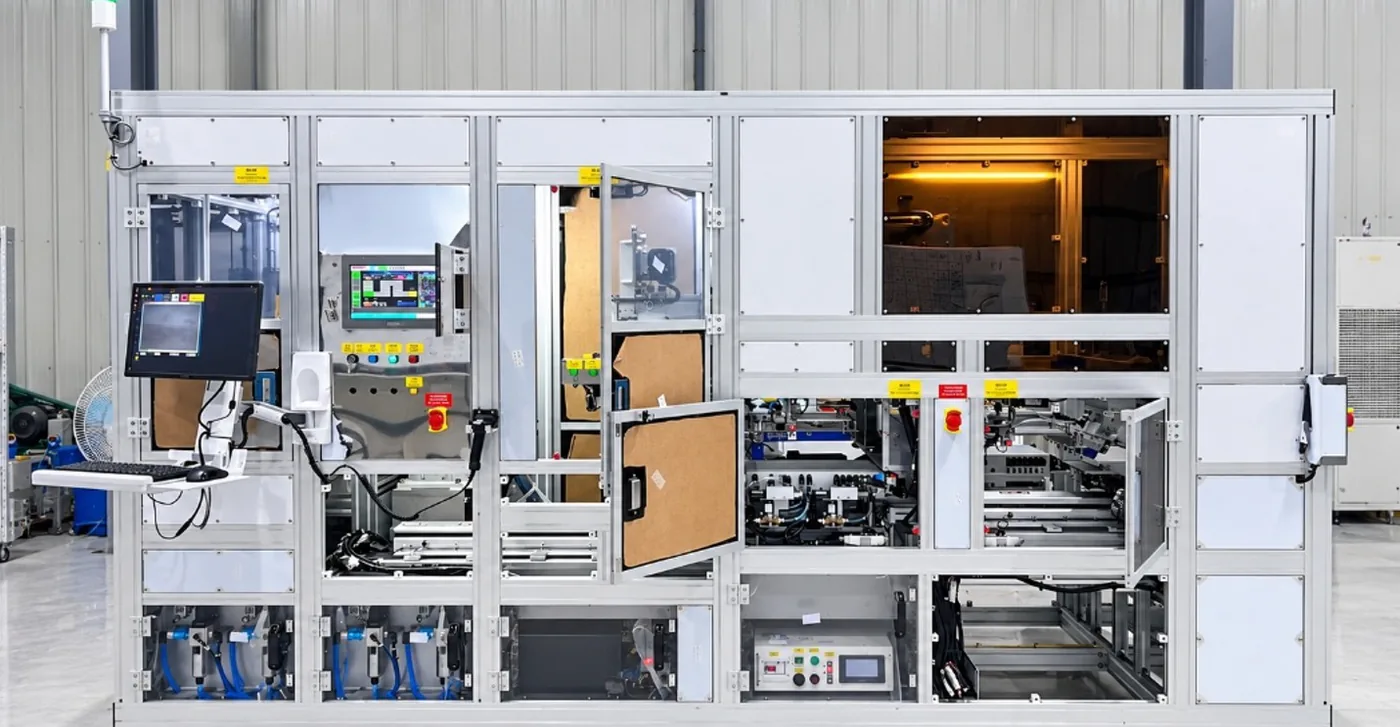
The Automatic Film Peeler automatically removes protective or process film from thin substrates: a robot handles products with vacuum suction cups, atmospheric plasma treatment loosens the adhesive before peeling — the degree of release is controlled by adjusting nozzle height — and then peeling tape and an automated mechanism strip the film. After peeling, a 20-megapixel industrial camera checks the result and sorts OK/NG automatically. It handles products 0.025–0.15 mm thick and 250 mm wide, and is used in a key process for a global consumer-electronics brand's next-generation flexible display products.
ESG positioning: E (Environmental) + S (Social)SDG 9Industry & InnovationSDG 12Responsible ProductionHow DEYly approaches ESG →
- Proven benefits
- Every piece is vision-checked after peeling and NG parts are diverted automatically, reducing scrap caused by peeling defects reaching downstream (E); thin products no longer have to be peeled by hand, reducing repetitive hand work (S).
- Limits
- Scrap reduction depends on the product and the previous method and is measured by comparing defect records before and after deployment; CE is an equipment safety certification and does not indicate process yield.
Why it is hardWhy is film peeling hard on thin products?
The thinner the product, the more easily it bends or creases during peeling, and film that sticks too firmly leaves adhesive residue. Manual peeling varies in force and angle every time, so results are inconsistent. This machine first treats the film with atmospheric plasma to reduce adhesion between film and product, then a mechanism peels it at a fixed angle, and a camera checks it right after peeling.
How it worksWhat steps does a product go through in the machine?
- 01Robot pick-and-placeRobot handles products with vacuum suction cups
- 02Atmospheric plasma releaseNozzle height adjusted to control release
- 03Automatic film peelingPeeling tape and mechanism strip the film
- 0420MP vision inspectionVerifies peeling, ±0.05 mm accuracy
- 05OK/NG sortingConveyor outfeed; NG parts to the NG stage
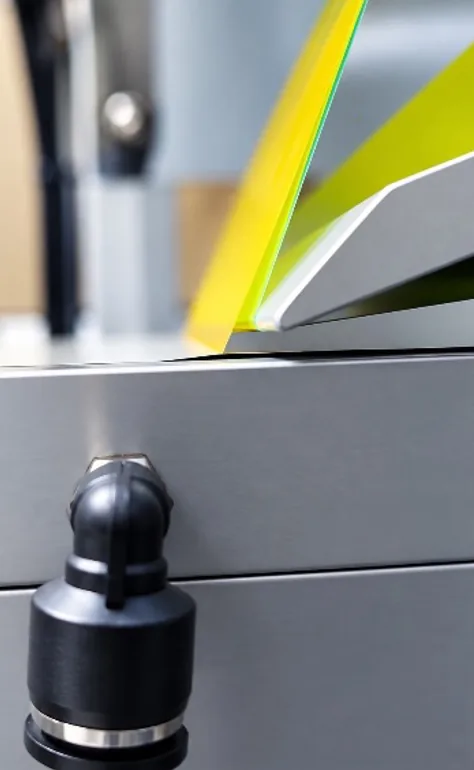
PhotosPhotos of the actual unit
Track recordWhat products is it used for?
Automatic removal of protective and process films from thin substrates; product width up to 250 mm, length 260–400 mm, thickness 0.025–0.15 mm.
Key process equipment for a global consumer-electronics brand's next-generation flexible display products. Customer name is kept confidential.
SpecificationsSpec
| Cleanliness | Class 10,000 |
|---|---|
| Dimensions | W3600 × D1100 × H2600 mm |
| Product size | W250 × L260~400 mm |
| Product thickness | 0.025~0.15 mm |
| Takt time (TT) | < 40 s/piece |
| Vision inspection | 20MP industrial camera, ±0.05 mm accuracy |
| Adhesive release | Atmospheric plasma, adjustable nozzle height |
| Pick-and-place | Robot + vacuum suction cups |
| Unload | Conveyor + NG stage, automatic OK/NG sorting |
| Certification | CE |
Specs are reference values for the standard configuration. The actual design depends on product, carrier and line conditions and is confirmed against your requirements before deployment.
FAQCommon questions
How thin a product can the film peeler handle?
It handles thin products 0.025–0.15 mm thick, up to 250 mm wide and 260–400 mm long.
Why use plasma to loosen the adhesive before peeling?
Treating the film surface with atmospheric plasma first reduces adhesion, so thin products are less likely to bend or keep adhesive residue when the film is peeled; adjusting the plasma nozzle height controls the release effect.
How do you confirm the film came off cleanly?
A 20-megapixel industrial camera inspects each piece after peeling with ±0.05 mm accuracy, and NG parts are diverted to the NG stage automatically.
How long does one piece take?
Takt time (TT) is under 40 s per piece.
Is the equipment CE certified?
Yes. The equipment is CE certified, with Class 10,000 cleanliness.
Can I buy directly from DEYly? Who handles quotations and after-sales service?
Yes. This equipment is sold by DEYly, and DEYly handles both quotations and after-sales service. Before quoting, we evaluate your products, throughput and line conditions. You can send your requirements directly through the inquiry form.