Automatic Laser De-flash SystemRemoves mold flash after QFN molding with a laser — no chemical soak
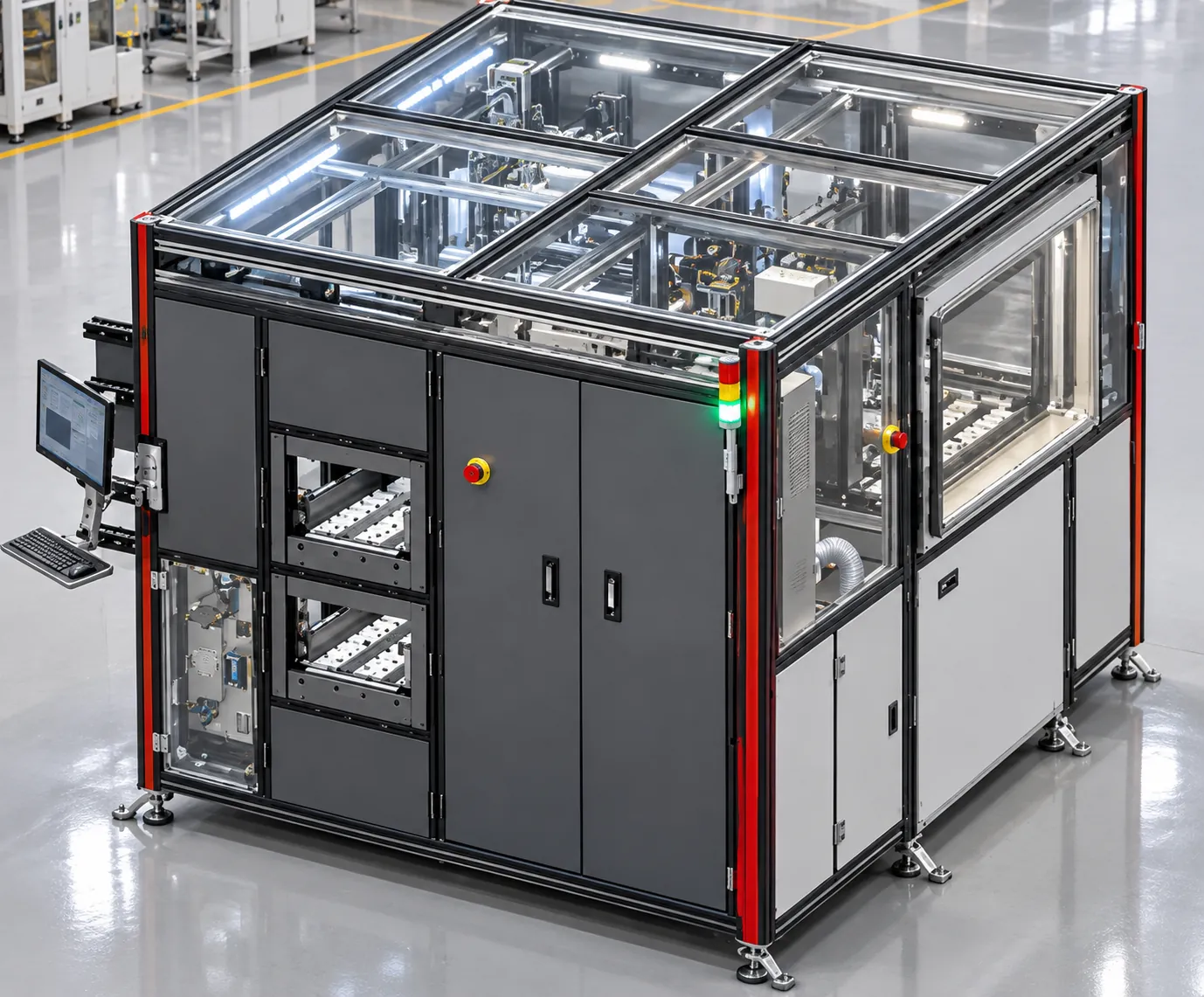
Laser de-flash is the process of using a laser to remove mold flash left on the leadframe and around the IC after molding. Our system handles QFN and other leadframe packages: fully automatic magazine loading/unloading and robot handling, CCD vision alignment (±10 μm) to guide the laser, multi-recipe parameter management, and integrated AOI and 1D/2D barcode reading — de-flash, inspection, handling and record management all in one machine.
ESG: E + GSDG 9Industry & InnovationSDG 12Responsible ProductionOur ESG approach →
- Proven benefits
- Laser processing is dry, so compared with de-flashing by chemical soak plus high-pressure water jet, it uses less chemicals and water (E); AOI results and 1D/2D barcode records build production traceability for the de-flash process (G).
- Limits
- Savings in chemicals and water depend on the customer's existing de-flash method and are measured by comparing consumption records before and after deployment; the equipment itself makes no carbon-reduction claim.
Why de-flashWhat is mold flash, and why must it be removed?
During molding, epoxy molding compound (EMC) seeps through gaps in the mold onto surfaces that should stay clear — for example, the exposed thermal pad and leads on the bottom of a QFN. This thin layer is mold flash. If it isn't fully removed, solder won't wet properly in downstream soldering, and both appearance and solderability suffer, so a de-flash step is usually scheduled after molding and before plating or singulation. For the process sequence, see the back-end process flowcharts (QFN/DFN tab).
| Method | How it works | What to watch for |
|---|---|---|
| Chemical/electrolytic soak + high-pressure water jet | Chemicals soften the flash, then high-pressure water washes it off | Chemicals and wastewater must be treated; the whole strip is processed at once, so removing flash only where needed is difficult |
| Media blasting | Fine media is blasted at the surface | Media residue and surface roughening must be controlled |
| Laser | Vision-guided laser hits only the spots with flash | Parameters must be tuned to flash thickness and leadframe material to avoid damaging the base material |
How it worksWhat steps does a leadframe strip go through in the machine?
- 01Magazine loadingFully automatic magazine loading/unloading
- 02Robot pickRobot moves the product to the processing position
- 03CCD vision alignment±10 μm accuracy guides the laser
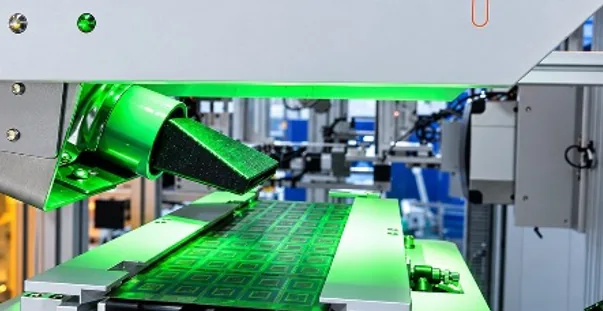
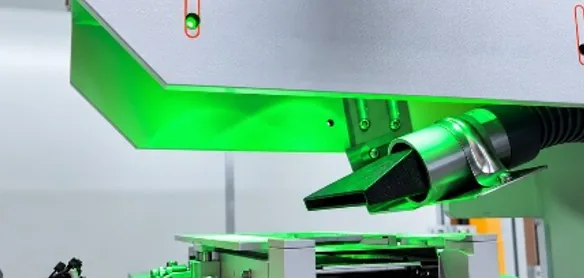
- 04Laser de-flashRemoves residual compound around the IC per recipe
- 05AOI inspectionVerifies de-flash results, diverts exceptions automatically
- 06Barcode record and unloading1D/2D barcode reading builds the production history
FeaturesWhat does the laser de-flash system integrate?
For QFN and similar packages
Automatically removes residual compound and flash around the IC and on leadframe surfaces after molding, for QFN and other leadframe packages.
CCD vision alignment
CCD alignment before laser processing improves accuracy and consistency.
Multiple recipes
Industrial-grade laser system with multiple process parameter sets — switch directly at product changeover.
Auto loading/unloading
Fully automatic magazine loading/unloading and robot handling.
AOI + barcode
Integrated AOI and 1D/2D barcode reading strengthen quality inspection and production traceability.
All in one machine
De-flash, inspection, handling and record management in a single machine for higher overall productivity.
PhotosPhotos of the actual unit
SpecificationsSpec
| Application | Laser de-flash for QFN and other leadframe packages |
|---|---|
| De-flash targets | Residual compound around the IC after molding, flash on leadframe surfaces |
| Laser system | Industrial-grade laser with multi-recipe parameter management |
| CCD laser alignment accuracy | ±10 μm |
| Loading/unloading | Fully automatic magazine loading/unloading + robot handling |
| Inspection and traceability | AOI, 1D/2D barcode reading |
| Dimensions | W2550 × D2553 × H2100 mm |
| Weight | About 1,200 kg |
Specs are reference values for the standard configuration. The actual design depends on product, carrier and line conditions and is confirmed against your requirements before deployment.
FAQCommon questions
What is laser de-flash?
It uses a laser to remove mold flash left on the leadframe and around the IC after molding — a step that follows molding for QFN and other leadframe packages.
Why do QFN packages need de-flashing?
A QFN has an exposed thermal pad and leads on the bottom. During molding, resin easily seeps onto these surfaces and forms flash; if it isn't removed, it affects downstream soldering and product appearance.
How does laser de-flash differ from chemical de-flash?
Chemical de-flash softens the flash with chemicals and then washes it off with high-pressure water, so chemicals and wastewater have to be treated. Laser de-flash is a dry process that hits only the flash locations found by vision, but its parameters must be tuned to flash thickness and leadframe material.
How accurate is the laser alignment?
CCD vision alignment accuracy is ±10 μm, and the laser processes based on the alignment result.
How big is the machine?
Dimensions are W2550 × D2553 × H2100 mm, and it weighs about 1,200 kg.
Can I buy directly from DEYly? Who handles quotations and after-sales service?
Yes. This equipment is sold by DEYly, and DEYly handles both quotations and after-sales service. Before quoting, we evaluate your products, throughput and line conditions. You can send your requirements directly through the inquiry form.