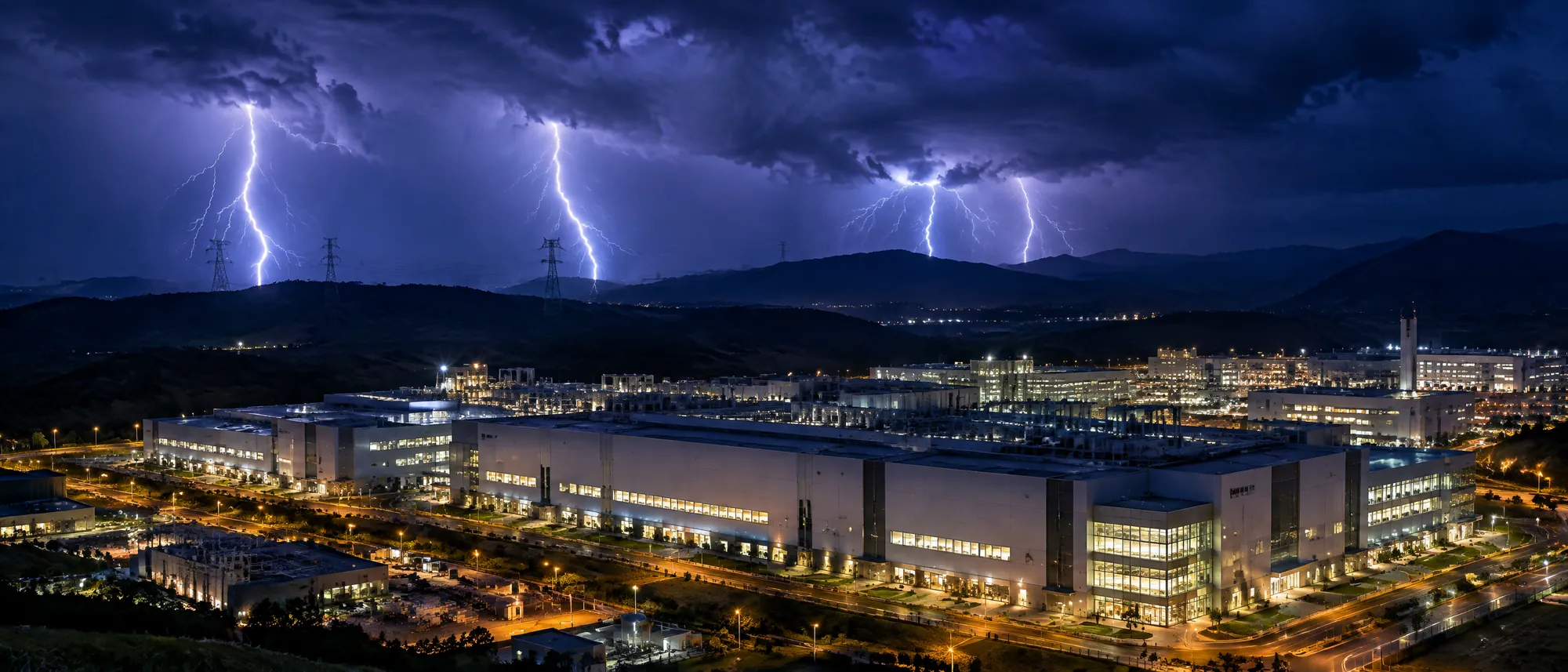
Summary: storm trips
The most common reason fab tools trip during thunderstorms is a voltage sag: lightning strikes a transmission line and causes a short-circuit fault, pulling down voltage across the nearby grid for about 0.1 s, and the tools' control systems reset. Lightning arresters and surge protective devices (SPDs) only stop overvoltage surges, not voltage sags. To prevent these trips, add voltage sag compensators (sag protectors) or an online UPS to the control circuits that reset, and adjust protection settings such as undervoltage relays. Surge protectors keep equipment from being damaged by surges; you need both.
What happens in a storm?
Lightning affects factory power in two completely different ways:
- Lightning reaches plant wiring→Surge: spike that can fry gear
- Lightning hits an outside line→Sag: grid dips ~0.1 s
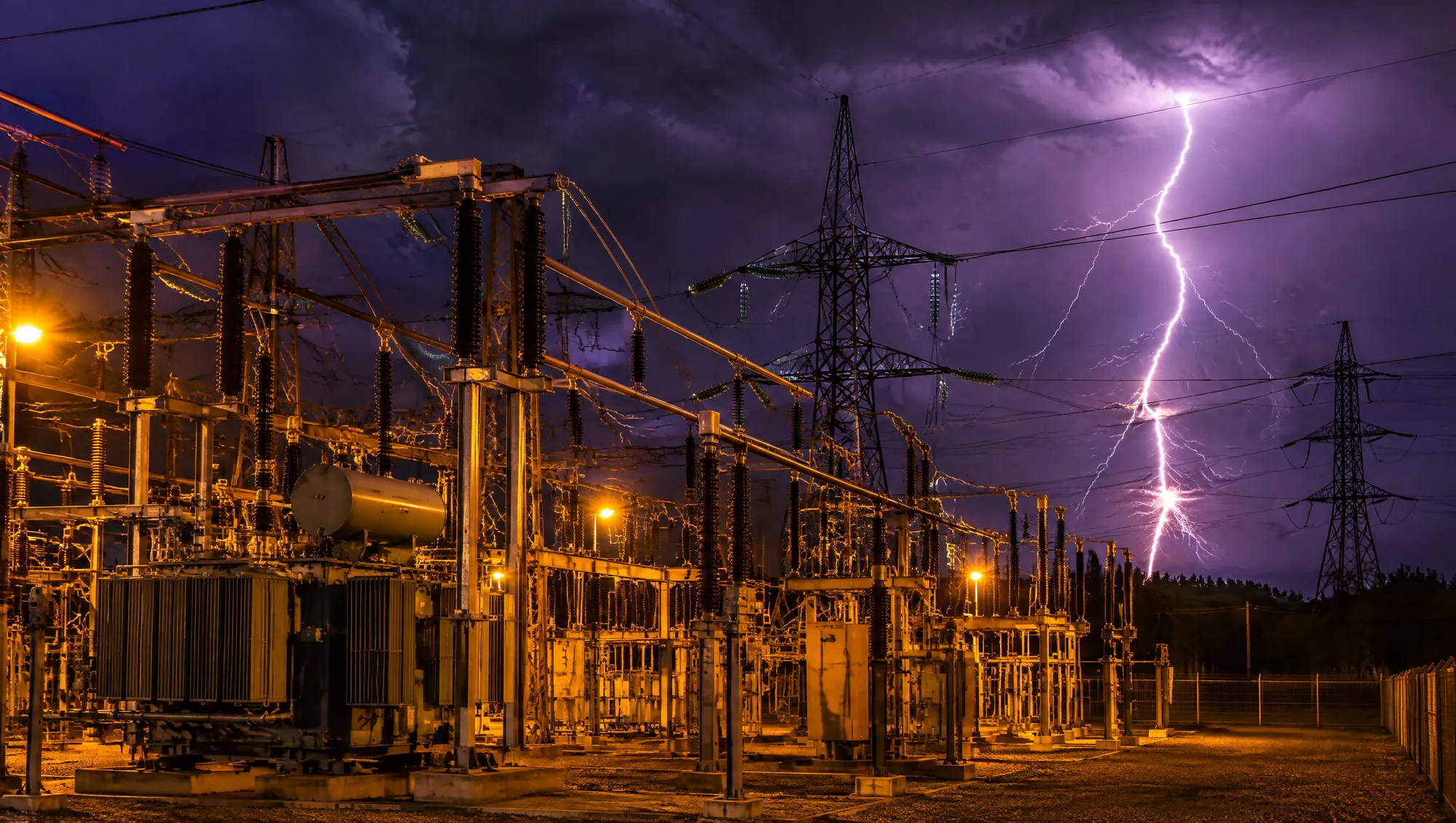
The second is far more common than the first. Lightning doesn't need to hit your plant. If it hits a line on the same supply network and causes a short-circuit fault, protection equipment isolates the fault within a very short time, and every nearby customer experiences a voltage sag during that interval. Taipower also lists lightning as one of the main causes of voltage sags (Taipower FAQ: "What is a voltage sag?").
Surge vs. sag
| Item | Surge | Voltage sag |
|---|---|---|
| Voltage change | Spikes above normal | Drops to 10–90% |
| Duration | Microseconds | ~0.1 s typical |
| Typical result | Fried boards | Trips; restart fixes it |
| Area affected | Near the strike | The whole grid area |
| Fix | Arresters, SPDs | Voltage sag compensators, online UPS |
Which one is it?

Anything broken?
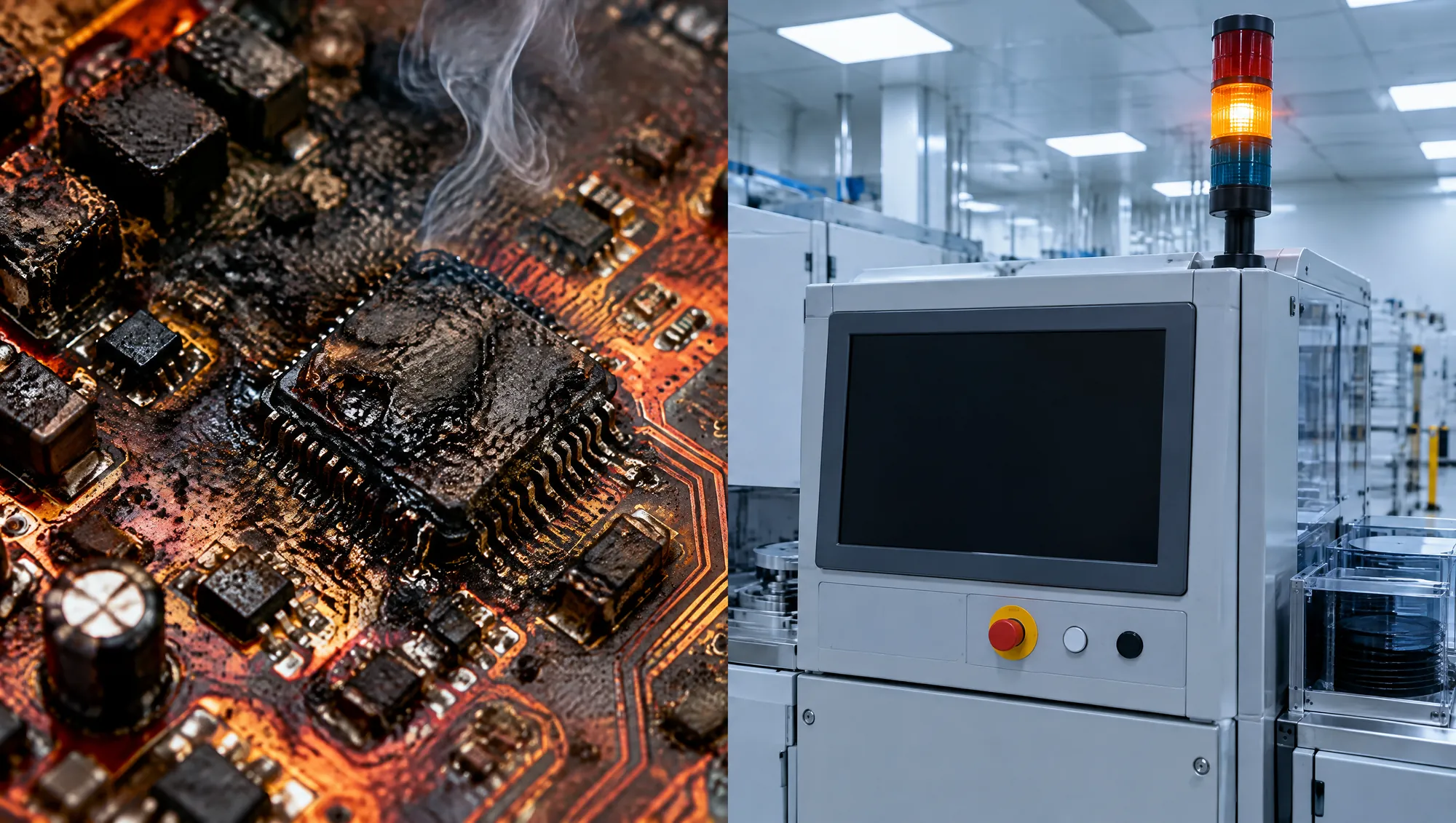
Burned-out components or boards point to a surge; a tool that trips but runs normally after restart points to a voltage sag.
Did the lights flicker?
If the lights flickered or dimmed at the moment of the trip, voltage dropped across the whole site, a classic sign of a voltage sag.
Same model tripping?
If only certain models trip during the same storm, their control components are especially sensitive to sags.
Do the times match other records?
Cross-check equipment alarms, UPS input event logs, facility power monitoring, and lightning data from the weather service. If the times match, you can confirm a lightning-induced sag.
What prevents storm trips?
| Measure | Problem it solves | Protects | Notes |
|---|---|---|---|
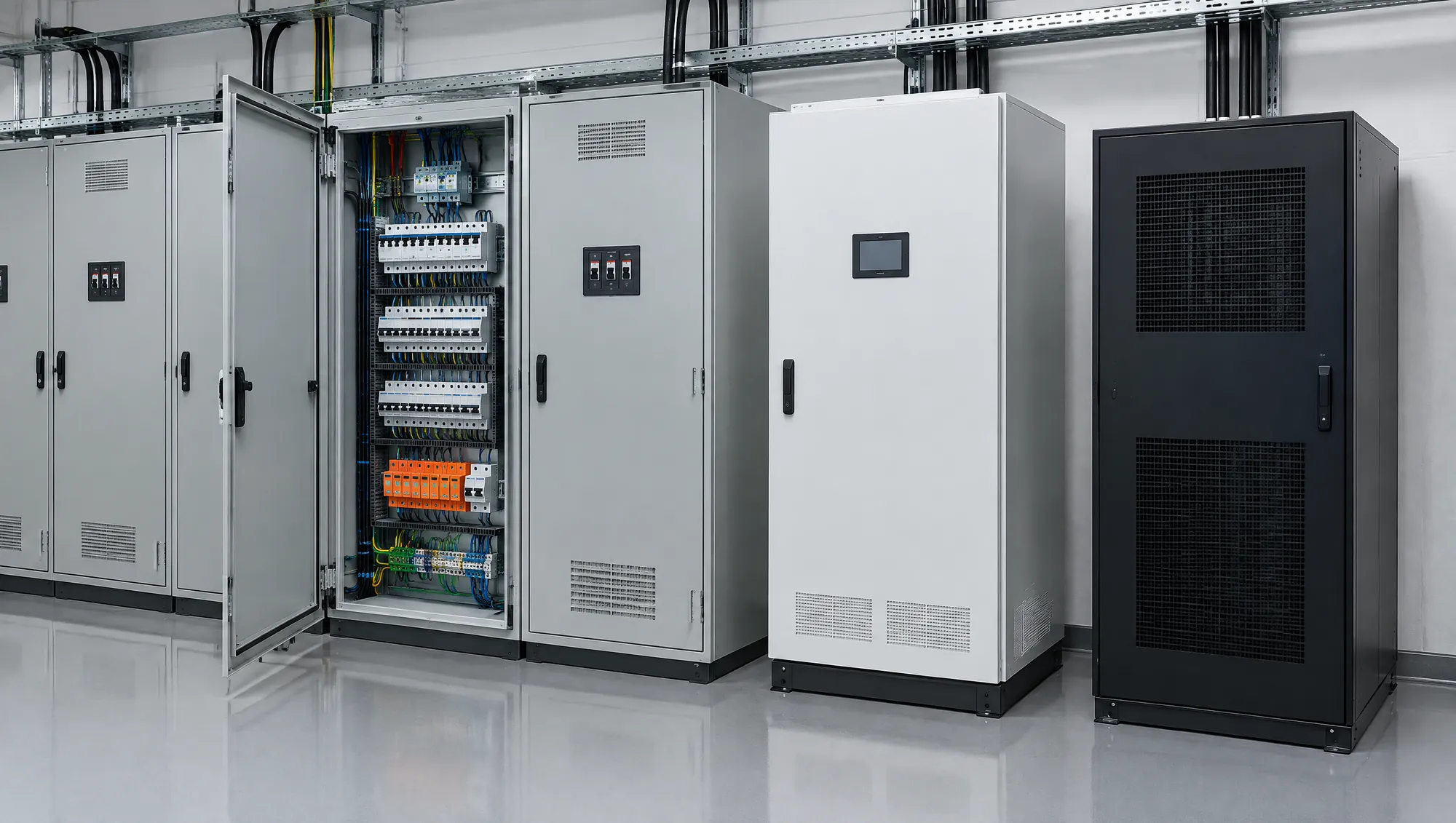
| Voltage sag compensator (sag protector) | Voltage sag | PLCs, IPCs, robots, control power, EMO circuits | Controls only, small size; holds seconds |
| Online UPS | Sags and outages | Must-run loads | 3–6% loss; batteries every 3–5 yrs |
| Tune settings | Voltage sag | Undervoltage relays, VFDs | Cheapest; ask the maker |
| Arresters, SPDs | Surges | Panels, electronics | Stops burnout, not sag trips |
The most common misconception is "We already installed lightning arresters, so why do tools still trip in storms?" The two solve different problems: surge protectors keep equipment from being damaged; sag compensators keep equipment from stopping. In areas with frequent thunderstorms, you usually need both. For sizing a sag compensator, see "How to size it"; for the full set of prevention methods, see "How to prevent voltage sag trips in a factory."
4 things to do before storm season
Compile last season's trip records
Which days, which tools, how long each recovery took: start with a list.
Find the worst models and parts
Use alarm types to find whether the control power supply, contactor, or VFD drops out first.
Fix the worst one first
Adjust settings or add a compensator to the control circuit; thunderstorm season is the best time to verify.
Set up monitoring
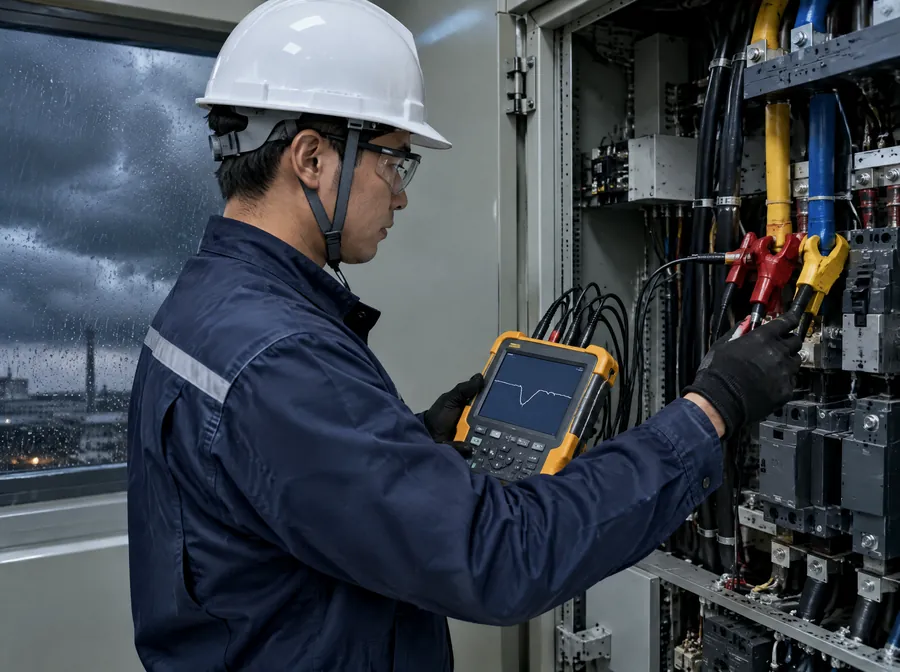
Event logs from a power quality analyzer or the compensator itself record the time, depth, and waveform of every sag, so you can prove the improvement worked.
FAQ
We have lightning arresters and surge protectors. Why do tools still trip during thunderstorms?
Because lightning arresters and surge protectors stop overvoltage surges, while thunderstorm trips are mostly voltage sags: lightning hits a transmission line outside the plant, causing a short circuit that pulls grid voltage down for about 0.1 s. Preventing these trips requires a voltage sag compensator or an online UPS.
Lightning didn't hit the factory. Why do tools still trip?
Because if lightning hits a transmission line on the same supply network and causes a short-circuit fault, every nearby customer experiences a voltage sag. The factory doesn't need to be hit directly to be affected.
How do you prove a thunderstorm trip was a voltage sag?
Match the trip time against light flicker, UPS input event logs, facility power monitoring, and lightning data from the weather service. Matching times, equipment that runs normally after restart, and no burned components are the classic signs of a voltage sag. You can also ask your local Taipower district office whether there was a supply incident at the time.
What's the most effective equipment against thunderstorm trips in a fab?
Adding voltage sag compensators to the control circuits that reset is the most direct fix: they run in bypass normally and draw almost no power, and during a sag they switch in about 1 ms and hold for several seconds. Use an online UPS only for loads that must also survive outages.