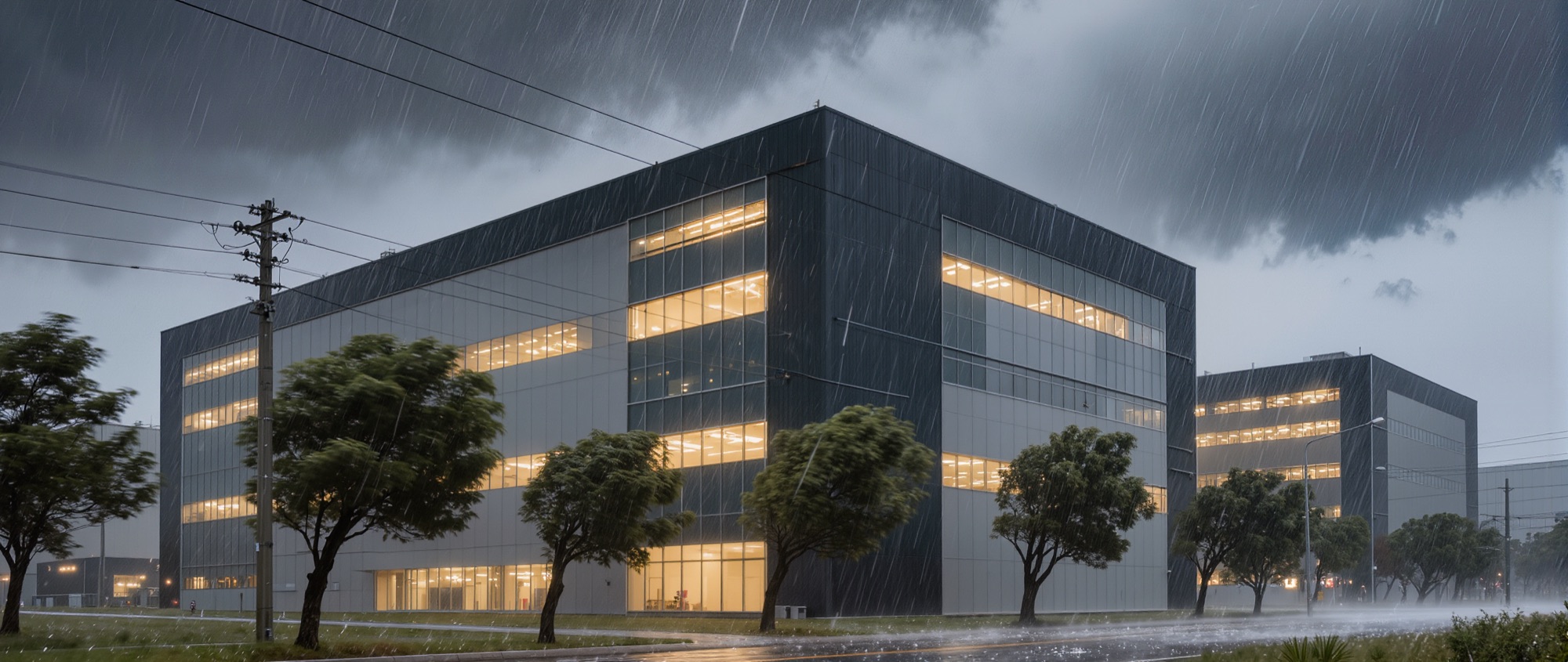
Summary: how to prevent factory trips in typhoon season
The most common cause of factory trips in typhoon season is voltage sags, not outages. Wind pushes trees or debris into power lines, and salt carried by sea wind builds up on insulators and causes flashover. When a line shorts, voltage across the nearby grid drops to 10–90% of normal for a fraction of a second. The power never goes out, but machine control systems still reset. These faults cluster during a typhoon, and automatic reclosing can cause several sags within a few seconds; if the storm brings wind without rain, salt contamination can keep causing trips for days afterward. To prevent typhoon-season trips: before the season, find the machines that trip most often and add voltage sag compensators to the control circuits that reset, or adjust undervoltage settings; before the typhoon arrives, check generators and UPS units; after it passes, compare event records and review which machines still need reinforcement.
Why factories trip so easily during typhoons: three reasons
A typhoon's impact on factory power goes beyond the "hundreds of thousands of households without power" in the news. For factories that don't lose power, these three situations cause trips more often:
High winds blow branches and sheet metal into power lines
Fallen trees, signs or sheet metal land on overhead lines and short them out. Until protection equipment isolates the fault, every customer on the same part of the grid sees a voltage sag; only customers close to the fault actually lose power.
Salt contamination: sea wind blows salt onto insulators
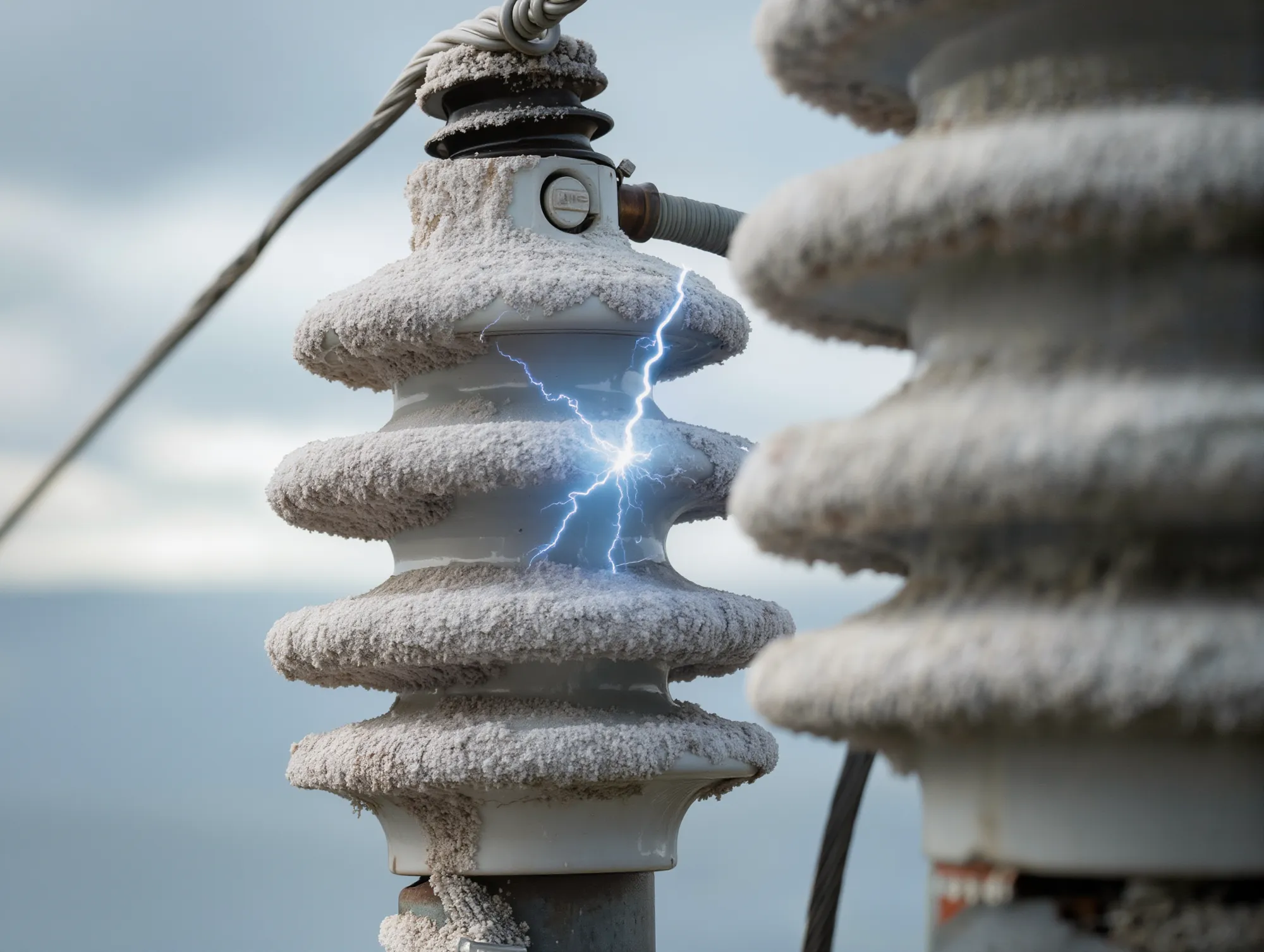
A typhoon's strong winds carry sea salt inland, where it settles on line insulators. Rain washes the salt away; but when there is wind without rain, salt keeps building up, and once the insulators get damp they can flash over and trip the line. When Typhoon Koinu passed in 2023, wind without rain caused severe salt-contamination outages along the coasts of Changhua, Yunlin and Chiayi, slowing power restoration (MOEA).
Reclosing and repairs: one fault, several sags
After a fault, distribution line protection usually tries to re-energize the line automatically (reclosing). If a branch is still lying across the line, it faults again, so a single fault point can cause two or three sags within seconds to tens of seconds. Post-typhoon repairs and load-transfer switching can also bring several more voltage disturbances.
How much do typhoons affect Taiwan's power supply?
Typhoon Kong-rey at the end of October 2024 cut power to more than 970,000 households in Taiwan at some point, the most of any typhoon in recent years (Taipower). That number counts customers who lost power; factories that kept their power but went through voltage sags during the same period don't show up in any statistics.
Taipower has also made salt contamination a priority before typhoons. Ahead of Typhoon Krathon's landfall in 2024, drawing on its experience with salt contamination from Typhoon Koinu the year before, Taipower finished washing insulators in advance (Taipower). The utility can reduce faults on the grid, but it can never eliminate them; what a factory can do is make sure its own machines ride through.
Typhoons mostly hit between July and September, but they can still come after October — Kong-rey made landfall on October 31. Salt contamination also occurs during the northeast monsoon season (October through March) (Taipower Monthly).
Typhoon trips vs. lightning trips: what's the difference?
Both trip equipment the same way — a voltage sag caused by a line fault — but they happen at a different pace, so preparation differs too:
| Item | Thunderstorms | Typhoons |
|---|---|---|
| Main cause | Lightning striking transmission lines | Wind-blown contact with lines, salt flashover, reclosing and repair switching |
| Pattern | Afternoon storms; single, scattered events | Clustered within a day or two; repeated sags possible |
| Advance warning | A few hours | Warnings usually issued 2–3 days ahead |
| After the storm | Usually over | With wind but no rain, salt contamination can last for days |
| Also protect against | Surges (lightning arresters, SPDs) | Long outages (generators, UPS), flooding |
For how to tell lightning-related trips from surges, see Tools Trip in Lightning Storms: What Equipment Helps?. The advantage with typhoons is the warning time: you can finish what needs to be done before the storm arrives.
Typhoon-season checklist: from before the season to after the storm
- Before typhoon season (May–June)
- Review last year's trip records from the typhoon and thunderstorm seasons: which days, which machines, and how long each restart took
- Identify the models and components that trip most often, and prioritize adding compensators to their control circuits or adjusting undervoltage relay settings (see Older Tools That Fail SEMI F47: How to Improve Them)
- Set up power quality monitoring so every future sag is logged with its time, depth and waveform
- After a typhoon warning is issued
- Check generator fuel, UPS battery condition, and which loads must stay up during an outage
- Schedule on-duty staff and the restart sequence for the typhoon; staffing is thin on typhoon days off, and slow restarts multiply losses
- Consider pausing the processes most sensitive to sags and with the highest scrap cost ahead of time
- While the typhoon passes
- Log the time, machine and alarm type of every trip, and match the times against flickering lights and UPS input-fault records
- If a machine trips again within seconds of restarting, it's usually repeated sags from line reclosing — don't rush to restart machines one by one
- The week after the typhoon
- Coastal sites should watch for windy, dry weather, when salt contamination can keep causing trips
- Match trip records from the typhoon against monitoring data, find the machines that still couldn't ride through, and add them to the next round of improvements
Repeated sags: one more question when choosing equipment
Sags during a typhoon often come in a series, not one at a time. When choosing a voltage sag compensator or other protection equipment, besides asking "how deep and how long can it ride through," also ask: if two or three sags hit only seconds apart, can the equipment compensate for every one of them? This depends on the energy storage method and recharge time, so ask the vendor for specifications or test data.
Also keep the distinction clear: a voltage sag compensator handles sags lasting a fraction of a second to a few seconds — DEYly's Voltage Sag Protector (VSP), for example, rides through for up to 3 seconds at full load. Long outages caused by typhoons need generators and UPS. For how the five types of protection equipment differ, see Choosing Sag Protection: 5 Technologies Compared; for sizing, see How to Size a Sag Protector.
Typhoon season at overseas factories
Many popular locations for Taiwanese manufacturers' overseas plants also sit in the path of typhoons or hurricanes: Japan, the Philippines and northern Vietnam get typhoons, while the U.S. Gulf Coast and Southeast get hurricanes. The preparation is the same; what differs is the local grid structure, restoration speed and warning system. In October 2026, Hurricane Isaias left more than 880,000 customers in the southeastern U.S. without power at its peak — see Hurricane Isaias Outages and Factory Voltage Sags. When buying equipment for a new plant, you can write SEMI F47 ride-through requirements directly into the specification.
FAQ
Our factory didn't lose power — why do machines keep tripping on typhoon days?
During a typhoon, faults from wind-blown trees and debris touching power lines happen in clusters, and until each fault is isolated, voltage across the nearby grid is pulled down for a fraction of a second. The power doesn't go out, but if a machine's control system can't ride through the voltage sag, it resets. When the line recloses automatically, the same fault can cause several sags in a row.
The typhoon is gone — why are machines still tripping?
It may be salt contamination. A typhoon blows sea salt inland, where it settles on line insulators. If the following days are windy without rain, the salt isn't washed off, and once the insulators get damp they can flash over, causing line faults and voltage sags. Coastal sites should stay alert for several days after a typhoon.
What is the most effective way to prevent trips in typhoon season?
Start by identifying the machines and components that trip most often, then add voltage sag compensators to the control circuits that reset (PLC, IPC, control power, EMO circuits) or adjust undervoltage relay settings. This costs far less than putting the whole plant on UPS. Handle long outages separately with generators and UPS.
Are typhoon trips and lightning trips handled the same way?
The protection equipment is the same, since both target voltage sags. The differences are that typhoons come with 2–3 days of warning, faults occur in dense, repeated clusters, and salt contamination may follow, so you also need a plan for long outages and should confirm the equipment can handle repeated sags.
When is typhoon season?
Most typhoons in Taiwan hit between July and September, but they can still come after October — Typhoon Kong-rey, for example, made landfall on October 31, 2024. We recommend finishing your trip-record review and improvements before typhoon season, in May–June.
Source
- Taipower, "Typhoon Kong-rey Causes Most Cumulative Outages in Recent Years; Over 99% Now Restored," 2024-11 (in Chinese). Link
- MOEA, "Salt Contamination Along the Changhua, Yunlin and Chiayi Coast Slows Restoration; Taipower and Local Governments Work Together on Repairs," 2023-10 (in Chinese). Link
- Taipower, "Typhoon Krathon Makes Landfall; Taipower Sends Extra Crews to Southern Taiwan to Restore Power Quickly," 2024-10 (in Chinese). Link
- Taipower Monthly, "Power Myths Explained: Outages Without a Typhoon? How Salt Dust on Insulators Affects Supply" (in Chinese). Link