Summary: catch leaks where?
Vacuum leaks in barrier bags mostly originate at the packing station: pinholes or wrinkles in the bag material, wrinkles or debris caught in the seal, or sealing before enough vacuum is reached. Visually checking whether the bag conforms misses slow leaks; humidity indicator cards don't change color until the customer opens the bag; offline sampling only checks a portion. The most cost-effective place is at the moment of sealing. Our automatic inner-box packing machine builds vacuum detection into its vacuum module: it seals only after reaching the set vacuum level, and a detection device under invention patent No. I740582 confirms there's no leak before the bag moves on to folding and boxing.
Why foil bags leak
Semiconductor parts are dry packed per IPC/JEDEC J-STD-033: parts, desiccant, and a humidity indicator card go into a moisture barrier bag (MBB), the moist air is evacuated, and the bag is heat-sealed (J-STD-033). The bag material itself blocks moisture very well; problems usually come from the bag and the seal:
Bag defects
Pinholes, scratches and wrinkles break the barrier; makers say check bags first (Bondline).
Incomplete seal
Wrinkles or debris can leave a hairline gap in a seal that looks fine.
Sealed too early
Manual or timed vacuum varies; a snug-looking bag may not be evacuated.
Punctures
Reel and tray corners puncture bags after packing — protect with boxes.
The cost of finding it at the customer
Once the bag leaks, moisture slowly seeps in, and after the desiccant is saturated, the parts start absorbing moisture. When the customer opens the bag and the indicator card has changed color, J-STD-033 requires baking before use; reeled parts can only be baked at low temperature, taking days (see MSL levels and bake conditions). If it goes unnoticed and the parts are reflowed, moisture in the package vaporizes and can cause delamination or cracking.
For the shipper, this means complaints, batch rework, or returns, and because the problem surfaces weeks after shipment, it's hard to trace which shift or machine sealed it. The same leak caught at the packing station means resealing one bag; found at the customer, it's a trust problem for the whole batch.
4 ways to check for leaks
| Approach | When it's found | Coverage | Limitations |
|---|---|---|---|
| Look and feel | Packing station | Every bag, person-dependent | Misses slow leaks |
| Humidity card | At the customer | Every bag | Too late — already shipped |
| Vacuum decay test | Sampled | Sample | Chamber test per ASTM F2338; accurate but separate and sampled |
| Built into the packer | At sealing | Every bag | Needs the right machine; ours is patented |
Our approach: check at sealing
The vacuum module of our automatic inner-box packing machine links evacuation, detection, and sealing in one sequence, with no separate test station and no reliance on manual feel:
Gather the mouth
Upper and lower sealing modules first gather the bag mouth toward the center, reducing wrinkles at the seal.
Clamp and vacuum
The evacuation seal bar clamps the bag mouth while a nozzle draws vacuum inside the bag.
Wait for set vacuum
Controlled by vacuum level, not a fixed number of seconds. The nozzle withdraws only after the set vacuum level is reached.
Heat seal
The heat seal bar seals the bag, which then moves to automatic folding and inner-box loading.
The vacuum detection device holds a Republic of China (Taiwan) invention patent. Every bag is checked before sealing, not by sampling. The detection principle is patented technology and can be explained under an NDA; handling when a leak is detected (stop and alarm / automatic reject / reseal) can be set with the customer.
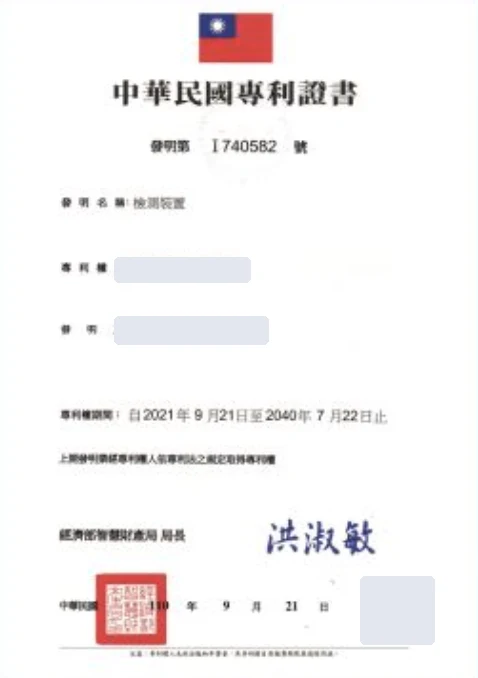
Invention No. I740582: detection device
- Patent type
- Invention patent (granted after substantive examination)
- Term
- 2021-09-21 to 2040-07-22
- Applications
- Vacuum detection in the vacuum module
The machine also holds packing equipment utility model patent No. M683459; see the patent details on the product page.
Why is this worth an invention patent?
Caught before shipping
Cards and complaints mean it already failed. Checking at sealing keeps a leaking bag out of the box.
Examined invention patent
Utility models get formal review only; invention patents need substantive review for novelty. I740582 is one, valid to 2040.
No extra station or staff
Checked in the vacuum module, in the same step as sealing — no sampling station, no extra inspectors.
Vacuum level decides, not feel
Vacuum level sets the seal timing — same on every shift.
FAQ
Why foil bags leak
Four common causes: pinholes, scratches or wrinkles in the bag; wrinkles or debris in the seal; sealing before full vacuum; punctures in handling. The first three happen at packing and can be caught at sealing.
What happens when a barrier bag loses vacuum?
Moisture seeps into the bag, and once the desiccant is saturated, the parts start absorbing moisture. If the humidity indicator card has changed color when the customer opens the bag, the parts must be baked before use, and in serious cases the whole batch is returned. If it goes unnoticed and parts are reflowed, moisture in the package vaporizes and can cause delamination or cracking.
How do you check vacuum packs for leaks?
Common methods include manual visual and touch checks, checking humidity indicator cards after the fact, offline sampling with vacuum decay testing (ASTM F2338), and building vacuum detection into the packing machine to check during sealing. The first two depend on people or only reveal problems at the customer, and sampling only checks a portion; detection built into the packing machine catches leaks before shipment.
Is your vacuum detection patented?
Yes. The vacuum detection built into the vacuum module of our automatic inner-box packing machine holds Republic of China (Taiwan) invention patent No. I740582 (detection device), with patent rights through 2040. Invention patents are granted only after substantive examination. The machine also holds packing equipment utility model patent No. M683459.