Fixed Scanners & OEM EnginesMount on lines, conveyors and equipment for automatic reading — or embed in your machine
Fixed-mount barcode scanners (also called fixed readers or code readers) are housed scanners that mount directly on lines, conveyors, equipment or gates and read automatically — no one has to hold them. OEM scan engines are the reading core that equipment makers embed in their own machines, from entry-level CCD engines to high-performance 2D imaging engines. The Japanese manufacturer has worked in barcode scanning and automatic identification since 1976, with products used in retail, healthcare, logistics, ticketing and postal services.

ESG positioning: G (Governance)How DEYly approaches ESG →
- Proven benefits
- Code reading built into equipment and lines keeps material, specimen and access records automatically and traceably (G).
- Limits
- The engine itself is a component; traceability benefits depend on the integrated system design.
Engine vs fixed mountOEM engine vs. fixed reader
To build code reading into your own product (kiosks, inspection instruments, handheld devices), choose an OEM scan engine — small and only a few grams. To add code reading to existing lines, gates or machines, choose a fixed-mount reader — housed, protection-rated and ready to plug in.
| Comparison | OEM scan engine | Fixed-mount reader |
|---|---|---|
| Form | Bare board module | Housed, mounts directly |
| Integration | Designed into your product | Mounted on existing equipment |
| Dimensions | About 20–40 mm, 2.6–10 g | About 30–140 mm |
| Best for | Kiosks, instruments, handhelds | Lines, gates, counters, kiosks |
Production line & OEMFixed scanners on lines and machines
Scanning one by one with a handheld gun can't keep up with a line and invites missed scans. A fixed-mount barcode scanner sits where material passes and reads automatically as soon as a code enters its field, sending data to the system; equipment makers can build readers or OEM engines straight into their machines so the equipment ships with code reading built in.
Models on this page are mainly for printed barcodes, labels and on-screen barcodes; DPM marks engraved directly on metal, glass or wafers require a separate evaluation of dedicated readers.
ModelsEngines and readers
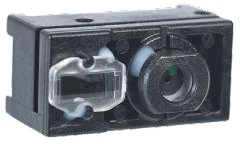
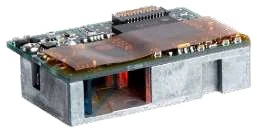
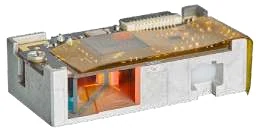
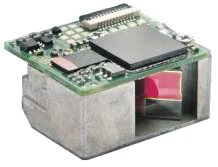
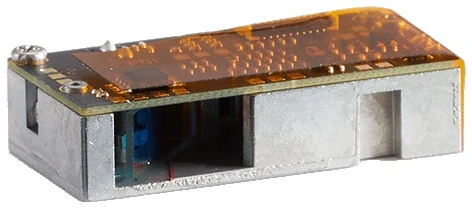
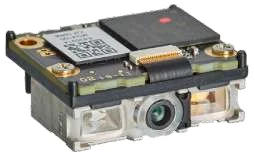
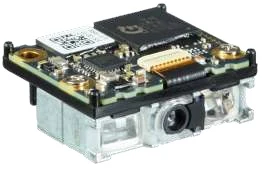
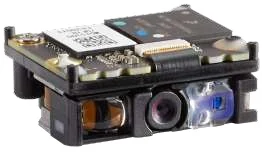
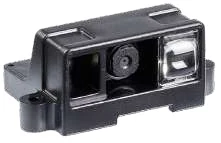
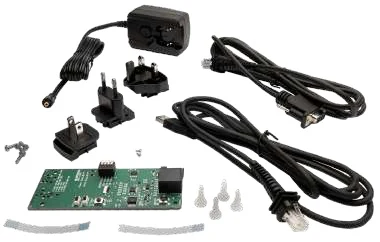
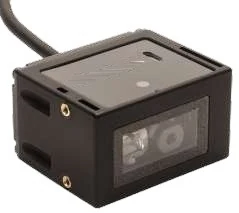
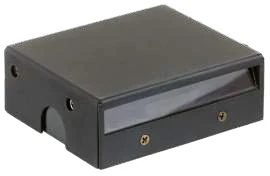
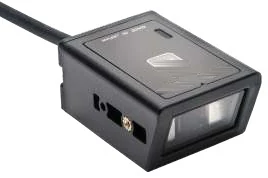
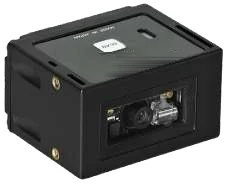
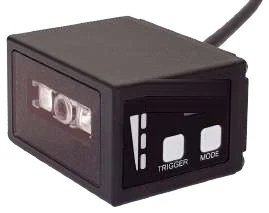
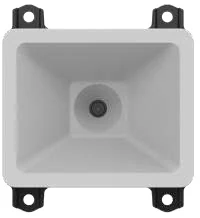
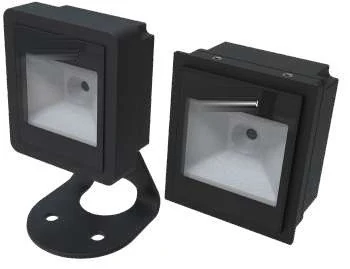
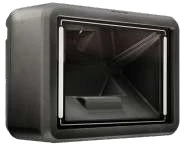
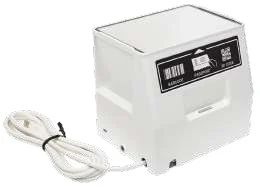
Product photos provided by the manufacturer; actual appearance may vary.
| Model | Technology | Scan rate | Dimensions (mm) | Weight |
|---|---|---|---|---|
| MDC-200A | CCD | 300 scans/s | 22.8 × 15.0 × 7.5 | About 2.6 g |
| MDL-1000 | Laser | 100 scans/s | 28.0 × 18.0 × 7.8 | About 10 g |
| MDL-1500 | Laser | 100 scans/s | 28.0 × 14.0 × 8.0 | About 3.9 g |
| MDL-2001MOQ applies | Laser | 100 scans/s | 20.4 × 18.0 × 11.2 | About 4.7 g |
| MSL-1400 | Laser | 100 scans/s | 28.0 × 14.0 × 7.8 | About 3.9 g |
| MDI-4100MOQ applies | 2D | Up to 100 fps | 25.3 × 21.0 × 10.0 | About 5.5 g |
| MDI-4700 | 2D | Up to 120 fps | 25.3 × 10 × 21 | About 7 g, green aimer, HD/UD versions available |
| MDI-5350 | 2D | Up to 120 fps | 25.3 × 10.8 × 21 | ~7.3 g, red laser aimer |
| N-250Coming soon | 2D | Up to 100 fps | 38.53 × 16.2 × 24.33 | ~5.5 g, motion tolerant, USB |
For development and evaluation, pair with the MEK-3100 development kit: two FFC cables, RS-232 and USB interface cables, a power supply with international plugs, and mounting parts.
| Model | Technology | Key specs |
|---|---|---|
| NLV-4001 | CCD | 300 scans/s, ABS housing, IP65, RS232 / USB |
| F-70 | CCD | 700 scans/s, metal, I/L type, IP42, RS232MOQ applies |
| NLV-1001 | Laser | 100 scans/s, ABS housing, RS232 / USB |
| NLV-3101 | 2D | Up to 60 fps, ABS housing, IP65, RS232 / USB |
| NLV-5201 | 2D | Up to 100 fps, die-cast zinc alloy housing, IP65 |
| Q-250 | 2D | Up to 120 fps, 60.2 × 66 × 31.4 mm, about 30 g, USB-C |
| P-250 | 2D | Up to 120 fps, 77 × 68 × 39 mm, RS-232 or USB |
| M-11 | 2D | Omnidirectional, 120 fps, mounting holes |
| PR-11 passport reader | 2D | Omnidirectional, antimicrobial whiteMOQ applies |
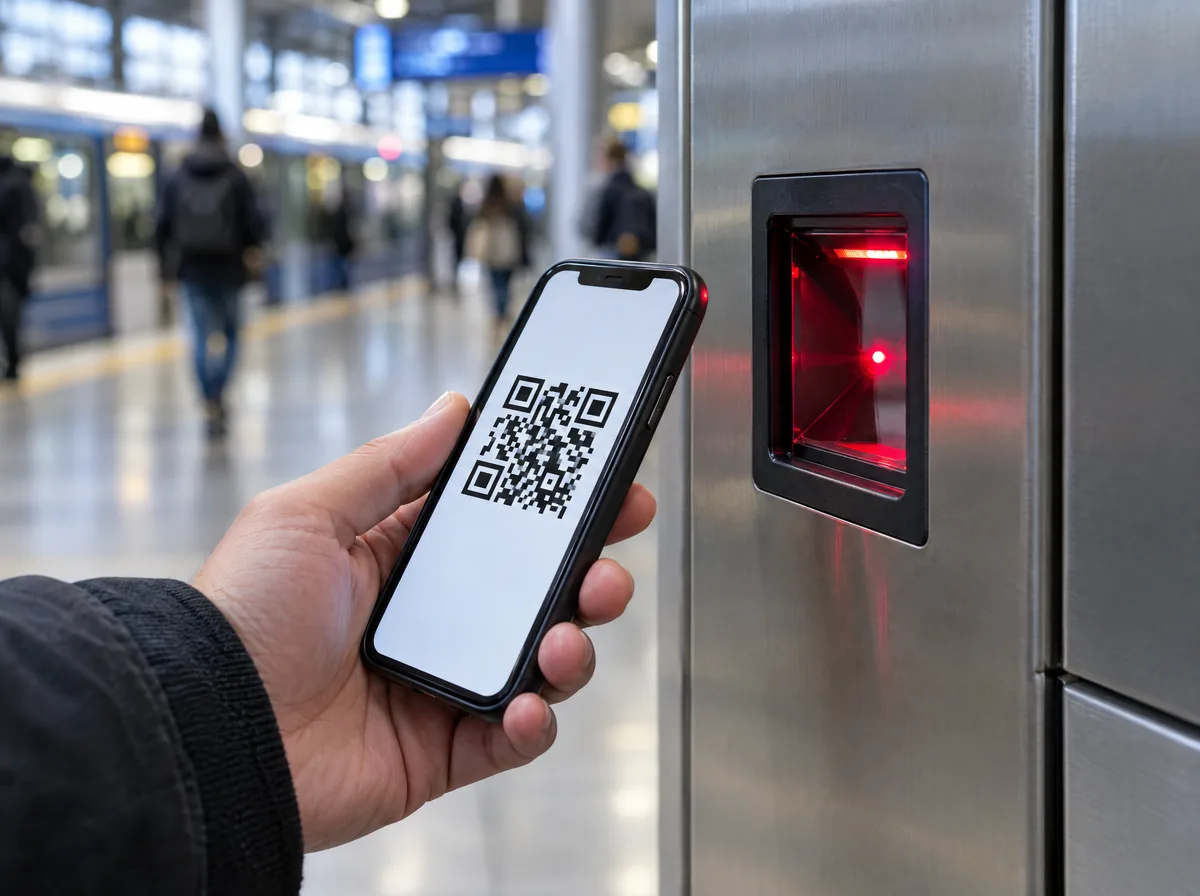
ApplicationsWhere are OEM engines and fixed-mount readers used?
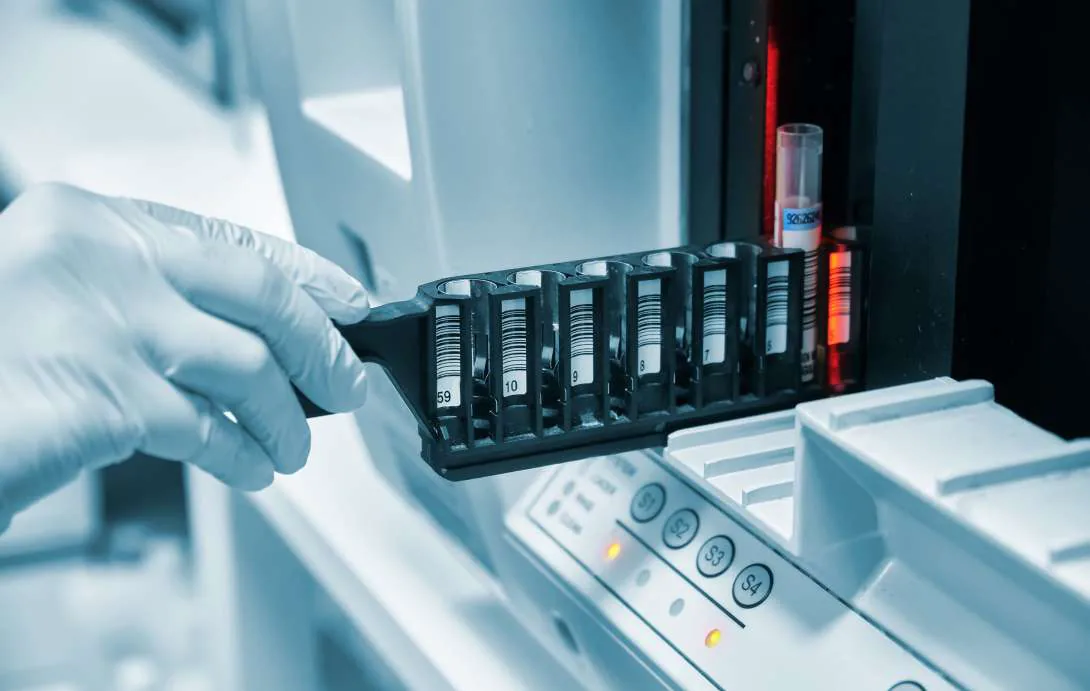
DevelopmentHow to evaluate and adopt an OEM engine
FAQCommon questions
What is an OEM barcode scan engine?
An OEM barcode scan engine is a reading core that can be embedded in other equipment; equipment makers design it into kiosks, inspection instruments or handheld devices to give their products code reading.
Are fixed-mount barcode scanners and code readers the same?
Yes. Fixed-mount barcode scanners, fixed readers and code readers all refer to devices mounted in a fixed position that read barcodes automatically, as opposed to handheld scanners held by a person.
How do I choose a fixed-mount barcode scanner?
Start with the code type: for 1D only, CCD or laser models; for QR codes, 2D codes or phone screens, 2D models. Then speed and environment: for fast conveyors, the F-70 at 700 scans/s; for dust or splashes, IP65 models (NLV-4001, NLV-3101, NLV-5201); for a rugged housing, metal or zinc alloy models. Finally, confirm whether the interface is RS-232 or USB.
OEM engine or fixed-mount reader — which should I choose?
To build code reading into your own product, choose an OEM engine; to add code reading to existing lines, gates or machines, choose a housed, protection-rated fixed-mount reader that installs directly.
Which type reads QR codes on phones?
Choose a 2D imaging engine or reader, such as the MDI-4700, MDI-5350, Q-250, P-250 or M-11. CCD and laser read only 1D barcodes.
Is there a development kit for testing first?
Yes. The MEK-3100 development kit includes cables, RS-232 and USB interface cables and a power supply for testing reading performance before volume production.
Can they be mounted on semiconductor equipment or lines?
Yes. Common placements are conveyors, machine infeeds and packing/shipping stations, reading barcodes on magazines, trays, fixtures and cartons; equipment makers can also design readers or OEM engines into their machines. Reading DPM marks engraved directly on wafers or metal requires a separate evaluation of dedicated readers.
Do OEM engines have minimum order quantities?
Some models do, such as the MDL-2001 and MDI-4100. Actual quantities, lead times and long-term supply are confirmed at quotation.
How do we evaluate and purchase in Taiwan?
Contact DEYly directly with sample barcodes, reading distance, line speed and mounting space, and we'll help select and quote; OEM engines can be tested first with the MEK-3100 development kit. Pricing depends on model, quantity and integration.
Models and specs are compiled from the manufacturer's 2025–2026 catalog; actual supply, minimum order quantities and specs are confirmed at quotation.