Key takeaways: Where does cleaning CO₂ come from? Does CO₂ cleaning cut carbon?
Cleaning CO₂ is mostly a by-product of other processes: steam reforming in hydrogen and ammonia production, fermentation in beer and ethanol making, limestone calcination and natural gas processing. It is collected, purified, liquefied and sold. So cleaning with CO₂ does not create new CO₂, but if it is vented after use, it only delays the emission without reducing the total. Real reduction requires recovering and reusing it after cleaning, or storing it long-term. Closed supercritical cleaning is easier to recover from; open snow cleaning is harder. Also, impurities in ordinary commercial CO₂ can deposit on part surfaces, so precision cleaning needs high-purity CO₂ and added filtration. CO₂ is heavier than air, so work areas need proper exhaust and concentration monitoring.
Where does cleaning CO₂ come from?
In short: Most cleaning CO₂ is not “made on purpose.” It is collected from by-products of hydrogen plants, ammonia plants, fermentation and the lime industry, then purified and liquefied. In other words, it was going to be released into the air anyway; cleaning simply “borrows” it once first.
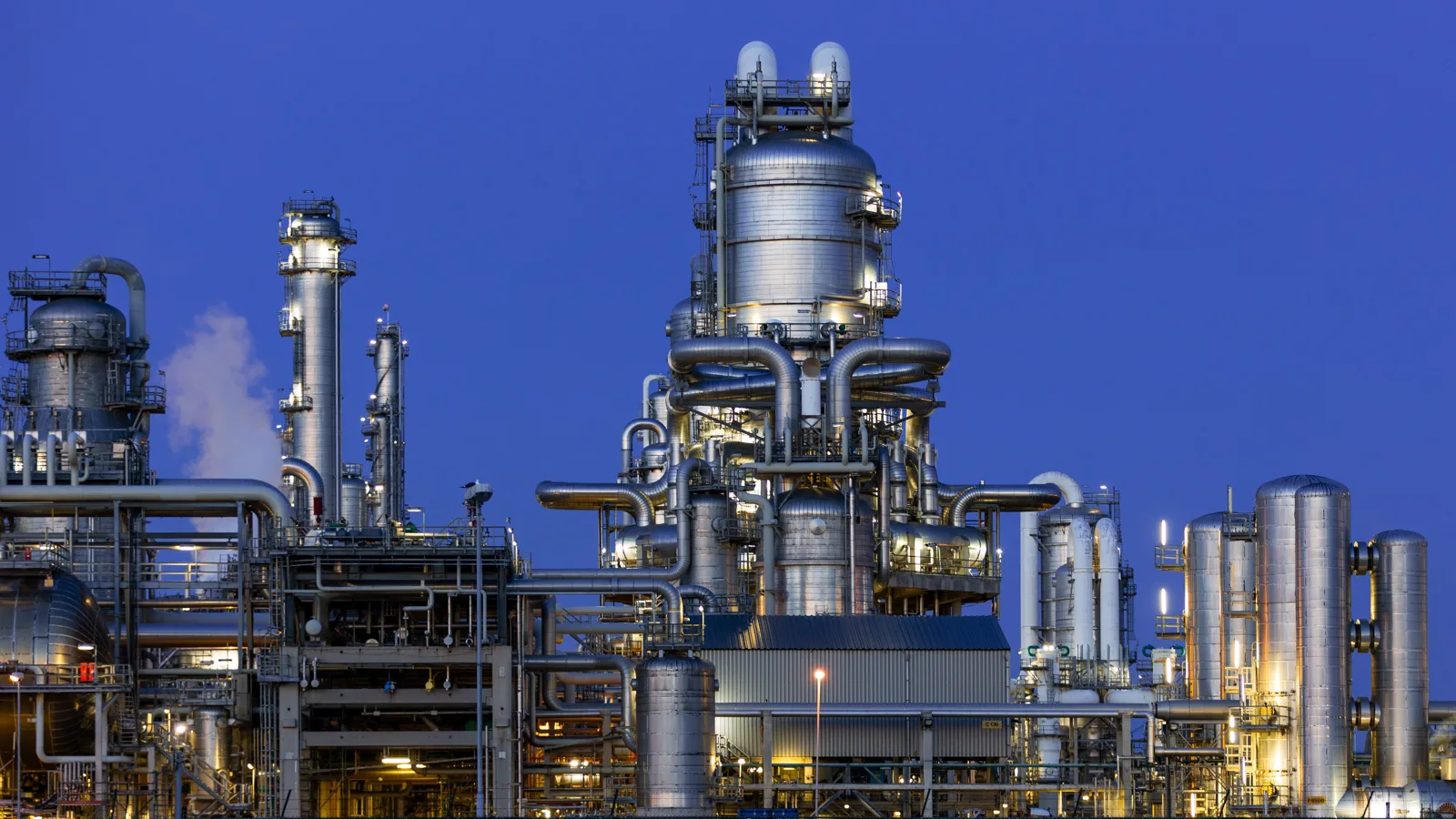
Producing hydrogen from natural gas by steam reformingWhat is steam reforming?The most common industrial way to make hydrogen: natural gas (mainly methane) reacts with high-temperature steam to produce hydrogen, along with large amounts of CO₂.Ammonia synthesis (a feedstock for fertilizer) also needs large amounts of hydrogen, so hydrogen and ammonia plants are major CO₂ sources.generates large amounts of CO₂ and is a major source of industrial CO₂.
When brewing beer or producing ethanol, yeast ferments sugar and gives off CO₂.
The calcination used to make quicklimeWhat is calcination?Heating limestone (calcium carbonate) to about 850 °C so it breaks down into quicklime and CO₂.The cement and lime industries both rely on this reaction.releases the carbon in limestone as CO₂.
Natural gas processing plants must separate out CO₂ first; some places also have springs that naturally emit CO₂, which can be tapped directly.
According to Wikipedia, CO₂ is a by-product of producing hydrogen from natural gas by steam reforming and of fermenting sugar in brewing; calcining limestone at about 850 °C to make quicklime also produces CO₂, and in some places it can be taken directly from natural CO₂ springs (Wikipedia: Carbon dioxide). Industrial dry ice is likewise mostly made from CO₂ recovered from other processes (Wikipedia: Dry-ice blasting).
Notably, less than 1% of the CO₂ generated each year goes to commercial uses, and most of that is used by the fertilizer industry (Wikipedia: Carbon dioxide). Cleaning accounts for a tiny share of this, so be wary of claims that “CO₂ cleaning dramatically cuts carbon.” A more accurate statement is that it requires no additional CO₂ to be produced and can replace some cleaning that uses water and chemicals.
How should “CO₂ cleaning adds no emissions” be understood?
Comparing the same amount of CO₂ across three scenarios makes the limits of this claim clear:
Scenario ①
Vented directly
A plant's by-product CO₂ is not recovered and goes straight into the atmosphere.
To the atmosphere: 1 unit emitted
Scenario ②
Used for cleaning, then vented
The same CO₂ is collected for cleaning and returns to the atmosphere after use. There is no more CO₂, but no less either; it is just released a little later.
To the atmosphere: still 1 unit emitted
Scenario ③
Recovered and reused after cleaning, or stored long-term
Recovering CO₂ after cleaning for reuse means buying less new CO₂; only if it is ultimately sent underground for long-term storage is it truly removed from the atmosphere.
To the atmosphere: an actual reduction
International definitions of carbon storage work the same way: CO₂ must be isolated long-term to count as stored. Using it to make fertilizer, fuels or chemicals does not count, because the CO₂ is released again when those products are burned or used (Wikipedia: Carbon capture and storage). Cleaning is a form of “utilization”; if the CO₂ is not recovered after use, it ends up back in the atmosphere.
So in external communications, a more precise phrasing is: “Uses recovered by-product CO₂ and produces no new CO₂; recovering and reusing it after cleaning can reduce purchases of new CO₂.” Whether it can be reported as a carbon reduction depends on actual recovery volumes and third-party verification.
Can CO₂ be recovered after cleaning? It depends on closed vs open systems
| Supercritical CO₂ cleaning | CO₂ snow cleaning | |
|---|---|---|
| Equipment type | Closed high-pressure vessel | Open jet, sprayed inside a cleaning chamber or work area |
| Where the used CO₂ ends up | Stays in the vessel and piping | Sublimates into gas and mixes with surrounding air |
| Recovery method | Depressurize so CO₂ returns to gas and separates from dissolved contaminants, then compress or condense for recovery | Must be recaptured from air-diluted exhaust, which is difficult and costly |
| Recovery difficulty | Easier | Harder |
Supercritical CO₂ already operates in a closed vessel; when depressurized, the CO₂ returns to gas and can be condensed into a recovery tank for reuse (Wikipedia: Supercritical carbon dioxide). Snow cleaning sprays CO₂ into open space, where it sublimates and is immediately diluted by air, making recovery much harder. For how the two technologies work and differ, see What Is Supercritical CO₂ and CO₂ Snow Cleaning; for choosing among three CO₂ cleaning methods, see Comparing Three CO₂ Cleaning Methods.
Actual recovery rates depend on equipment design, cleaning cycles and purification method; there is currently no universal figure that can be applied directly. When evaluating equipment, ask the vendor to explain the recovery method, the purity after recovery, and whether recovered CO₂ can be reused directly for precision cleaning.
How does carbon capture (CCUS) relate to cleaning?
Carbon capture (CCUS)What is CCUS?Short for Carbon Capture, Utilization and Storage.“Capture” separates CO₂ from exhaust gas; “utilization” turns it into products or industrial feedstock; “storage” locks it underground long-term so it doesn't return to the atmosphere.separates CO₂ from plant exhaust for utilization or storage. Utilization is actually very small: only about 1% of captured CO₂ is used as feedstock for products such as fertilizer, fuels or plastics (Wikipedia: Carbon capture and storage).
The link between cleaning and carbon capture is the CO₂ source: if a plant can capture CO₂ from its own exhaust and purify it to cleaning grade, it can supply its own cleaning CO₂, turning emissions into a cleaning medium. Two caveats: first, this is still “utilization,” so CO₂ not recovered after cleaning is released again; second, purifying captured CO₂ to precision-cleaning grade requires extra energy and equipment, so whether it pays off must be calculated case by case.
For semiconductor fabs, the more practical ESG benefit is often not about CO₂ itself but about the water, chemicals and liquid waste that dry cleaning can cut. See Waterless Cleaning: How Fabs Save Water and Reduce Liquid Waste.
Why precision cleaning cares about CO₂ purity, plus safe use
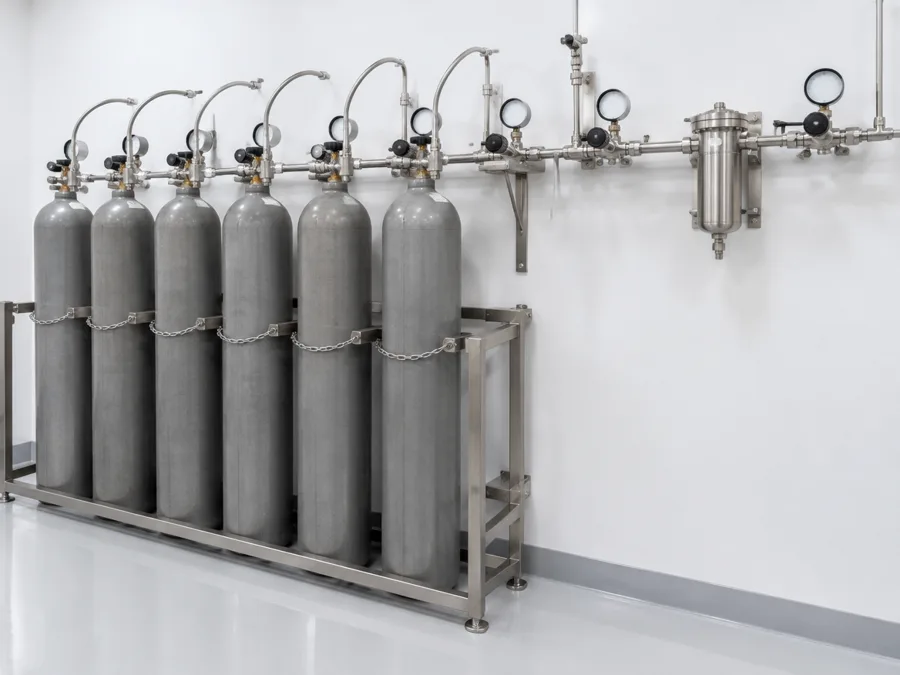
CO₂ snow cleaning blasts CO₂ directly onto parts, so whatever is in the CO₂ may end up on the surface. An early wafer-cleaning patent noted that when ordinary commercial CO₂ is used to make cleaning snow, particles in the snow deposit right where contamination was removed; the fix was to vaporize the liquid CO₂, pass the gas through a filter, then cool and reliquefy it (US4972677A).
Precision cleaning therefore usually uses high-purity CO₂ with filtration at the supply end. When using recovered or captured CO₂, it is even more important to confirm that impurities, moisture and oil after purification meet cleaning requirements.
On safety: CO₂ is non-flammable but heavier than air. Rising concentrations can cause headaches, dizziness and even loss of consciousness, and buildup in enclosed spaces such as tanks and pits can cause asphyxiation. The UK HSE workplace exposure limits are 5,000 ppm as an 8-hour average and 15,000 ppm as a 15-minute average (HSE). Cylinder rooms and cleaning work areas both need exhaust and CO₂ concentration monitoring.
FAQ
Where does the CO₂ used for cleaning come from?
Mostly from by-products of other industrial processes, such as steam reforming of natural gas to make hydrogen and ammonia, fermentation in beer and ethanol production, limestone calcination and natural gas processing, with a small share from natural CO₂ springs. This CO₂ is collected, purified and liquefied, then supplied for cleaning, food, welding and other uses.
Does CO₂ cleaning count as carbon reduction?
It depends on where the CO₂ goes after use. Using by-product CO₂ creates no new CO₂, but venting it after cleaning only delays the emission without reducing the total. Recovering and reusing it after cleaning reduces purchases of new CO₂; only long-term storage truly removes it from the atmosphere.
Can CO₂ be recovered after cleaning?
It is easier with closed supercritical CO₂ cleaning: when depressurized, the CO₂ returns to gas and can be separated from contaminants and condensed for recovery. With open CO₂ snow cleaning, the CO₂ mixes with air as it sublimates, making recovery much harder and more costly.
What is carbon capture (CCUS)?
CCUS stands for Carbon Capture, Utilization and Storage: separating CO₂ from exhaust gas, then using it as a product feedstock (utilization) or locking it underground long-term (storage). Only long-term storage truly removes it from the atmosphere; CO₂ used in products or cleaning may be released again after use.
Why does precision cleaning need high-purity CO₂?
CO₂ snow hits the part surface directly, so particles and impurities in the CO₂ deposit along with it, contaminating the part as it cleans. Precision cleaning therefore uses high-purity CO₂ with filtration at the supply end; with recovered or captured CO₂, confirm the quality after purification first.
Source
- Wikipedia, “Carbon dioxide”, 2026-10-23. Link
- Wikipedia, "Dry-ice blasting," 2026-10-23. Link
- Wikipedia, “Carbon capture and storage”, 2026-10-23. Link
- Wikipedia, 'Supercritical carbon dioxide', 2026-10-23. Link
- Google Patents, “US4972677A Method of cleaning wafers or the like”, 1990-11-27. Link
- UK Health and Safety Executive, "General hazards of Carbon Dioxide," 2026-10-23. Link