Key takeaways: how can fabs save water, and how can dry cleaning help?
Most of a fab's water goes to cleaning and rinsing wafers with ultrapure water, and an advanced fab uses millions of gallons of ultrapure water a day. In 2021 Taiwan was hit by a severe drought, and its three major science parks were told to cut water use by up to 15%. There are three ways to save water: ① recycle and reuse rinse water or switch to reclaimed water to reduce intake; ② clean once less and rinse less by reviewing cleaning steps and rinse times; and ③ switch to dry cleaning, replacing wet cleaning with CO₂ snow, supercritical CO₂ or plasma in steps that are water-sensitive or only need surface particles and thin films removed, which also eliminates the rinsing, drying and liquid waste. But dry cleaning can only replace some steps, not wet cleaning as a whole, and its benefits must be verified with comparison tests on the actual process before they go into an ESG report.
Why do fabs use so much water?
In short: most of a fab's water goes to cleaning. After every process step, ultrapure waterWhat is ultrapure water?Tap water or groundwater that has gone through filtration, reverse osmosis, ion exchange, UV and other treatment steps to remove almost all ions, organics, particles and gases.It is so pure it barely conducts electricity. The slightest impurity on a wafer can become a defect, so wafer cleaning and rinsing use ultrapure water, and in very large volumes. is used to rinse the wafer clean. The more cleanings and the longer the rinses, the more water used and liquid waste produced. So the most direct ways to save water are recycling used water and making some cleaning steps water-free.
Raw water goes through many treatment steps to become ultrapure water, and the process itself produces concentrated discharge water.
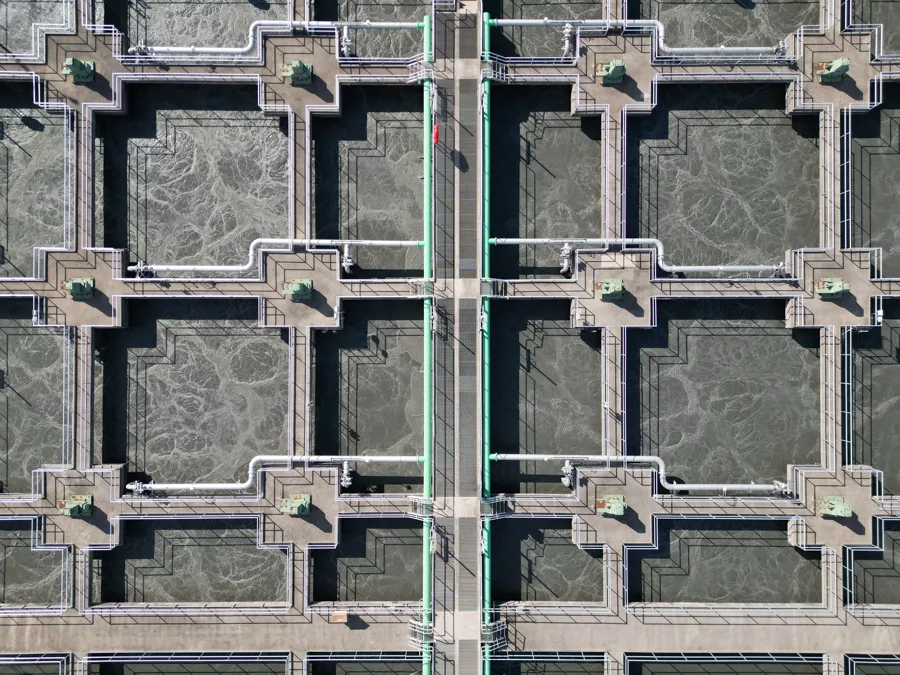
After chemical treatment, large amounts of ultrapure water are needed to rinse off residues. This is where most of the water goes.
Rinse water contains chemicals and must be sorted and treated. The cleaner streams can be recycled and reused.
The main and most critical use of ultrapure water in a semiconductor fab is wafer cleaning, such as rinsing wafers after chemical treatment. Advanced fabs consume millions of gallons of ultrapure water a day, and the more advanced the process, the more raw water it takes to make that ultrapure water (Wikipedia: Ultrapure water).
In other words, much of a fab's water use is set by how many times wafers are cleaned and how much water each rinse uses. A chip is built up from dozens of layers, and each layer goes through several cleaning steps. A small change in how cleaning is done, multiplied by the number of process steps and the production volume, becomes a big difference. You can see where each cleaning step sits in the process on the semiconductor process flow chart.
The 2021 drought: water shortage is a real risk for fabs
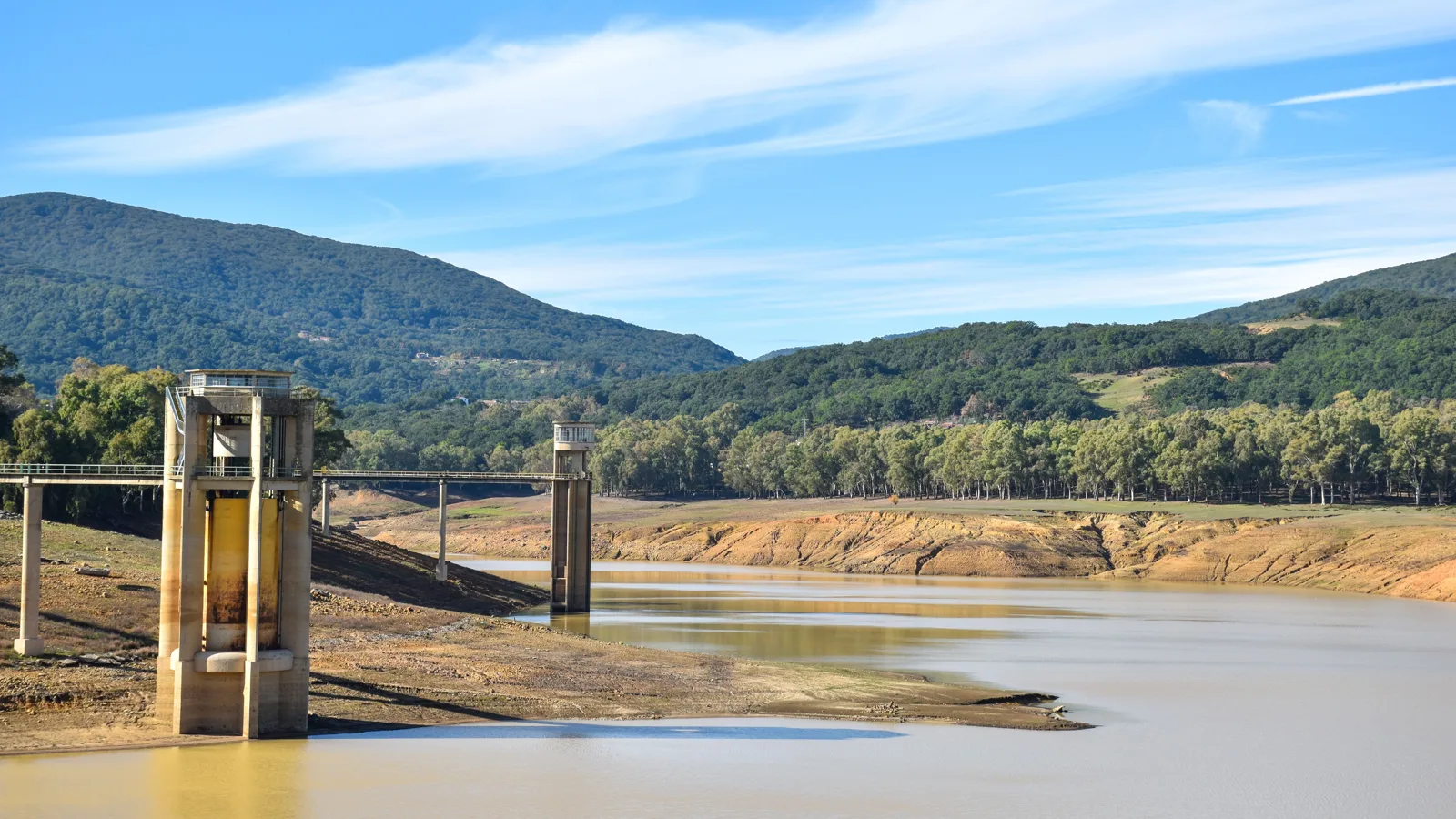
In spring 2021, Taiwan was hit by a severe drought. According to the Taipei Times, the previous year was the first in 56 years with no typhoon making landfall, so reservoirs missed their main source of replenishment. The government imposed water restrictions on more than a million households and businesses in central Taiwan, the three major science parks were told to cut water use, and some fabs began trucking water in (Taipei Times, 2021-04-22).
Source: Taipei Times, 2021-04-22
The drought turned water from an environmental issue into an operational risk: no matter how much capacity a fab has, it cannot produce without water. That is why recycling rates, reclaimed water and lower rinse-water use have become increasingly important ESG metrics for fabs and their supply chains.
Three ways to save water
Method ①
Recycle and reuse: use the same water more than once
Recover the cleaner rinse water, treat it, and send it back to the ultrapure water system or to uses such as cooling and scrubbing. Fabs can also switch to treated municipal wastewater, known as reclaimed waterWhat is reclaimed water?Under Taiwan's Reclaimed Water Resources Development Act, it is wastewater, sewage or effluent that has been treated so it can be reused.Water taken from the sewer system is called “system reclaimed water”; water from other sources (such as a factory's own wastewater) is called “non-system reclaimed water.”。
Saves: water withdrawal
Method ②
Fewer washes, shorter rinses
Review whether every cleaning and rinsing step is really necessary and whether rinse time and flow can be cut. Use sensors to tell when a rinse is “clean enough” instead of always rinsing for a fixed time.
Saves: water and chemical use
Method ③
Switch to waterless dry cleaning
For steps that are sensitive to water, or that only need to remove surface particles and films, switch to dry methods such as CO₂ snow, supercritical CO₂ or plasma, eliminating both rinsing and drying.
Saves: rinse water, drying time and liquid waste
Taiwan also promotes reclaimed water through regulation. Under the Reclaimed Water Resources Development Act, developers required to submit a water use plan must use a set proportion of system reclaimed water according to the approved plan when starting or changing a development; in science parks, industrial parks and other designated zones, the park authority coordinates water demand and facility planning (Reclaimed Water Resources Development Act).
Of the three approaches, the first two deal with “what to do with used water” and “can we use less”; the third makes certain steps need no water at all. How much it saves depends on how many wet cleaning steps it can replace. The next section covers its strengths and limits.
What can dry cleaning save, and what can't it?
| CO₂ snow cleaning | Supercritical CO₂ cleaning | Plasma cleaning | |
|---|---|---|---|
| How it cleans | Ultra-fine CO₂ snow knocks off surface particles and films, then turns straight into gas | CO₂ with the dissolving power of a liquid and the diffusivity of a gas penetrates tight gaps to dissolve contaminants, then returns to gas when depressurized | Plasma in a vacuum chamber breaks down organic matter on the surface |
| What it saves | Rinse water, drying steps, chemicals and wastewater | Organic solvents, rinse water and drying steps | Some of the wet chemistry and rinsing used to remove organics |
| Good at | Surface particles, thin oil films, water-sensitive parts | Porous materials, tight gaps, organic residue | Organic residue, surface activation |
| Limitations | Surface only; CO₂ purity, condensation and static must be controlled | Requires high-pressure equipment; longer process time | Requires vacuum equipment; not good at removing particles and metals |
For how CO₂ snow works and where it is used, see What Is CO₂ Snow Cleaning. Supercritical CO₂ is a state “between liquid and gas”: it fills a container like a gas but has a density close to a liquid, and is already used in industrial cleaning such as dry cleaning (Wikipedia: Supercritical carbon dioxide). For a plain-language explanation, see What Is Supercritical CO₂. For how dry and wet cleaning divide the work, see Dry Cleaning vs Wet Cleaning.
Myth 1: Dry cleaning can fully replace wet cleaning
It can't. Dry cleaning excels at surface particles, films and organics, but dissolving heavy contamination, removing metal residue or treating contamination that has penetrated the material still requires wet cleaning. In practice, the goal is to identify the steps that are worth switching, not to convert an entire line to dry processing.
Myth 2: Cleaning with CO₂ adds to carbon emissions
The CO₂ used for cleaning is mostly recovered from other industrial processes (Wikipedia: Dry-ice blasting), not produced specifically for cleaning, and the equipment can recover it for reuse. For where the CO₂ comes from and how it is recovered, see Where Does Cleaning CO₂ Come From.
Myth 3: Estimated water savings can go straight into a report
Every line has different cleaning frequencies and rinse flow rates. To use water savings as a basis for ESG disclosure, they must be measured with before-and-after comparisons on the actual process.
How should water be reported in an ESG report?
GRI, the sustainability reporting standard widely used internationally, covers water in a dedicated standard, GRI 303: Water and Effluents, with three quantitative disclosures: 303-3 Water withdrawal, 303-4 Water discharge and 303-5 Water consumption. Water withdrawal is reported in megaliters and broken down by source, such as surface water, groundwater, seawater and third-party water (GRI 303: Water and Effluents 2018).
Water withdrawal (303-3)
How much water is drawn from outside sources. Recycling and switching to reclaimed water mainly show up as a drop in this figure and a change in the source mix.
Water discharge (303-4)
How much water is discharged. Reducing rinses and switching to dry cleaning lowers both discharge and the liquid waste that needs treatment.
Water consumption (303-5)
Withdrawal minus discharge: the water actually “used up” and not returned to a water body. It best reflects the real pressure in water-stressed regions.
For fabs and their supply chains, the ESG value of dry cleaning goes beyond “using less water” to include less liquid waste to treat and fewer chemicals. When adopting it, plan measurement from the start: water use, discharge, chemical use and liquid waste before and after the change, so the savings hold up to verification. For approaches that make water “clean better,” such as microbubbles, see Microbubble Cleaning.
FAQ
Why do fabs use so much water?
Most of a fab's water goes to cleaning and rinsing wafers with ultrapure water. A chip has dozens of stacked layers, and each layer goes through multiple cleaning steps, so an advanced fab consumes millions of gallons of ultrapure water a day. Producing ultrapure water itself also takes large amounts of raw water.
How did Taiwan's 2021 drought affect the semiconductor industry?
In 2020, for the first time in 56 years, no typhoon made landfall in Taiwan. By spring 2021, reservoir levels were critically low: over a million households and businesses in central Taiwan faced water restrictions, the three major science parks were asked to cut water use by up to 15%, and some fabs began trucking water in.
Can dry cleaning fully replace wet cleaning?
No. Dry methods such as CO₂ snow, supercritical CO₂ and plasma excel at surface particles, films and organics, saving rinse water, drying and liquid waste. But dissolving heavy contamination, removing metal residue or treating contamination that has penetrated the material still requires wet cleaning. In practice, you pick the steps suited to dry cleaning.
Does cleaning with CO₂ increase carbon emissions?
The CO₂ used for cleaning is mostly recovered from other industrial processes, not produced specifically for cleaning, and equipment can recover it for reuse. CO₂ itself still needs to be managed: work areas need exhaust and concentration monitoring to prevent buildup in enclosed spaces.
What are the water metrics in an ESG report?
The widely used GRI 303 standard has three quantitative disclosures: 303-3 Water withdrawal, 303-4 Water discharge and 303-5 Water consumption. Withdrawal is reported in megaliters and broken down by source. Recycling and reclaimed water mainly show up in withdrawal, while fewer rinses and dry cleaning lower both discharge and liquid waste.
Source
- Wikipedia, “Ultrapure water,” 2026-10-23. Link
- Taipei Times, “Taiwan's worst drought in decades deepens chip shortage jitters (AFP)”, 2021-04-22. Link
- Taipei City Laws and Regulations Database, “Reclaimed Water Resources Development Act (amended May 18, 2022)”, 2026-10-23. Link
- Global Reporting Initiative, “GRI 303: Water and Effluents 2018”, 2026-10-23. Link
- Wikipedia, 'Supercritical carbon dioxide', 2026-10-23. Link
- Wikipedia, "Dry-ice blasting," 2026-10-23. Link