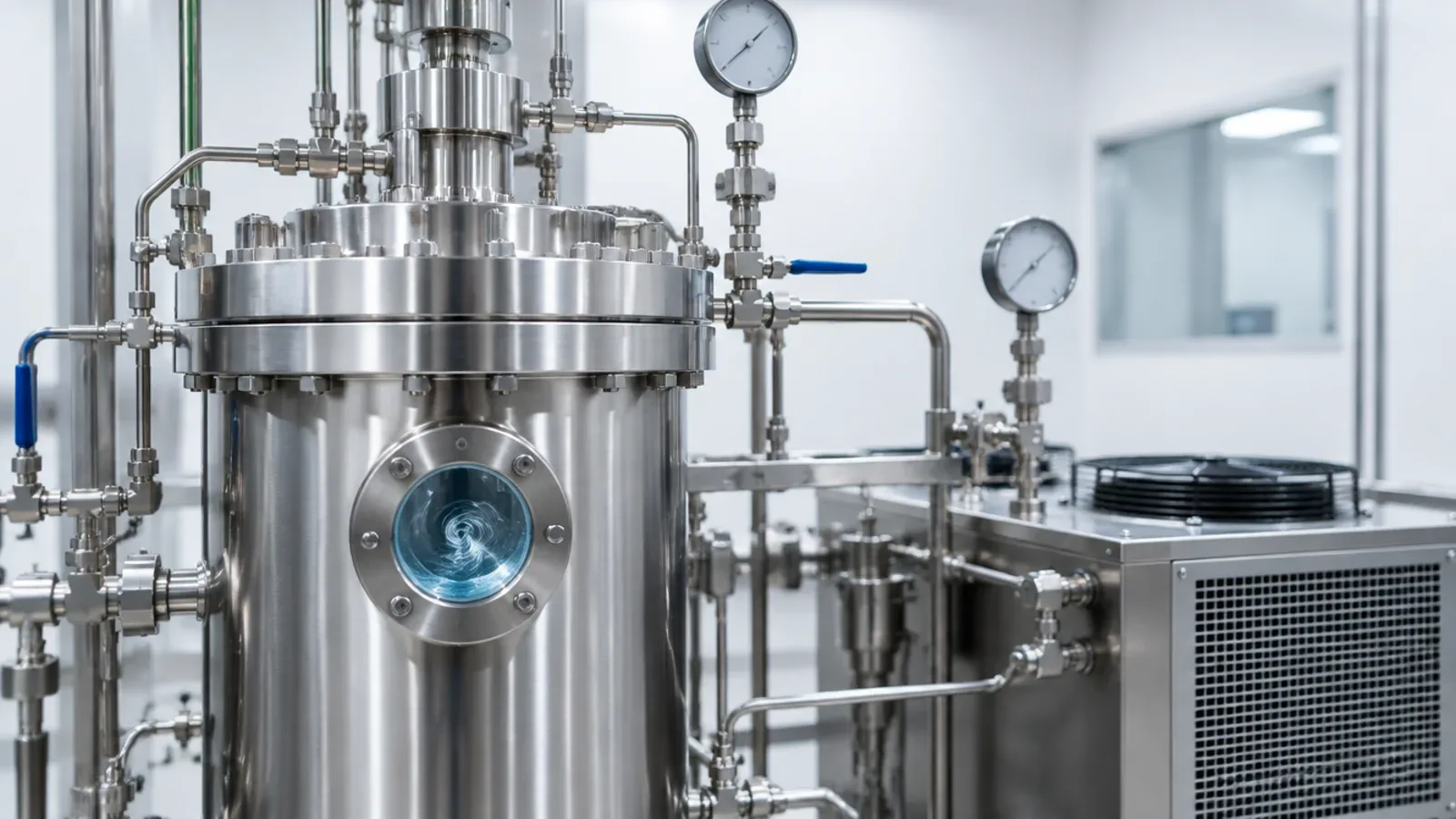
Key takeaways: what is supercritical CO₂?
Supercritical CO₂ is carbon dioxide at temperatures above about 31 °C and pressures above about 7.38 MPa (about 73 atmospheres). At this point the boundary between liquid and gas disappears: it has liquid-like density and strong solvent power, yet low viscosity and fast diffusion, so it penetrates fine pores like a gas, and it has no surface tension. Industry favors CO₂ because its critical temperature is close to room temperature, it is non-flammable, it leaves no toxic solvent residue, and it turns back into gas and leaves on its own once depressurized. Common uses include coffee decaffeination and botanical extraction, precision parts cleaning, and supercritical drying of MEMS and nanostructures (keeping surface tension from pulling down fine structures). It differs from CO₂ snow cleaning: snow is solid particles striking the surface at atmospheric pressure, while supercritical CO₂ penetrates and dissolves contamination inside a sealed high-pressure vessel.
4:01 video: why 2nm nanosheets are vulnerable during drying, plus the principle, history and four on-site steps of supercritical CO₂ drying. For the full write-up, see “The drying challenge of 2nm nanosheets”.
4:47 video: why 2nm nanosheets are vulnerable during drying, plus the principle, history and four on-site steps of supercritical CO₂ drying. For the full write-up, see “The drying challenge of 2nm nanosheets”.
What is supercritical CO₂? The four forms of CO₂
In one sentence: supercritical CO₂ is a special state of carbon dioxide heated above about 31 °C and pressurized above about 74 atmospheres: neither liquid nor gas but a hybrid of the two, able to slip into fine gaps like a gas and dissolve dirt like a liquid.
About −78.5 °C at atmospheric pressure; it doesn't melt into liquid but turns straight into gas (sublimation).
Exists only under pressure, e.g. CO₂ in a cylinder at room temperature and high pressure.
The carbon dioxide in air and the bubbles in soda.
Once past the critical pointWhat is the critical point?If you heat and pressurize a substance, above a certain temperature and pressure the boundary between liquid and gas disappears. That turning point is called the critical point.For CO₂ it is about 31 °C and 73.8 bar (7.38 MPa, about 73 atmospheres)., liquid and gas can no longer be told apart, and the fluid has the properties of both.
According to the US National Institute of Standards and Technology (NIST), CO₂ has a critical temperature of about 304.18 K (about 31 °C) and a critical pressure of about 73.8 bar (about 7.38 MPa) (NIST Chemistry WebBook). Above both, CO₂ fills its entire container like a gas but has a density close to a liquid (Wikipedia: Supercritical carbon dioxide).
CO₂ in a sealed tube, heated and pressurized
Liquid below, gas above, with a clear liquid surface
The liquid thins and the gas thickens until they look alike
The surface vanishes and the tube turns hazy white
A single fluid, uniform throughout the tube
Another point you often hear about is the triple pointWhat is the triple point?The one temperature and pressure at which solid, liquid and gas can all coexist.For CO₂ it is about −56.6 °C and 5.2 bar. Below this pressure CO₂ has no liquid state, and dry ice turns directly into gas.: about −56.6 °C and 5.2 bar (same NIST source). Below the triple-point pressure CO₂ cannot exist as a liquid, which is why dry ice on a table just 'smokes' instead of melting into a puddle.
Why it 'penetrates like a gas and dissolves like a liquid'
| Gas | Liquid | Supercritical fluid | |
|---|---|---|---|
| Density (source of solvent power) | Low | High | Close to liquid; strong solvent power |
| Viscosity | Low; flows easily | High | Close to gas; flows easily |
| Diffusion rate | Fast | Slow | Fast; penetrates porous materials |
| Surface tension | None | Yes | None |
| Tunable? | — | — | Solvent power adjustable via pressure and temperature |
A supercritical fluid can pass through porous solids like a gas, avoiding the problem of liquids that can't flow through fine pores; and because of its low viscosity and fast diffusion, extraction with it is usually faster than with liquids (Wikipedia: Supercritical fluid).
Even more distinctive is that it is 'tunable': near the critical point, a small change in pressure or temperature causes a large change in density, and solvent power changes with it. So the same CO₂ can be tuned to target different contaminants or components, deciding what gets dissolved and what stays behind.
In addition, because a supercritical fluid has no 'liquid surface', it also has no surface tensionWhat is surface tension?The surface of a liquid acts like a 'stretched membrane' that pulls the liquid inward; round water droplets and insects standing on water are both caused by surface tension.As a liquid dries, this pull can bend or topple tiny structures; a supercritical fluid has no liquid surface, so it has no surface tension.. This makes it especially useful for drying fine structures, as explained below.
Why CO₂ in particular? 4 reasons
Reason ①
Critical temperature near room temperature
CO₂'s critical temperature is only about 31 °C, so slight heating brings it into the supercritical state without heating the workpiece to high temperatures — gentler on heat-sensitive materials.
For comparison: water's critical point is about 374 °C, 22 MPa
Reason ②
Relatively low pressure threshold
Its critical pressure of about 7.38 MPa is far lower than water's. Equipment still needs pressure vessels, but the threshold is easier to reach.
Still high-pressure equipment; must be designed to pressure vessel codes
Reason ③
Non-flammable, relatively low toxicity
Compared with organic solvents such as hexane and acetone, CO₂ is non-flammable and leaves no toxic solvent residue after extraction.
The main reason it replaces organic solvents
Reason ④
Turns back into gas on its own
Once depressurized, CO₂ turns back into gas and leaves; the dissolved substances stay in the vessel, the workpiece comes out dry with no baking needed, and the CO₂ can be collected and reused.
Dry in, dry out, no liquid waste
Almost any fluid can become supercritical, but for most the conditions are too extreme to be practical. Water's critical point, for example, is about 374 °C and 22 MPa; the high temperature can damage workpieces and causes corrosion problems. CO₂ is one of the most widely used supercritical fluids in industry (Wikipedia: Supercritical drying).
What is supercritical CO₂ used for?
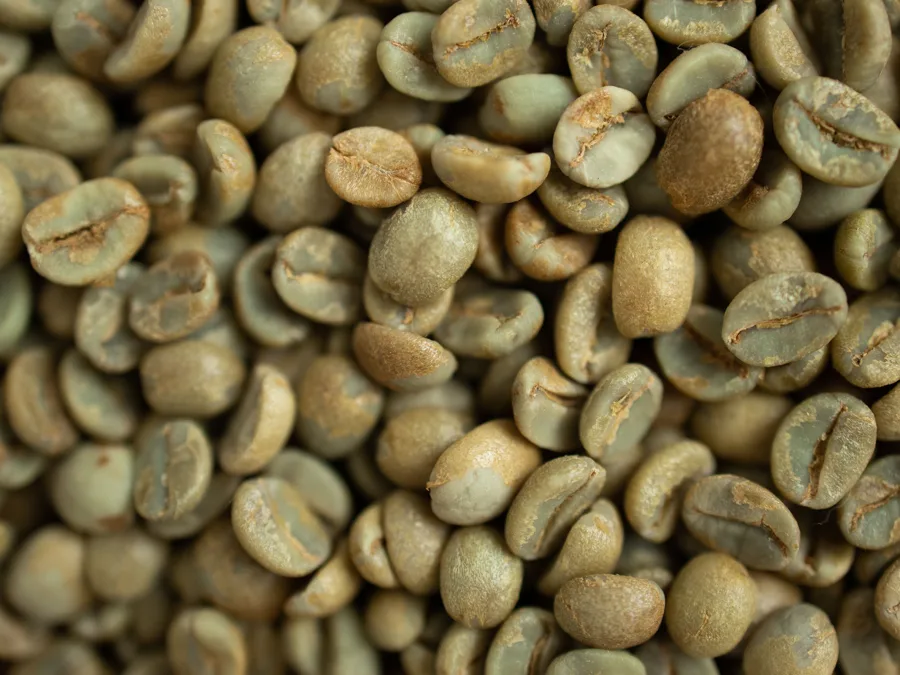
The best-known use of supercritical CO₂ is decaffeination: supercritical CO₂ flows through green coffee beans and carries the caffeine out (Wikipedia: Supercritical carbon dioxide). The same principle is used to extract hops, essential oils and medicinal plant compounds (Wikipedia: Supercritical fluid).
Use ①
Coffee decaffeination and essential oil extraction
Supercritical CO₂ is forced through green coffee beans to carry out the caffeine; it is also widely used to extract essential oils, hops and other plant compounds. It replaces organic solvents because it is non-flammable and leaves no toxic residue.
The largest industrial use
Use ②
Precision parts cleaning
Supercritical CO₂ dissolves grease and organic contamination from parts, replacing organic solvents and reducing solvent use and liquid waste. US national laboratories published research on this as early as the 1990s.
Especially suited to parts with fine pores and gaps
Use ③
Drying MEMS and nanostructures
With supercritical dryingWhat is supercritical drying?Fine structures are first immersed in a liquid, the liquid is then replaced with supercritical CO₂, and finally the pressure is released so the CO₂ leaves directly as gas.The whole process skips the 'liquid slowly drying' step, so there is no surface tension to topple the structures., the surface tension of a drying liquid can't snap the tiny mechanical structures in MEMS or cause pattern collapse in the fine lines on a chipWhat is pattern collapse?When photoresist or structures on a chip are made very thin and tall, the moment the rinse water dries after cleaning, surface tension can pull neighboring lines together or even knock down entire rows.The narrower the line width and the higher the aspect ratio, the more likely it is., which matters more as structures get finer.
Semiconductor relevance: cleaning and drying fine structures
Use ④
Dry cleaning of clothes
CO₂ is also used in dry cleaning to replace conventional dry-cleaning solvents. However, most real CO₂ dry-cleaning machines use liquid CO₂ rather than supercritical CO₂, to avoid damaging buttons.
Another use in the CO₂ family
In cleaning and semiconductor-related fields, Los Alamos National Laboratory in the US published a report in 1994 on using supercritical CO₂ for precision cleaning to reduce solvents and waste (OSTI report); supercritical drying is used in MEMS fabrication (Wikipedia: Supercritical drying), and research has also used it to fabricate nanostructures without pattern collapse (Namatsu et al., Microelectronic Engineering, 199900033-7)).
How does supercritical CO₂ differ from CO₂ snow cleaning?
| CO₂ snow cleaning | Supercritical CO₂ | |
|---|---|---|
| State of CO₂ | Solid (ultra-fine CO₂ snow) | Supercritical fluid |
| How it cleans | Snow impact knocks particles off the surface | Penetrates pores and dissolves contaminants |
| Reach | Workpiece surface | Surface plus the interior of porous materials |
| Equipment type | Sprayed at atmospheric pressure; can be integrated inline | Sealed pressure vessel; batch processing |
| Good at | Surface particles, thin oil films, spot cleaning | Organic contamination, residue in pores, drying fine structures |
Simply put, snow 'strikes' and supercritical 'dissolves'. If you need to remove surface particles and can't use water, look at CO₂ snow cleaning; only when contamination is trapped inside the material, or structures are fine enough to fear surface tension, do you need supercritical CO₂. Where cleaning sits across the whole process is shown in the semiconductor process flowchart. For how to choose among the three CO₂ cleaning methods, see three CO₂ cleaning methods compared; for cleaning and reusing chemical filters with supercritical CO₂, see chemical filter regeneration.
It is high-pressure equipment
Supercritical CO₂ operates above about 7.38 MPa, so vessels, piping and valves must be designed and inspected to pressure vessel codes. This is not an ordinary cleaning tank.
CO₂ must be controlled too
CO₂ is heavier than air; high concentrations building up in enclosed spaces can cause headaches, dizziness and even asphyxiation. The UK HSE sets workplace exposure limits of 5,000 ppm as an 8-hour average and 15,000 ppm as a 15-minute average (HSE). The area around the equipment needs exhaust and concentration monitoring.
Run sample tests before deciding
The right temperature, pressure and treatment time vary widely by contaminant. Before adoption, test with actual workpieces and measure contamination and material condition before and after cleaning.
FAQ
What is supercritical CO₂?
Supercritical CO₂ is carbon dioxide at temperatures above about 31 °C and pressures above about 7.38 MPa (about 73 atmospheres). At this point the boundary between liquid and gas disappears: it has liquid-like density and strong solvent power, flows easily and penetrates fine pores like a gas, and has no surface tension.
What are the critical point and triple point of CO₂?
According to NIST, CO₂'s critical point is about 304.18 K (about 31 °C) and 73.8 bar (about 7.38 MPa); its triple point is about 216.58 K (about −56.6 °C) and 5.2 bar. Below the triple-point pressure CO₂ has no liquid state, which is why dry ice turns directly into gas.
Why is CO₂, rather than water, the usual supercritical fluid?
CO₂'s critical temperature is only about 31 °C and its critical pressure about 7.38 MPa, which are mild conditions; water's critical point is about 374 °C and 22 MPa, and the high temperature damages workpieces and causes corrosion. CO₂ is also non-flammable, leaves no toxic solvent residue, and turns back into gas on its own when depressurized.
How is supercritical CO₂ different from CO₂ snow cleaning?
CO₂ snow cleaning sprays ultra-fine dry ice particles onto a surface at atmospheric pressure and knocks particles off by impact; supercritical CO₂ works inside a sealed pressure vessel, where CO₂ penetrates pores and dissolves contaminants. Snow excels at surface particles; supercritical CO₂ excels at organic contamination, residue in pores and drying fine structures.
Why does supercritical drying prevent pattern collapse?
When an ordinary liquid dries, surface tension bends or topples tiny structures. Supercritical drying replaces the liquid with supercritical CO₂ and then releases the pressure so it turns directly into gas. There is no liquid surface during the process and therefore no surface tension, so tiny MEMS structures and fine lines on chips are not pulled down.
Source
- NIST Chemistry WebBook, 'Carbon dioxide: Phase change data', 2026-10-23. Link
- Wikipedia, 'Supercritical carbon dioxide', 2026-10-23. Link
- Wikipedia, 'Supercritical fluid', 2026-10-23. Link
- Wikipedia, 'Supercritical drying', 2026-10-23. Link
- Microelectronic Engineering, 'Namatsu et al., Supercritical drying for nanostructure fabrication without pattern collapse, 46:129–132', 1999-05. Link
- OSTI (Los Alamos National Laboratory), 'Elimination of solvents and waste by supercritical carbon dioxide in precision cleaning', 1994-10-01. Link
- UK Health and Safety Executive, "General hazards of Carbon Dioxide," 2026-10-23. Link