AWafer carrier: each wafer sits in its own slot, standing upright and parallel, so a whole batch soaks together. BThe robot arm moves the carrier to the next tank in order.
- SC-1Ammonia + hydrogen peroxide + DI water, about 75–80 °C; removes organics and particles
- DI water rinseRinses off the chemicals
- Dilute HF (optional)Strips the thin oxide layer on the wafer surface
- DI water rinseRinses off the chemicals
- SC-2Hydrochloric acid + hydrogen peroxide + DI water; removes metal ions
- DI water rinseRinses off the chemicals
- DryDries the wafers without water marks
Key takeaways: how do dry and wet cleaning differ?
Wet cleaning cleans wafers by immersing them in or spraying them with liquid. Common methods include RCA cleaning (SC-1 removes organics and particles, SC-2 removes metal ions, optionally with dilute hydrofluoric acid in between to strip oxide), SPM (sulfuric acid + hydrogen peroxide, for photoresist and heavy organics), ozonated water and microbubbles, and physical cleaning with ultrasonic or megasonic energy. It excels at dissolving large amounts of contamination and removing metals, but requires rinsing and drying and produces liquid waste. Dry cleaning uses no liquid. Common methods include plasma cleaning (breaks down organics), CO₂ snow cleaning (knocks off surface particles), supercritical CO₂ cleaning (penetrates fine structures to dissolve organics) and clean gas purging (controls moisture and AMC). It is dry in, dry out with little liquid waste and suits water-sensitive structures, but is mostly poor at removing metals. Advanced processes usually combine the two — for example, plasma ashing to strip photoresist followed by wet cleaning to remove residue.
How do wet and dry differ?
In one sentence: semiconductor cleaning falls into two camps: wet means 'cleaning in liquid', using water and chemicals to dissolve and carry contamination away; dry means 'cleaning without liquid', using gas, plasma or CO₂ to knock off or break down contamination. Each has its strengths, and advanced processes usually use them together.
Wet cleaning
Cleaning in liquid
- Uses ultrapure water, acids, bases, oxidizers and other liquids
- Can immerse a whole batch of wafers at once, or spray single wafers
- Requires rinsing and then drying
Strengths: dissolving large amounts of contamination, removing metal ions
Dry cleaning
Cleaning without liquid
- Uses plasma, CO₂ snow, supercritical CO₂, clean gas, etc.
- Wafers go in dry and come out dry
- No drying needed, very little liquid waste
Strengths: organics, water-sensitive structures, spot cleaning
What needs to be cleaned off a wafer falls roughly into four categories: particles (dust, debris), organics (photoresist residue, grease), metal ions (iron, copper, sodium, etc.), and native oxide. Different contamination requires different methods, and no single cleaning method handles everything — which is why there are so many.
Wet cleaning has the longest history and the most production experience, but uses a lot of water, generates liquid waste, and some devices can't be exposed to water. Dry cleaning was developed to fill these gaps; the two don't replace each other but divide the work.
Wet cleaning: 4 common methods
Wet ①
RCA cleaning (SC-1, SC-2)
The industry's classic wafer cleaning sequence, developed in 1965 by Werner Kern at RCA. SC-1 (ammonia + hydrogen peroxide + DI water, about 75–80 °C) removes organics and particles by changing the zeta potentialWhat is zeta potential?A number describing how much charge small particles in water or a wafer surface carry.SC-1 gives the wafer surface and particles the same charge so they repel each other, making it hard for particles to reattach.to push particles away; SC-2 (hydrochloric acid + hydrogen peroxide + DI water) removes metal ions. A dilute hydrofluoric acid (HF) step can be added between the two to remove the thin surface oxide.
Best for: thorough cleaning before high-temperature steps
Wet ②
SPM (sulfuric acid + hydrogen peroxide)
Also called 'piranha solution', it is an extremely strong oxidizer that breaks down most organics and is commonly used to strip photoresist and heavy organic contamination. The downsides: it is highly corrosive, requires high temperatures, can react violently when contamination is heavy, and creates a heavy waste treatment burden. See how photoresist stripping works.
Best for: photoresist, heavy organic contamination
Wet ③
Ozonated water, microbubbles
Ozone dissolved in water breaks down organics through its oxidizing power and OH radicals, then reverts to oxygen and water after reacting, reducing strong acid use. Combined with microbubbles, it can capture particles and dissolve more gas. See ozonated water and microbubble cleaning.
Best for: organic residue, processes aiming to cut chemical use
Wet ④
Ultrasonic, megasonic
Acoustic vibration is added to the cleaning liquid. Ultrasonic uses lower frequencies and relies on the impact of cavitationWhat is cavitation?When pressure in a liquid swings up and down, tiny bubbles form and then instantly collapse, releasing a strong impact at the moment of collapse.Ultrasonic cleaning relies on this impact, but too much force can damage fine structures.to remove dirt, with strong force; megasonic uses much higher frequencies, with less cavitation and a gentler action, and is the version commonly used for wafers. Both finish with an ultrapure water rinse and drying.
Best for: particle removal, used together with other liquids
For RCA cleaning steps and formulations, see Wikipedia: RCA clean; for SPM, see Wikipedia: Piranha solution; for the difference between ultrasonic and megasonic, see Wikipedia: Megasonic cleaning. Whatever the wet cleaning method, the last step is always rinsing and drying: if rinsing is insufficient or drying is done poorly, contamination on the water surface can reattach to the wafer and undo all the earlier cleaning.
Dry cleaning: 4 common methods
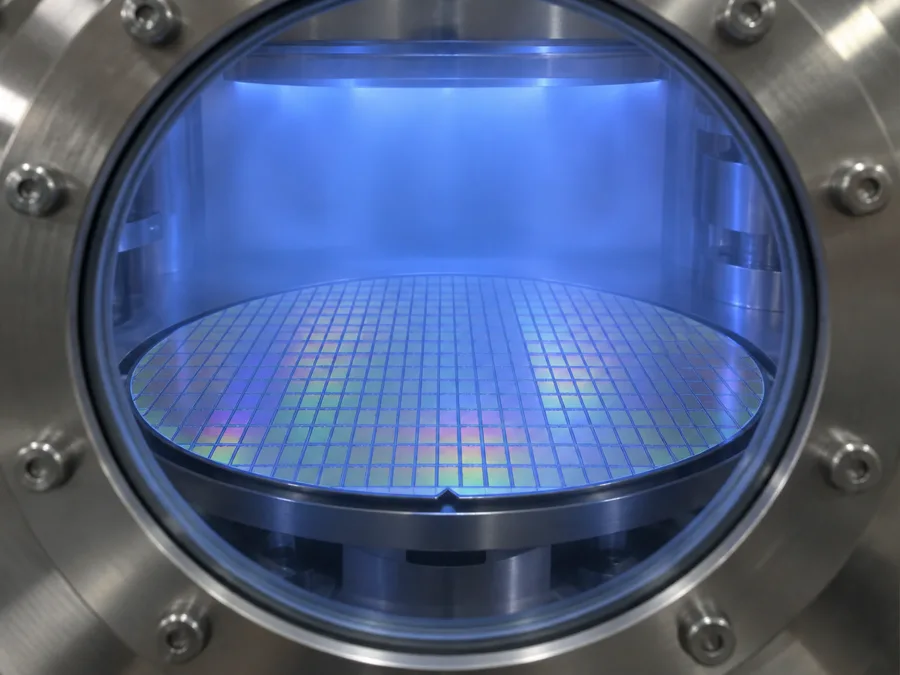
What dry cleaning methods have in common is that wafers go in dry and come out dry, with no rinsing or drying and almost no liquid waste. For how plasma cleaning works, see Wikipedia: Plasma cleaning: reactive oxygen in an oxygen plasma reacts with organics to form water, carbon monoxide, CO₂ and other gases that are easily pumped away.
Dry ①
Plasma cleaning
In a low-pressure chamber, gas (such as oxygen or argon) is turned into plasma; its reactive species and UV light break the chemical bonds of organics, converting them into water, CO₂ and other gases that are pumped away. Commonly used for photoresist stripping (plasma ashing) and surface organic cleaning.
Good at: organics; poor at: metals, inorganic particles
Dry ②
CO₂ snow cleaning
Liquid CO₂ is sprayed as ultra-fine CO₂ snow that knocks off particles and thin oil films by impact, then turns straight into gas — no water, no drying. See CO₂ snow cleaning.
Best for: fine surface particles, water-sensitive devices
Dry ③
Supercritical CO₂ cleaning
Uses supercritical CO₂What is supercritical CO₂?When CO₂ is heated and pressurized past a certain point (about 31 °C, 7.4 MPa), it enters a state that is 'neither gas nor liquid'.Like a gas it can slip into very fine gaps, and like a liquid it can dissolve things; once the pressure is released it turns back into gas, leaving no residue.to penetrate fine structures and dissolve organics, turning back into gas as soon as the pressure drops. With no surface tension, it suits fine structures that a liquid could 'pull apart'. See What is supercritical CO₂.
Best for: organics in porous materials and fine structures
Dry ④
Clean gas purging
A continuous flow of dry nitrogen or other inert gas drives moisture and airborne molecular contamination (AMC) out of wafer pods and tools. It doesn't 'wash off' contamination; it 'keeps it from settling'. See What is AMC.
Best for: day-to-day control of moisture and AMC
The weakness of dry cleaning is metal ions and inorganic contamination: neither plasma nor CO₂ can really 'dissolve' metals, so this kind of contamination mostly still requires wet cleaning.
One map: which method for which contamination?
| Method | Type | Best for | What to watch for |
|---|---|---|---|
| RCA cleaning (SC-1/SC-2, optional dilute HF) | Wet | Particles, organics, metal ions; dilute HF removes native oxide | Hot chemicals, high water use, requires rinsing and drying; HF is highly corrosive |
| SPM (sulfuric acid + hydrogen peroxide) | Wet | Photoresist, heavy organics | Highly corrosive, high temperature, heavy waste treatment burden |
| Ozonated water, microbubbles | Wet | Organic residue, particles | Ozone requires exhaust and detection; effectiveness depends on equipment integration |
| Ultrasonic, megasonic | Wet (physically assisted) | Particles | Too much force can damage fine structures |
| Plasma cleaning | Dry | Organics, photoresist | May leave residue; poor at metals and inorganics |
| CO₂ snow cleaning | Dry | Fine surface particles, thin oil films | CO₂ purity, condensation, static, CO₂ safety |
| Supercritical CO₂ cleaning | Dry | Organics in fine structures and porous materials | High-pressure equipment; longer processing time |
| Clean gas purging | Dry | Moisture, AMC | It 'controls' rather than 'washes off' |
The order for choosing a method is simple: first ask what kind of contamination needs removing, then ask what the underlying materials and structures can't tolerate (water, acid, high temperature, impact), and only then look at cost and ESG factors such as throughput, water use and liquid waste.
Why do advanced processes combine dry and wet?
No single method removes every contaminant
Plasma removes organics quickly but leaves inorganic residue; wet cleaning removes metals but uses lots of chemicals. A common combination is plasma ashing to remove most of the photoresist, followed by a wet cleaning step to finish.
The finer the structure, the more it fears liquid
As line widths shrink and structures grow taller, surface tension during liquid drying can topple or stick fine structures together. That's when you switch to dry methods or supercritical CO₂, which have no surface tension.
Pressure on water use and liquid waste
Fabs use a lot of water, and the cost of treating chemical waste keeps rising. Every step that can be switched to dry cleaning saves water and cuts liquid waste — a plus for ESG as well.
To dig deeper into a particular method, start here: three ways to strip photoresist, ozonated water, microbubble cleaning, CO₂ snow cleaning, supercritical CO₂, and the comparison of how to choose among three CO₂ cleaning methods; for the water use and ESG angle, see waterless cleaning.
FAQ
What is the difference between dry cleaning and wet cleaning?
Wet cleaning immerses wafers in or sprays them with liquid (ultrapure water, acids, bases, oxidizers); it excels at dissolving large amounts of contamination and removing metal ions, but requires rinsing, drying and waste treatment. Dry cleaning uses no liquid, relying instead on plasma, CO₂ snow, supercritical CO₂ or clean gas; wafers go in and come out dry with little liquid waste, and it suits water-sensitive structures, but it is mostly poor at removing metals.
What is RCA cleaning?
RCA cleaning is the standard wafer cleaning sequence developed in 1965 by Werner Kern at RCA. Step one, SC-1 (ammonia + hydrogen peroxide + DI water), removes organics and particles; an optional dilute hydrofluoric acid step removes the thin oxide; step three, SC-2 (hydrochloric acid + hydrogen peroxide + DI water), removes metal ions; and finally the wafer is rinsed with DI water and dried.
What is the difference between ultrasonic and megasonic cleaning?
Both add acoustic vibration to the cleaning liquid. Ultrasonic uses lower frequencies and cleans through the impact of collapsing cavitation bubbles, with strong force; megasonic uses much higher frequencies, with less cavitation and a gentler action, and is better suited to precision surfaces such as wafers.
Can dry cleaning fully replace wet cleaning?
Not yet. Dry cleaning excels at organics, surface particles and water-sensitive structures, but metal ions and inorganic contamination mostly still require wet cleaning. Advanced processes usually combine the two — for example, plasma ashing to strip photoresist followed by wet cleaning to remove residue.
Why are there so many semiconductor cleaning methods?
Because the contamination to be removed varies (particles, organics, metal ions, oxide), and the underlying materials and structures each have their own weaknesses (water, acid, high temperature, impact). No single method handles everything, so methods are combined according to the contamination and materials involved.