Key takeaways: How to choose a micro-nano bubble generator?
Start with the application, then pick the method. There are two types of generator. Pressurized dissolution generators use a pump to force gas into water, then release the pressure so the gas comes out as bubbles. They produce a high bubble density, can use oxygen or ozone, and can be built with metal-free wetted parts, which makes them a good fit for semiconductor cleaning. Nozzle air-intake generators draw in air and form bubbles using only the water pressure already in the line. They need no power or gas supply and mount directly in the piping, which makes them a good fit for machining fluids and general cleaning. Microbubbles (1–100 µm) shrink and dissolve, so they are good for adsorbing contaminants and dissolving gas. Nanobubbles (below 1 µm) can stay in water for tens of days. With micro-nano bubbles added, rinse water carries particles away more easily and machining fluids cool and lubricate more evenly. Confirm the actual effect with a comparison test on your own equipment. When selecting a unit, check that flow rate and pressure match, install it close to the nozzle, and confirm the wetted materials and utility requirements.
What is a micro-nano bubble generator?
In one sentence: a micro-nano bubble generator turns gas into large numbers of 1–100 µm microbubbles or sub-1 µm nanobubbles; the key to selection is not “more bubbles is better” but matching the application, flow and pressure, and installation location.
Under the ISO definition, bubbles from 1 µm up to but not including 100 µm are microbubbles, and bubbles smaller than 1 µm are ultrafine bubbles, often called nanobubbles (FBIA). Why microbubbles clean (they adsorb contaminants, help more gas dissolve, and release OH radicals when they collapse) is illustrated in Microbubble Cleaning, so we won't cover it again here. This article focuses on how to choose the equipment, where to use it, and how to install it.
What generation methods are there? Pressurized dissolution vs nozzle aspiration
Generators on the market fall into two broad types. The first is pressurized dissolutionWhat is pressurized dissolution?Think of soda: lots of gas is “forced” into water under high pressure, and when the cap comes off and pressure drops, the gas that can no longer stay dissolved comes out as bubbles.A pressurized dissolution generator uses a pump to pressurize water and gas together, then suddenly depressurizes at the nozzle, releasing large numbers of fine bubbles.: it needs a pump and gas supply, produces dense, fine bubbles, and can be built with all wetted parts in fluoropolymer for a metal-free design, making it the mainstream choice for semiconductor wet cleaning. The second is nozzle aspiration / cavitationWhat is cavitation?Where pressure suddenly drops very low, water spontaneously “forms” bubbles; when pressure recovers, those bubbles quickly collapse.Aspiration / cavitation generators deliberately create this pressure change inside the nozzle so the water produces large numbers of micro- and nanobubbles.: water pressure alone drives flow through special structures inside the nozzle (a common combination is static mixing, a VenturiWhat is a Venturi?A tube that “narrows in the middle.” As water reaches the narrow section it speeds up and its pressure drops, and the low pressure draws in surrounding air or shears bubbles apart.It is the same principle as pressing your thumb over a hose to make the water spray faster. and swirl flow), creating negative pressure inside the nozzle that draws in air and shears it into bubbles, with no separate power, compressed air or exhaust needed.
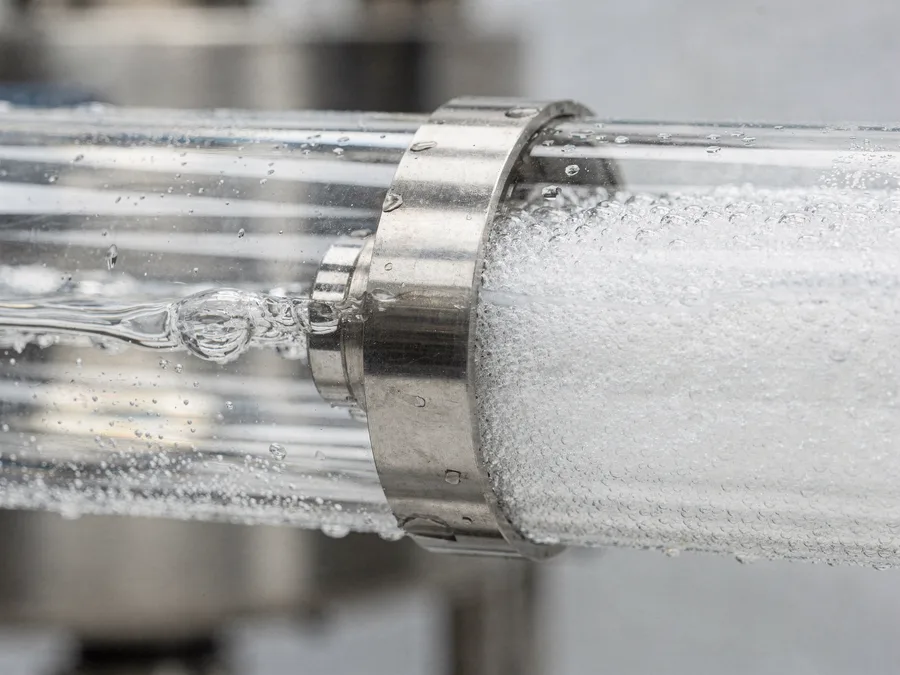
Nozzle aspiration
Mounted on the line, water turns white as it flows through
As long as the line has enough water pressure, water flowing through the nozzle draws in air on its own and forms microbubbles. No power, compressed air, or exhaust is needed. The unit is compact and can be installed directly in existing piping or just before a nozzle.
Best for: process fluids, rinse water, ultrasonic tank make-up water
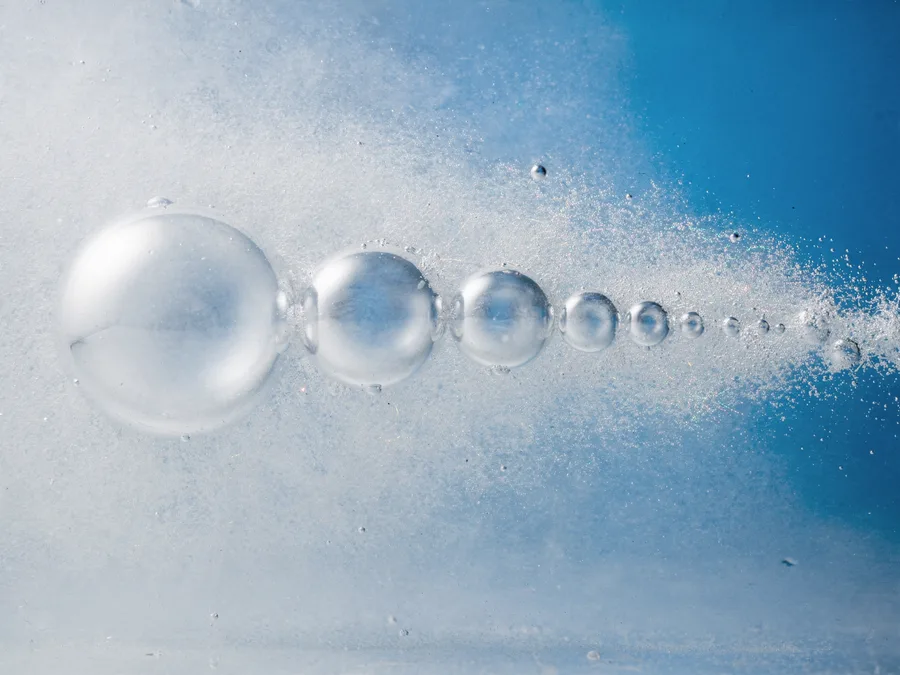
Pressurized dissolution
Force gas into water first, then release it all at once
Requires a pump, gas and power, and the equipment is larger, but you can freely choose the gas (oxygen, nitrogen, ozone), bubble density is high, and wetted parts can be entirely PFA, PTFE or other fluoropolymers, meeting front-end semiconductor metal contamination requirements.
Best for: wafer and carrier cleaning, ozone microbubble photoresist stripping
All images are AI-generated illustrations
| Pressurized dissolution | Nozzle aspiration / cavitation | |
|---|---|---|
| Principle | A pump dissolves gas into water under pressure; sudden depressurization at the nozzle releases bubbles | Water pressure through internal nozzle structures creates negative pressure, drawing in air and shearing it into bubbles |
| Utilities required | Power, pump, gas (oxygen, nitrogen, ozone, etc.) | Needs only line water pressure, with no power or compressed air |
| Bubble characteristics | Dense, fine microbubbles | Microbubbles accompanied by large numbers of nanobubbles |
| Usable gases | Free choice, including ozone | Mainly air; CO₂ or ozone can also be mixed in at the intake |
| Equipment size | Larger, standalone unit | Small, installed inline or just before a nozzle |
| Wetted materials | Can be all-fluoropolymer, metal-free | Mostly metal or resin nozzles; verify separately for front-end semiconductor use |
| Best for | Wafer and carrier cleaning, photoresist stripping | Process fluid cooling and lubrication, rinsing, ultrasonic cleaning |
The Fine Bubble Industries Association (FBIA) in Japan also lists swirl-flow, micropore and heated-precipitation methods (FBIA), but the two types above remain the most common in industrial cleaning and machining.
Microbubbles or nanobubbles?
| Microbubbles (MB) | Nanobubbles (UFB) | |
|---|---|---|
| Size | 1~100 µm | Under 1 µm |
| Appearance | Water looks milky white | Clear, invisible to the naked eye |
| Lifetime in water | Shrink and dissolve within minutes | Can stay in water for a long time |
| Good at | Adsorbing particles and oil, dissolving large amounts of oxygen or ozone into water | Penetrating tight gaps, dispersing liquids more evenly, sustaining effects over time |
| Best for | Cleaning, ozone water, dissolved oxygen | Precision process fluids, pipe flushing, functional water that must keep for a long time |
In practice, nozzle air-intake generators usually produce large numbers of nanobubbles along with microbubbles, and by count, nanobubbles are often the majority. Nanobubbles are invisible to the naked eye. When comparing generators, ask suppliers for data measured by NTAWhat is NTA (nanoparticle tracking analysis)?A laser illuminates nanoparticles in water and a camera tracks each one's movement to calculate their size and count.Nanobubbles are invisible to the naked eye, so they are usually measured with this instrument.on bubble size, concentration, and retention time, and check the water pressure and water quality used during the measurement.
In general, the smaller the bubbles, the higher their zeta potentialWhat is zeta potential?A number expressing how much electric charge is on the surface of small particles or bubbles in water.The more charge, the more strongly particles repel each other and the less they clump; so a high zeta potential means the liquid is more evenly and stably dispersed., so oil droplets and particles in the fluid are less likely to clump together. As a result, machining coolant with micro-nano bubbles emulsifies more finely and evenly.
Where Are They Used? 5 Common Applications
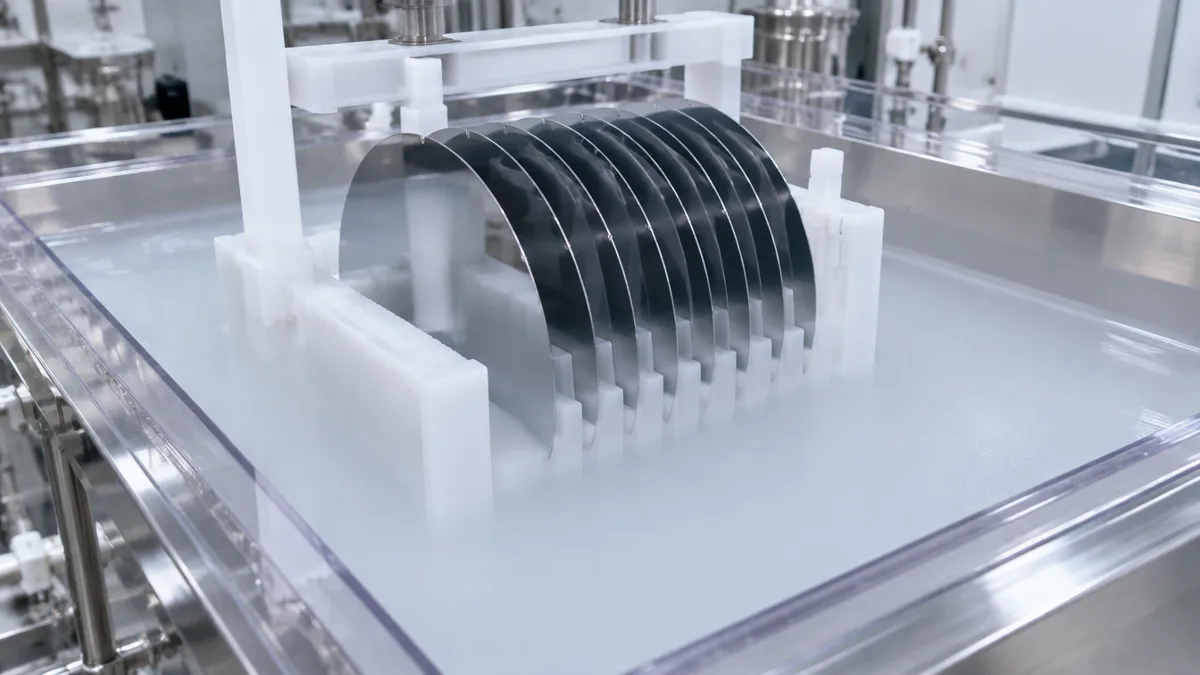
Wafer and Carrier Cleaning
The main use in semiconductors: cleaning wafers and wafer carriers
When microbubbles are added to a wet cleaning bath or rinse water, they adsorb particles on the wafer surface, so the particles are carried away by the water flow and are less likely to redeposit. With ozone microbubbles, the OH radicals released as the bubbles collapse can also break down organic residues, which is why they are commonly used for photoresist stripping and surface organic removal. The industry is also evaluating them for cleaning wafer carriers such as FOUPs, but results depend on how well they are integrated with the cleaning tool's flow rate and pressure differential.
Front-end processes are highly sensitive to metal contamination, so these applications usually use the pressurized dissolution type, with every wetted part made of fluoropolymers such as PFA and PTFE. For an illustrated explanation of how it works, see Microbubble Cleaning.
Key point: choose a model with metal-free wetted parts, and pick oxygen, nitrogen, or ozone based on the contaminant
Precision grinding and cutting
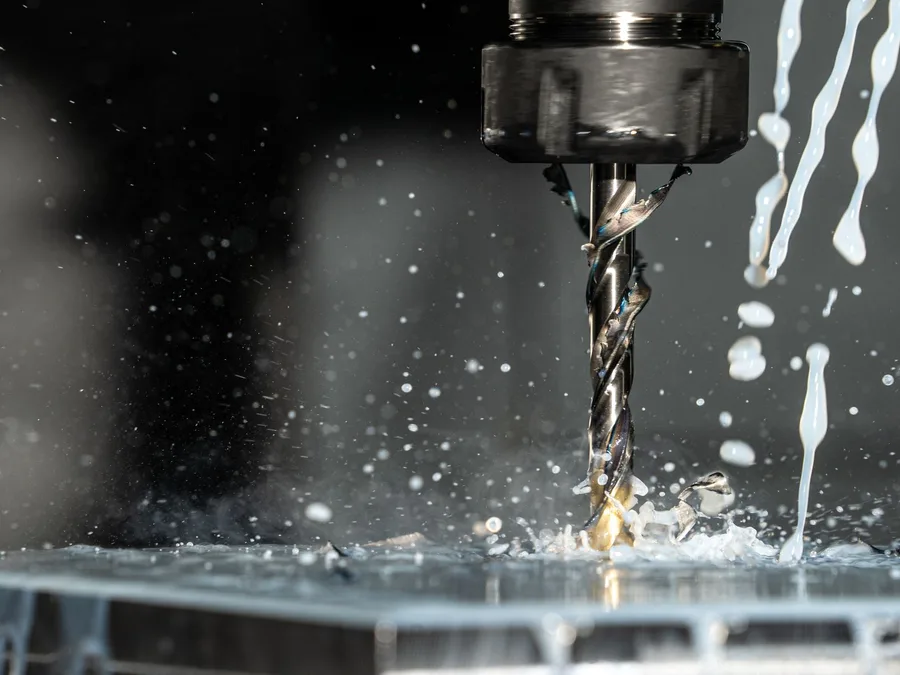
Micro-nano bubbles added to process fluid
The generator is installed just before the coolant nozzle, so the coolant hits the grinding wheel, tool, and workpiece carrying large numbers of micro-nano bubbles. Because surface tension drops, the fluid gets into the cutting zone more easily and carries away heat and chips more effectively. Common goals are shorter machining time, less wear on wheels and tools, and less workpiece warpage.
Why: more even cooling and lubrication, chips carried away more easily
Wafer dicing
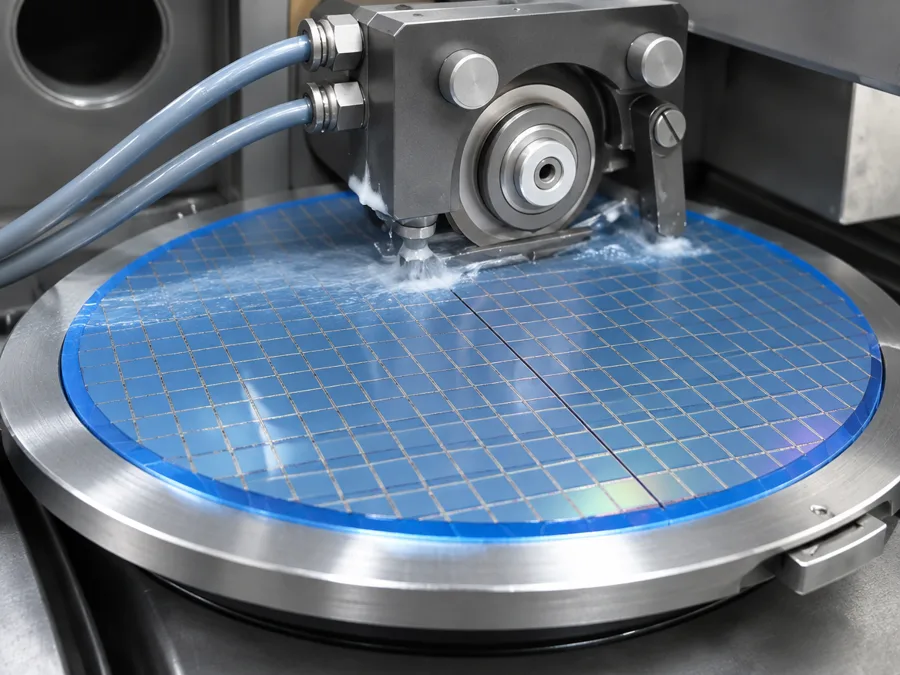
Dicing water carries away fine silicon sludge
During wafer dicing, micron-scale silicon sludge forms between the blade and the wafer, and once it sticks to the die surface it is hard to wash off. A generator is installed at the dicing water inlet and the outlet is fitted with a focusing nozzle, so the bubble-laden water hits the point where blade meets wafer. It removes heat and carries the sludge away at the same time.
Key point: install the generator as close to the nozzle as possible so the bubbles don't decay in long piping
Ultrasonic cleaning
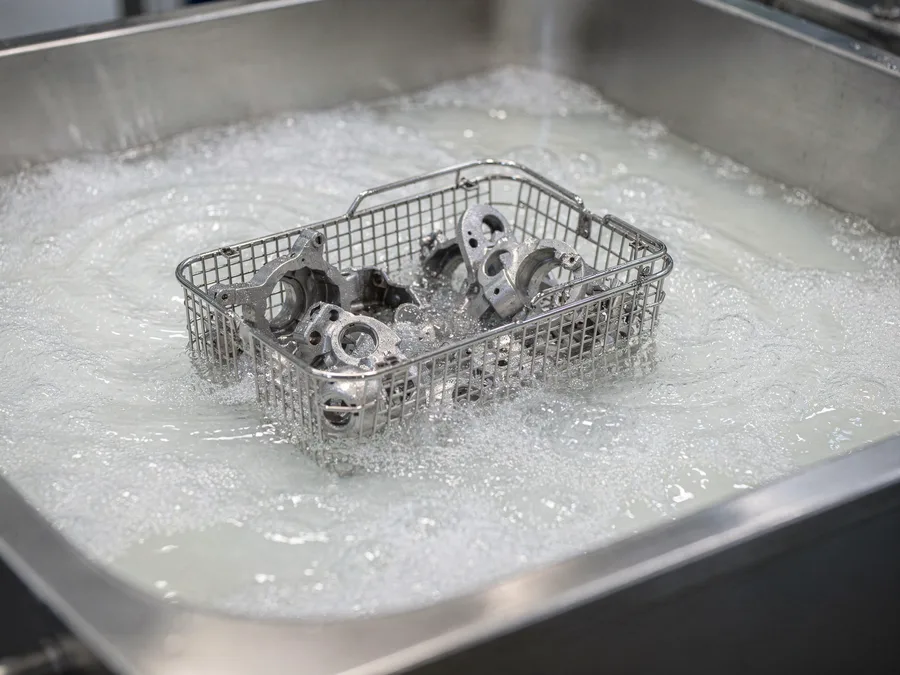
Pure water replaced with micro-nano bubble water
A generator is added to the make-up water line of an existing ultrasonic cleaning tank, replacing pure water with micro-nano bubble water. Microbubbles adsorb particles that have come loose, so the particles are less likely to stick back onto the part. This suits precision parts that still have fine residue after ultrasonic cleaning.
Especially effective on fine particles
Ozone water and CO₂ anti-static water
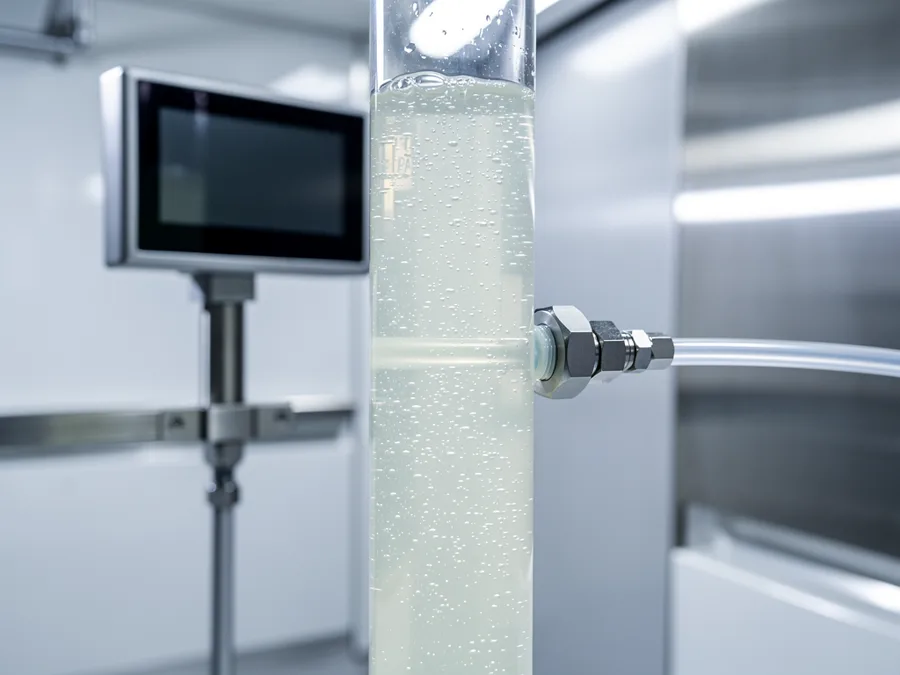
Inject gas at the suction port to make functional water
Inject ozone at the generator's suction port to make ozone water right in the line for sterilization. This also works on ultrapure water lines, where a standalone ozone water generator is usually hard to fit. Inject CO₂ instead to make slightly conductive water. Ultrapure water barely conducts electricity, so static tends to build up during high-speed rinsing in wafer dicing and grinding. A trace of CO₂ carries that static away, and the concentration can be adjusted in real time from conductivity readings before the water reaches the nozzle.
Note: the gas supply needs flow control and a backflow preventer
Grinding photo from Pexels (free stock); other images are AI-generated illustrations
| Applications | Approach | Where the effect comes from |
|---|---|---|
| Pipe interior flushing | Flush pipelines with micro-nano bubble water | Bubbles adsorb and carry away scale and biofilm from pipe walls |
| Cooling systems | Micro-nano bubbles added to cooling water | Water gets into narrow gaps more easily, so heat exchange is more even |
Run a comparison test before adopting: The effect of micro-nano bubbles varies with equipment, materials, water quality, and installation position. Run a with-bubbles vs. without-bubbles comparison on your own machine first, and decide once you've confirmed how much it helps.
Selection checklist: confirm these 7 things before you buy
What is the application?
Cleaning, process fluid cooling and lubrication, ozone water disinfection and CO₂ anti-static each need different gases and bubble types. First define the problem to solve (residue, tool wear, machining time, static).
Microbubbles or nanobubbles?
For adsorption and gas dissolution, choose mainly microbubbles; for long-lasting effects, penetrating tight gaps and more uniform process fluids, choose a model with a high nanobubble ratio.
Choose the generation method
Front-end semiconductor, ozone or oxygen microbubbles needed → pressurized dissolution; process fluids and general rinsing, no extra utilities wanted → nozzle aspiration.
Match flow and water pressure
Nozzle air-intake generators come in sizes with different rated flow rates and a minimum inlet water pressure. Choose the size based on the flow rate and water pressure of your existing line. For pressurized dissolution generators, match the actual flow rate of each step in the cleaning tool, and provide a return path for any excess flow.
Where to install
The closer to the nozzle the better: either one large unit after the supply pump, or a small unit before each nozzle; microbubbles decay in long piping runs.
Wetted materials
Front-end semiconductor needs all-fluoropolymer (PFA, PTFE) metal-free wetted parts; stainless steel is fine for process fluids and general cleaning, but confirm resistance to the process fluid or ozone.
Gas and safety
When mixing in CO₂, ozone or other gases, the gas supply needs flow control (flowmeter or mass flow controller) and backflow prevention (check valve or solenoid valve) so water cannot flow back into the gas supply during shutdown; ozone additionally requires planned exhaust and destruction units.
Further reading: for ozone water uses and safety regulations, see What is ozone water?; for photoresist stripping with ozone microbubbles, see how photoresist stripping works.
FAQ
What types of micro-nano bubble generators are there?
The most common industrial types are pressurized dissolution and nozzle aspiration (cavitation). Pressurized dissolution uses a pump to force gas into water and then releases it by depressurization, producing dense bubbles and supporting ozone; nozzle aspiration draws in air using water pressure alone, needs no power or gas supply, and installs directly inline.
Does a nozzle-type bubble generator need power or compressed air?
A nozzle air-intake generator only needs enough water pressure in the line. Water flowing through the nozzle draws in air on its own and forms bubbles, with no power, compressed air, or exhaust needed. You only need a gas supply if you want to mix in CO₂ or ozone.
How long do nanobubbles last in water?
Nanobubbles are so small that they barely rise to the surface, so they can stay in water for a long time. How long depends on the model and water quality, so ask the supplier for data measured by nanoparticle tracking analysis (NTA). Microbubbles, by contrast, shrink and dissolve within a few minutes.
What do micro-nano bubbles do in process fluids?
With micro-nano bubbles added, machining fluid cools and lubricates more evenly and carries chips away more easily. Common goals are shorter machining time and less wear on grinding wheels and tools. Actual results vary by equipment and material, so run a comparison test first.
Can a general-purpose bubble generator be used in semiconductor processes?
Front-end processes are highly sensitive to metal contamination, so wetted parts must be PFA, PTFE or other fluoropolymers with no metal, and pressurized dissolution is usually chosen; back-end dicing, grinding rinses and general parts cleaning can use nozzle aspiration as needed.