Key takeaways: what is the most effective way to insulate a metal roof?
Most of the heat in a metal roof comes from sunlight. There are three ways to cool it: absorb less heat (heat-reflective or white paint reflects part of the sunlight), block heat transfer (insulation such as PU, PS boards or rock wool, or a double roof, slows heat moving indoors), and get rid of the heat (sprinklers cool by evaporation; radiative cooling sends heat out to space as infrared). With the first two, the roof still runs hotter than the outdoor air in direct sun. Radiative cooling films and coatings are among the few options that use no power and can bring the surface below ambient temperature, and in field tests metal roof surfaces dropped by 20–35℃. For factories and warehouses, fix any leaks first, then choose a method based on the roof type. Trial it on one section of roof, measure it against a neighboring area, and scale up from there.
Why do metal roofs get so hot? Where the heat comes in
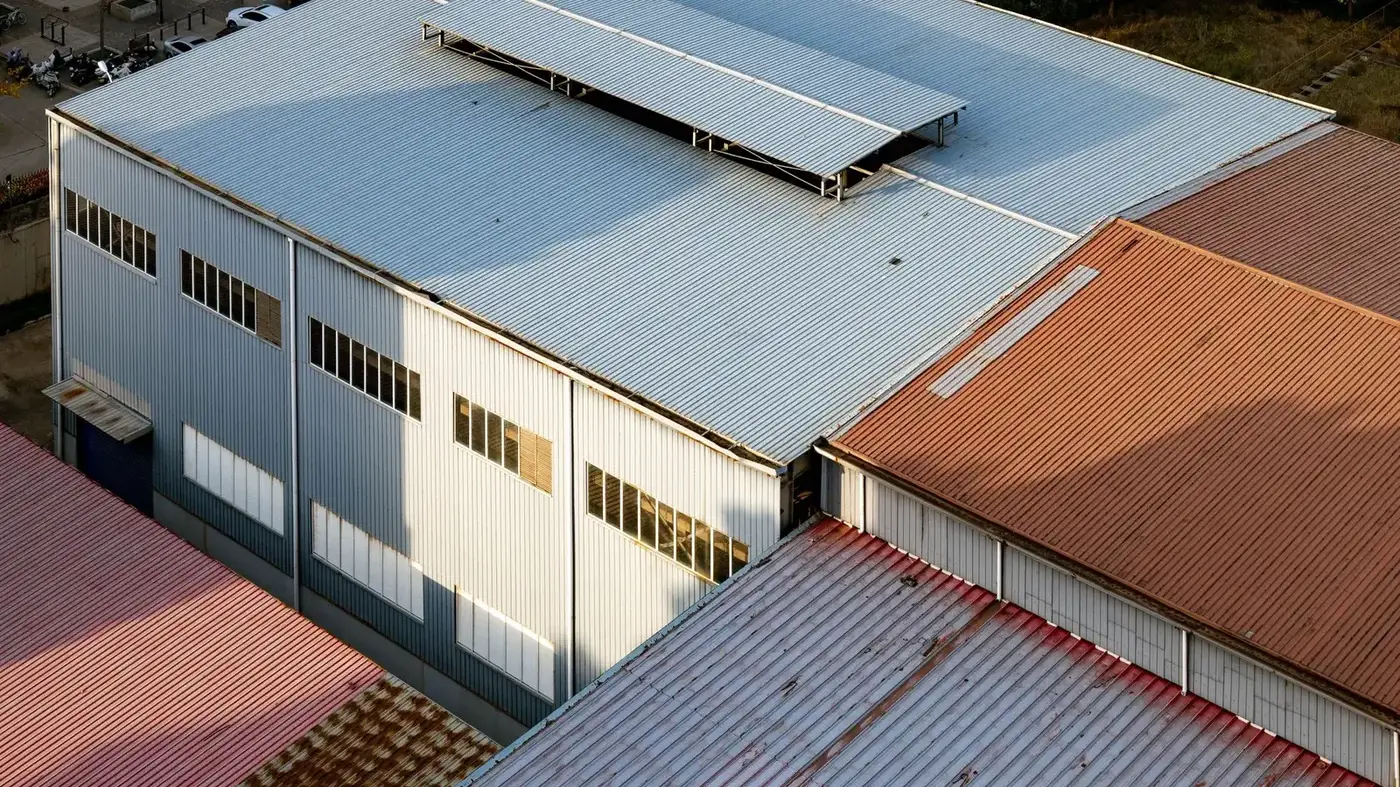
Metal sheet roofing is thin, conducts heat quickly and sits in direct sun all day. In the manufacturer's tests on a prefab building in Japan, a standard metal roof surface reached 61.2℃ when the outdoor air was 28.4℃, more than 30℃ above ambient. That heat conducts and radiates down from the underside of the roof, warming the air and goods below and adding to the load the air conditioning has to handle.
- Sunlight hits the metal sheet→Surface temperature can exceed 60℃
- Heat moves down from the roof's underside→Air and goods below heat up
- Hot air builds up near the ceiling→Without ventilation, it stays trapped under the roof
- Air conditioning works harder→Power bills rise, and it still won't cool down
That leaves three ways to cool a roof: absorb less heat (reflect the sunlight), block heat transfer (slow the heat coming in), and get rid of the heat (let the roof itself shed heat). Each of the 6 common methods below uses one or two of these.
6 roof insulation methods compared
| Approach | Principle | Suitable roofs | Roof surface in direct sun | Watch for |
|---|---|---|---|---|
| Heat-reflective paint / white paint | Absorb less heat: reflects part of the sunlight | Metal roofs, flat RC roofs | Lower than a standard roof, but still above ambient | Reflectance drops as dust builds up and the paint ages, so it needs regular recoating |
| Insulation (PU, PS boards, rock wool, insulation blankets) | Block heat transfer: slows heat moving indoors | Underside or cavity of metal roofs; on top of RC roofs | Unchanged; heat is held at the roof layer | Heat that is already indoors also has a harder time escaping |
| Insulating tiles | Block heat transfer: tiles and an air gap shield the roof from the sun | Flat RC roofs (top floors) | Tile surface stays hot; the slab below runs cooler | Not suitable for metal roofs; adds weight to the roof |
| Water spray | Get rid of the heat: water evaporation carries it away | All roof types | Drops while sprinkling, rises again once it stops | Uses water and power continuously; metal stays damp and rusts more easily |
| Double roof / roof ventilation | Block heat transfer + get rid of heat: an air gap insulates, ventilation exhausts hot air | Metal buildings, rooftop additions | Upper layer stays hot; the lower layer runs cooler | Major construction work and higher cost |
| Radiative cooling (film or coating) | Absorb less heat + get rid of heat: reflects sunlight while radiating heat to space as infrared | Metal and RC roofs, containers, storage tanks, electrical enclosures | Can drop below ambient | Needs a clear view of the sky; less effective when shaded, dusty, or over thick existing insulation |
Reflective methods do work. Research compiled by the US Environmental Protection Agency shows that highly reflective "cool roofs" can cut peak indoor temperatures in homes without air conditioning by 1.2–3.3℃, and reduce peak cooling demand in air-conditioned homes by 11–27% (US EPA). The difference is that ordinary heat-reflective paint only absorbs less heat, so the roof still runs hotter than the outdoor air in direct sun. Radiative cooling adds active heat release: it gives off more heat than it absorbs, which is what lets the surface drop below ambient.
The insulation is in, so why is the plant still stuffy?
Insulation works by slowing heat transfer in both directions. In summer it blocks heat coming down through the roof, but it also makes it harder for heat from machines, lighting, people and the afternoon sun to escape through the roof. If the hot air under the roof isn't ventilated out, you get the situation where the insulation is in but the space feels even stuffier by evening.
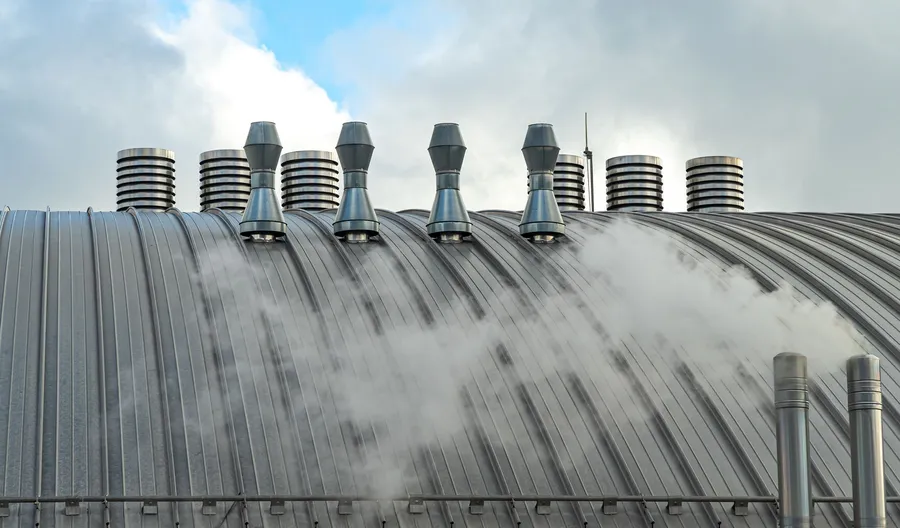
So factories with heat-generating equipment, or ones that run at night, need to think about getting rid of heat as well as blocking it: roof ventilation, air conditioning efficiency, and keeping the roof itself cool. Radiative cooling materials reflect sunlight during the day and keep radiating heat to the sky at night, and they can be used alongside existing insulation. If there is already a thick insulation layer under the roof, though, the extra indoor cooling will be limited, and it makes more sense to start with energy savings on your existing air conditioning.
How much can radiative cooling on a roof actually save?
On temperature: in a grain warehouse case with film on the roof and air conditioning off all year, the warehouse ran up to 10.4℃ cooler than a control warehouse, and 5℃ cooler on annual average. In the airport jet bridge case, the top surface dropped by 20–35℃. Steel roofs and storage tanks with complex shapes that are hard to film use a cooling coating instead, which saves somewhat less power than film under the same conditions.
The limits should be stated clearly too. In most cases it can't fully replace air conditioning; it reduces the heat the air conditioning has to handle. Heating power use rises slightly in winter, by only 0.3–3.2% in the manufacturer's winter tests. Performance also drops if the roof is shaded by taller buildings or canopies, or is left dusty without cleaning.
How should factories and warehouses choose? Trial one section first
Under Article 308-1 of Taiwan's Building Technical Regulations, buildings subject to building energy-efficiency rules must have an average roof thermal transmittance below 0.8 W/(㎡·K), but roof areas above stairwells, warehouses, storage rooms or machine rooms are exempt (Laws & Regulations Database of the ROC). In other words, the roofs over warehouses and machine rooms may have no required insulation performance at all, and they may be the hottest parts of the site and the best places to start.
Measure the baseline
Record the roof surface temperature, the room temperature under the roof and air conditioning power use at midday in summer as a baseline for later comparison.
Fix leaks first
If the roof leaks or is rusting, waterproof it before adding insulation or cooling, or moisture will damage the materials.
Choose a method by roof type
For flat RC roofs, consider insulating tiles or coatings. For metal roofs, check whether insulation can be added on the underside. For roofs in full sun all day where you need to lower the surface temperature, consider radiative cooling film, with coating for complex-shaped areas.
Trial one section
Apply it to one building or one section of roof, pick a similar area as a control, and measure temperature and power use in both.
Decide with data
Decide whether to scale up based on the measured difference. When buying, see How to Choose a Radiative Cooling Film.
FAQ
Which metal roof insulation method is most effective?
It depends on what you want to fix. To slow heat moving indoors, insulation or a double roof works reliably. To cool the roof surface itself, radiative cooling is one of the few options that uses no power and can go below ambient temperature, and in field tests metal roof surfaces dropped by 20–35℃. Actual results depend on sun exposure and the building, so trial one section before scaling up.
Can insulating tiles be laid on a metal roof?
Usually not. Insulating tiles are designed for flat RC roofs. They are heavy, most metal roof structures can't carry the load, and they are hard to fix in place. Metal roofs more commonly get insulation on the underside, a second roof, or heat-reflective paint or radiative cooling film on the outside.
Is spraying water on the roof a good way to cool it?
Sprinkling cools by evaporation and works quickly, but the roof heats back up as soon as the water stops, so it needs continuous water and power. Metal that stays damp also rusts more easily. It's fine as a short-term fix, not as a long-term solution.
Can radiative cooling film be used with insulation?
Yes. Radiative cooling film lowers the surface temperature on the outside of the roof, and insulation slows heat transfer on the inside, so the two don't conflict. If there is already a thick insulation layer under the roof, though, the extra indoor cooling will be limited, so we recommend a trial application with measurements first.
Will roof insulation make it colder in winter?
Insulation also reduces indoor heat loss in winter. Radiative cooling slightly increases heating power use in winter, by only 0.3–3.2% in the manufacturer's winter tests, because its cooling capacity drops sharply when temperatures are low. Winters are short in most of Taiwan, so the cooling power saved in summer usually outweighs the extra heating power used in winter.