Summary: how much do bridges save?
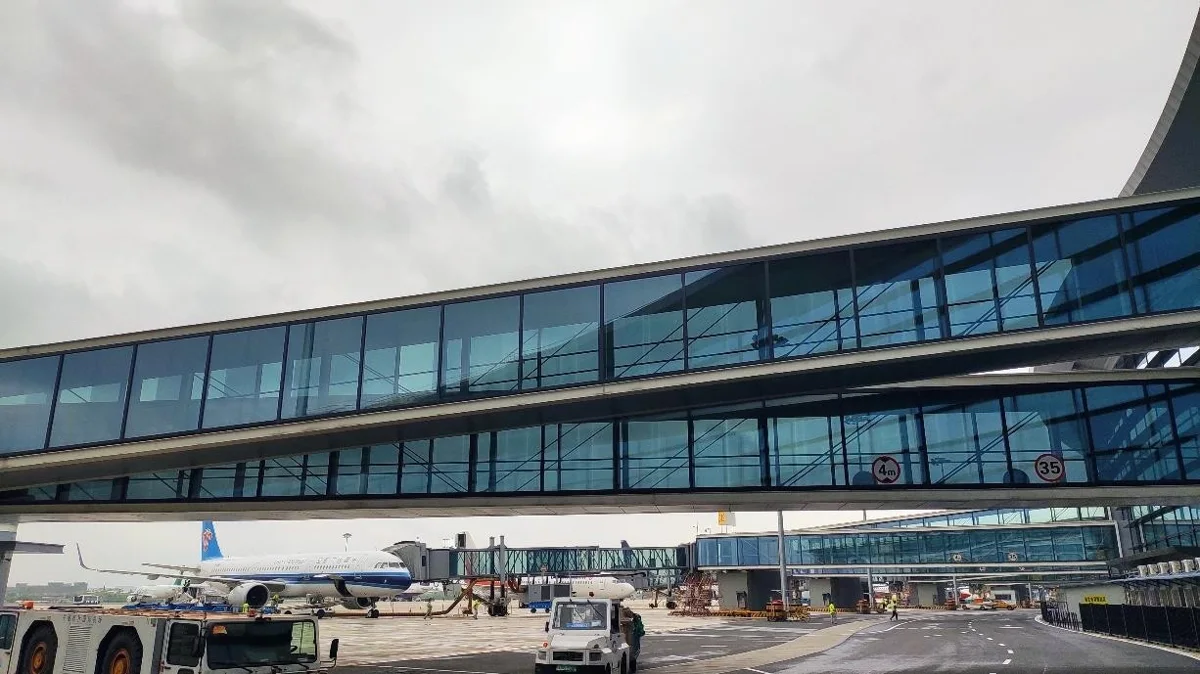
After an international airport in Singapore applied reflective radiative cooling film to its boarding bridge roofs, roof surface temperatures fell 20–35℃ and side surfaces 15℃. With energy normalized for passenger numbers and flights, the airport compared two consecutive years: the treated bridge used 44% less energy on average than the control bridge. A connecting bridge at an international airport in Tokyo is estimated to save about 30% a year, and a boarding bridge at an airport in Dubai saved about 17.7% in a single day. Actual percentages vary with bridge orientation, sun exposure and AC conditions.
Why bridges are hard to cool
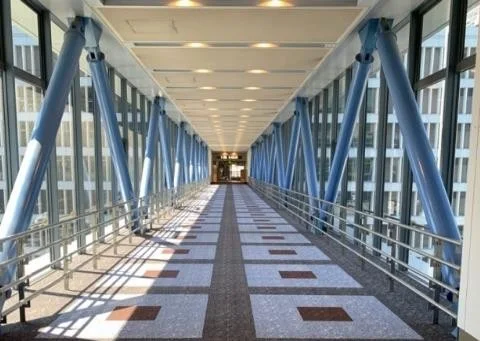
A boarding bridge is a suspended steel-shell corridor whose roof and sides are in direct sun all day, with heat coming in from every direction; when passengers board, the aircraft door and terminal door open together and cool air keeps escaping. Bridge AC is usually a small external unit that often runs flat out in summer and still can't keep up.
Common approaches
- Bigger AC units
- Added sunshades
- Standard solar film
- All still just "block heat"
Radiative Cooling Film
- Reflects sunlight, heat stays out
- Radiates heat to outer space
- Surface can be below outdoor air
- No power, no bridge downtime
Singapore: 44% saved over 2 years
The airport chose two boarding bridges with similar conditions: one with reflective film (treated) and one left as is (control), recording exterior surface temperature and AC energy at the same time. Because passenger and flight numbers vary daily, the airport normalized energy by passengers and flights before comparing.
| Item | Result |
|---|---|
| Roof surface temp | 20–35℃ lower |
| Side surface temp | 15℃ lower |
| Yearly energy (normalized) | 44% below control, 2 years |
Tokyo: surfaces 6.3℃ below air temp
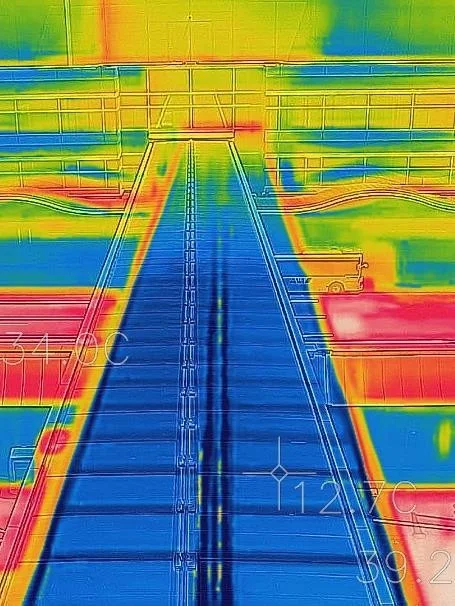
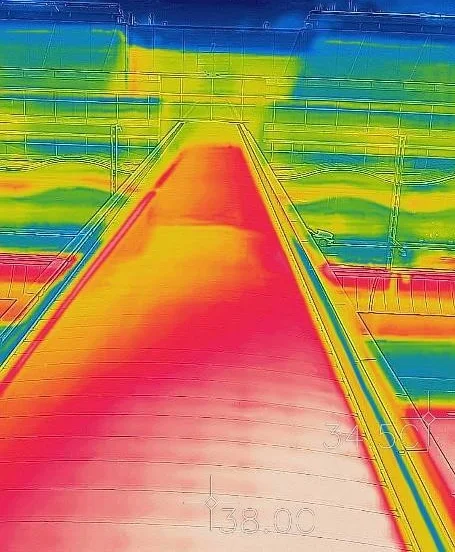
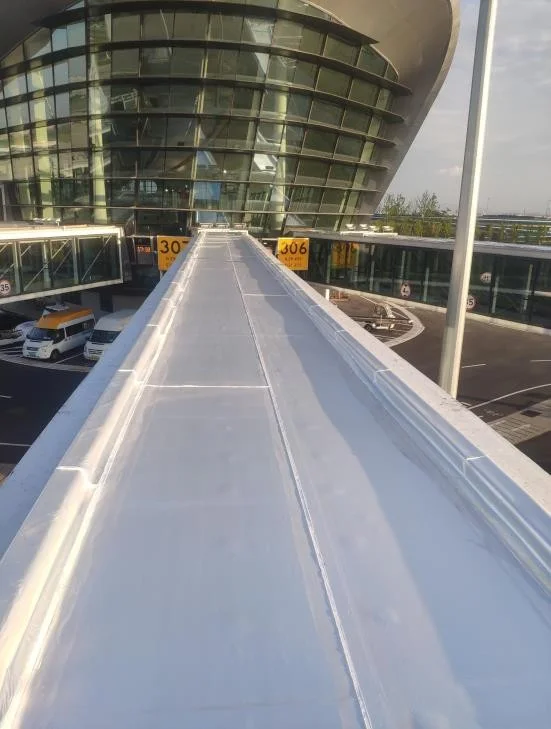
Since 2020 this airport has applied radiative cooling film to boarding bridges, connecting bridges and corridors between the terminal and parking: reflective film on roofs and sides, transparent window film on glass. The airport reports that treated locations are 4–5℃ cooler than before.
| Location | Outdoor temperature | Untreated | Treated | Difference |
|---|---|---|---|---|
| Walkway roof | — | — | — | Up to −25.3℃ |
| Walkway ceiling | — | — | — | −8.2℃ |
| Bridge exterior | 36.7℃ | 46.6℃ | 30.1℃ | −16.5℃ |
| Bridge interior | 36.7℃ | 39.2℃ | 33.2℃ | −6.0℃ |
| Link bridge exterior | 32.4℃ | 37.5℃ | 29.2℃ | −8.3℃ |
| Link bridge interior | 32.4℃ | 39.1℃ | 34.6℃ | −4.5℃ |
Why is the untreated surface (46.6℃) nearly 10℃ hotter than the air (36.7℃)? Air temperature is measured in the shade, while the surface is a steel skin baking in direct sun all day — it absorbs heat faster than it can shed it, just as a car roof gets far hotter than the air in summer. The treated surface was only 30.1℃, actually 6.6℃ below the air: the film reflects most sunlight and radiates heat as infrared out to space — the biggest difference between radiative cooling and ordinary insulation.
For one connecting bridge — 59.8 m long with 520 ㎡ treated — annual AC energy estimated from measurements was 367,663 kWh untreated and 258,591 kWh treated: about 109,000 kWh less per year, roughly a 30% saving (estimate).
Others: Dubai, regional Japan, China
| Airport | Applied to | Result |
|---|---|---|
| An airport in Dubai | Boarding bridge shell | Control used 38.8 kWh more; ~23.4 kWh less a day, ~17.7% saved |
| A regional airport in Japan | Fixed bridge glass (window film, 46 ㎡) | Summer indoor −10.9 to −11.3℃; ~23% a year |
| A regional airport in Japan | Ceiling and sides (film, 53.5 ㎡) | −7.1℃ summer, −2.5℃ winter; ~23% a year |
| China airport, T2 | 20 bridges: roof film + glass window film | Roof −20.2℃, ceiling −6.9℃, air −7.0℃ |
3 lessons from the airport cases
- Use a control: each airport measured a similar untreated bridge at the same time.
- Normalize: Singapore divided energy by passengers and flights.
- Film for roofs, window film for glass: treat each surface type.
These three points apply equally to factory roofs, logistics warehouses and outdoor enclosures in Taiwan. For verification methods, see How to verify AC energy savings.
FAQ
How much energy does radiative cooling film on airport boarding bridges actually save?
An international airport in Singapore compared a treated bridge with a control bridge over 2 consecutive years and, normalized for passengers and flights, found a 44% average annual saving; a connecting bridge at an international airport in Tokyo is estimated to save about 30% a year; a boarding bridge at an airport in Dubai saved about 17.7% in a day. Actual percentages vary with orientation, sun exposure and AC conditions.
Can surface temperatures really be below the outdoor air?
Yes. At a boarding bridge at an international airport in Tokyo, with 36.7℃ outdoors, the treated exterior was 30.1℃ — 6.6℃ below the air; the connecting corridor roof surface was also 6.3℃ below the air. That's because radiative cooling film radiates heat to outer space as infrared.
Does installation modify the bridge or the AC?
No. Reflective film is adhesive-backed and applied to the shell surface, and transparent window film goes on the glass — no changes to the existing structure or AC; installation times can be coordinated with the site.
Can factories in Taiwan learn from this case?
Yes. Metal roofs, logistics warehouses, outdoor electrical cabinets and equipment rooms share the bridge's conditions: sun exposure all day and heat passing into the building or equipment. We recommend treating one area, picking a comparable area as a control, and measuring both at the same time.