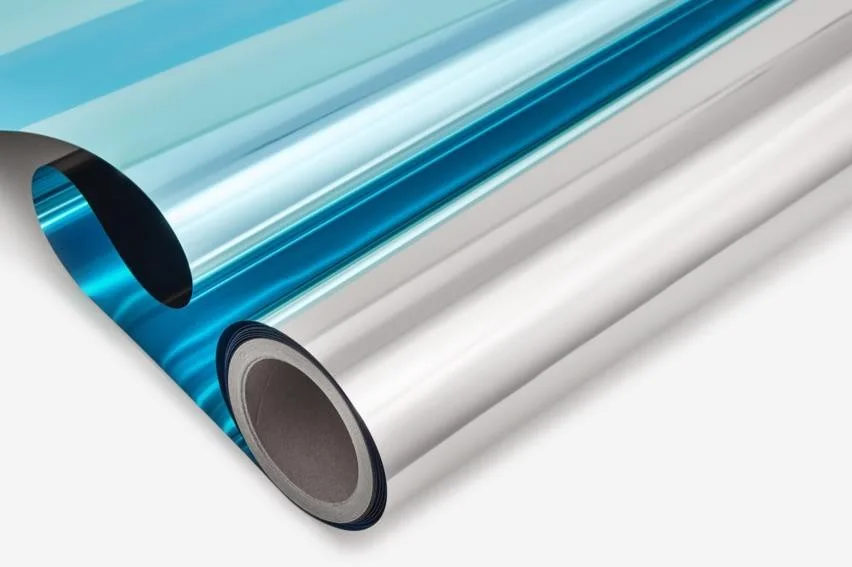
Reflective film
For metal roofs, boarding bridge roofs, electrical cabinets and container exteriors. Works on smooth or rough surfaces; matte silver or white.
- Solar reflectance about 83%
- Emissivity >90%
- 180 μm thick
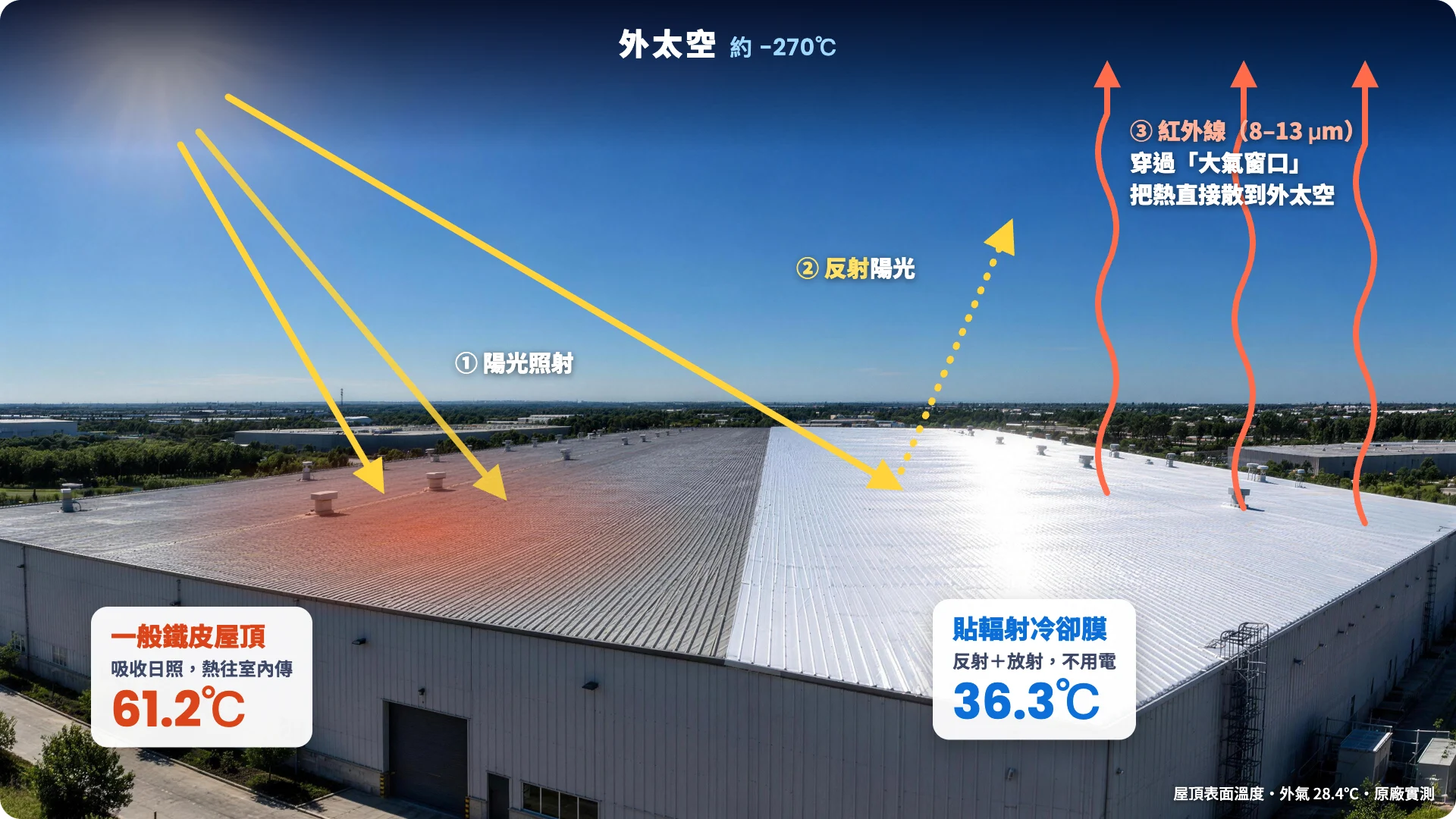
Radiative cooling film is applied to roofs, enclosures or glass: it reflects sunlight on one hand and radiates heat as 8–13 μm infrared through the atmosphere directly to outer space on the other. Unlike heat-reflective paint, it keeps surfaces below outdoor air temperature without electricity. It's used on airport boarding bridges, high-speed rail station roofs, transformer cabinets and granaries; boarding bridges at an international airport measured 44% annual energy saving.
ESG positioning: E (Environmental)How DEYly approaches ESG →
The sun's surface is about 5,500℃, the Earth about 25℃ and outer space about −270℃. Clear nights are especially cold because the ground's heat escapes through the atmosphere to space as infrared — this is radiative cooling. Radiative cooling film brings this to daytime: it reflects sunlight while radiating heat as 8–13 μm infrared. The atmosphere barely absorbs this band (the "atmospheric window"), so heat goes straight to space. When more heat leaves than comes in, the surface can drop below the outdoor air temperature.
Reflective film for opaque roofs and enclosures; transparent window film for glass that needs daylight; cooling coating for complex steel structures and tanks that are hard to cover with film.
For metal roofs, boarding bridge roofs, electrical cabinets and container exteriors. Works on smooth or rough surfaces; matte silver or white.
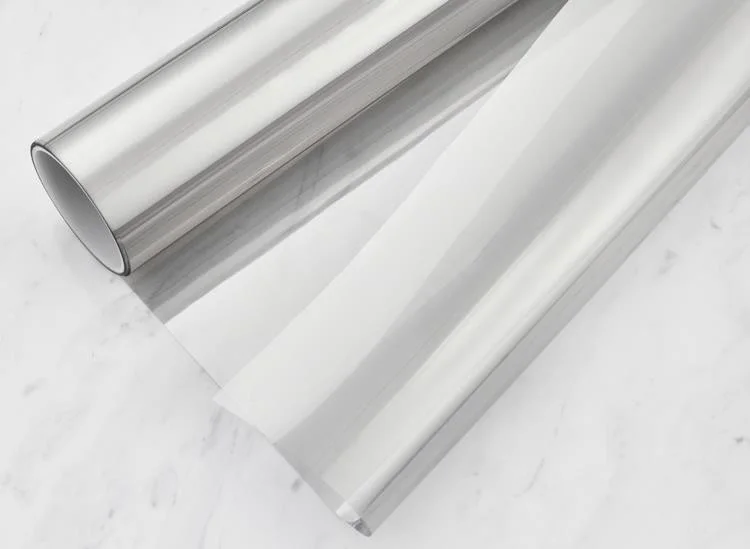
For the inside or outside of glass façades, skylights and domes — keeps daylight while blocking solar heat and easing stuffiness near windows.
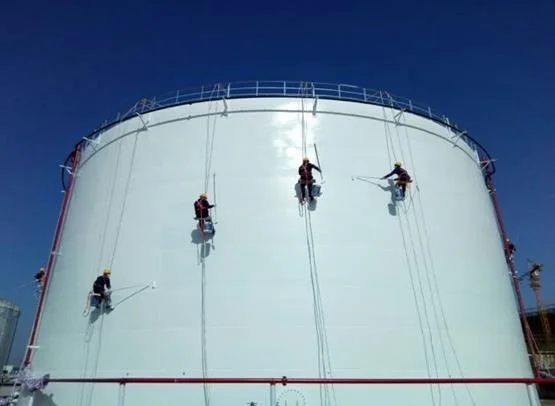
Water-based acrylic for stainless steel, carbon steel, concrete and other substrates; used on oil tanks, steel roofs, exterior walls and substations.
Cooling fabrics (tents, awnings, car covers) and ETFE materials for membrane structures are also available on request.
Below are the manufacturer's side-by-side tests on model houses, prefab buildings and a small warehouse: identical buildings, one treated and one not, measured at the same time.
AC off: roof up to 34℃ cooler, interior up to 16℃.
Manufacturer test · controlSame houses, AC on: ~57% average saving, 63.4% peak day.
Manufacturer test · controlFilm: 18.04 → 9.05 kWh; paint: −31.6%.
Manufacturer testGlass dome with window film: radiant temp 33.7 → 26.4℃, discomfort 28% → 5%.
Manufacturer test · 35℃| Measurement point | Plain prefab | With cooling film | Difference |
|---|---|---|---|
| Roof surface | 61.2℃ | 36.3℃ | −24.9℃ |
| Indoor ceiling | 48.6℃ | 37.2℃ | −11.4℃ |
| Indoor air | 42.5℃ | 33.1℃ | −9.4℃ |
The model house savings were measured on small buildings where the roof is a large share of the exterior; typical factories and office buildings will see lower percentages — rely on a trial application and measurement.
Radiative cooling works best on surfaces that are in the sun all day and pass heat into the building or equipment. Below are actual results across site types (sites anonymized).
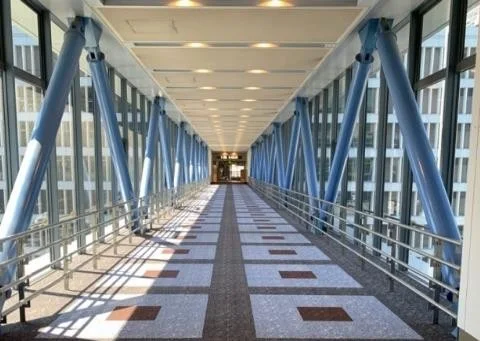
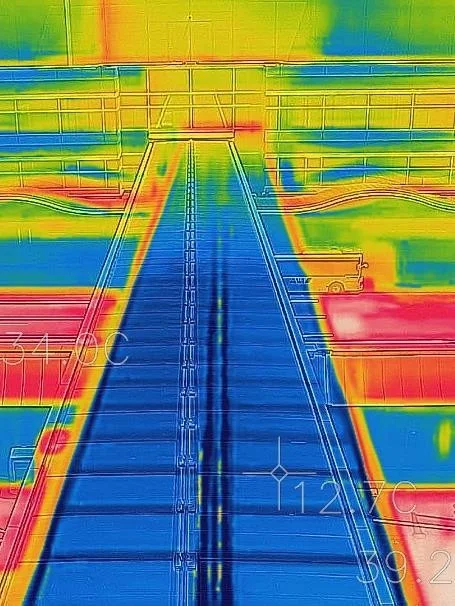
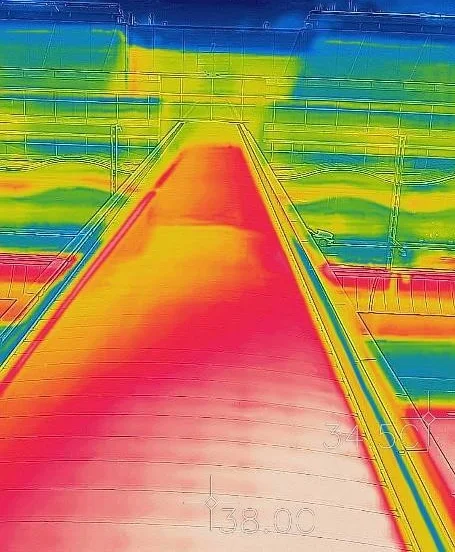
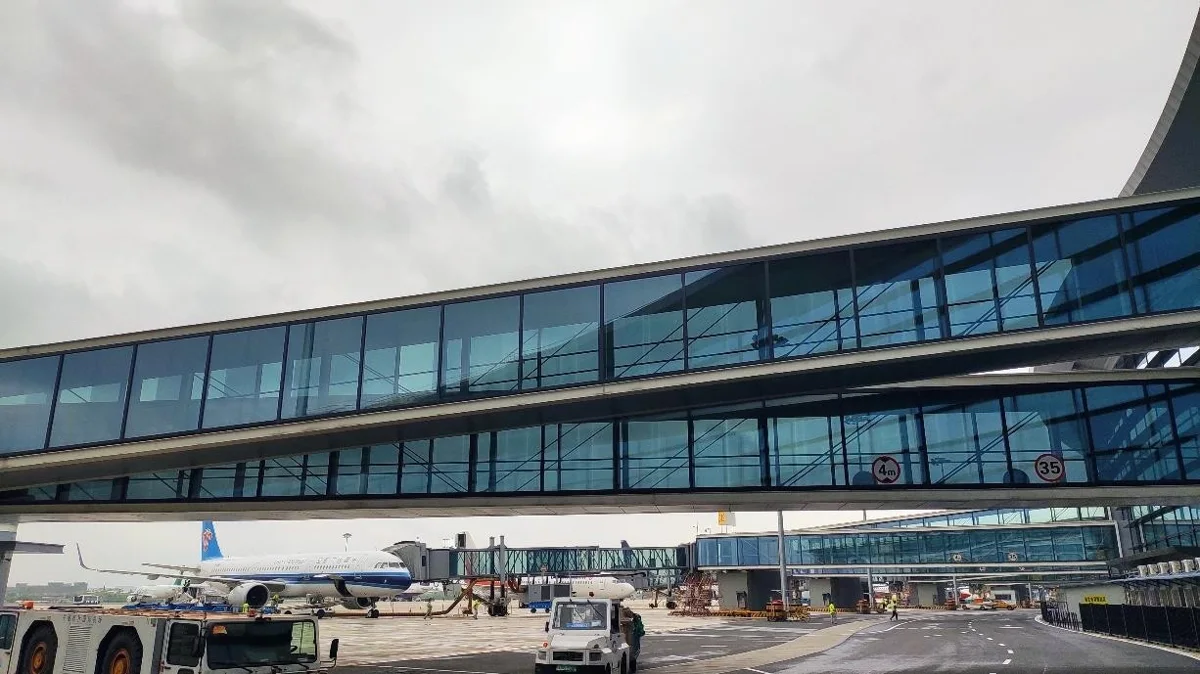
Boarding bridges at an international airport in Singapore: roof surface 20–35℃ cooler, 44% average annual energy saving over 2 consecutive years. Also applied at airports in Japan, Dubai and China.
Airport dataFull case →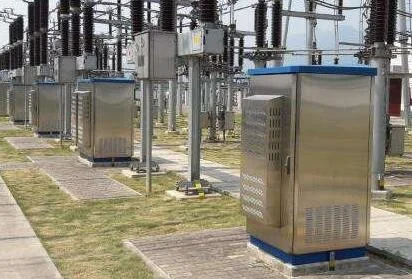
10 kV–750 kV substations, distribution cabinets and control cabinets: surfaces 15–30℃ cooler and interiors 7–16℃ cooler; applied in 27 provinces.
Manufacturer caseFull case →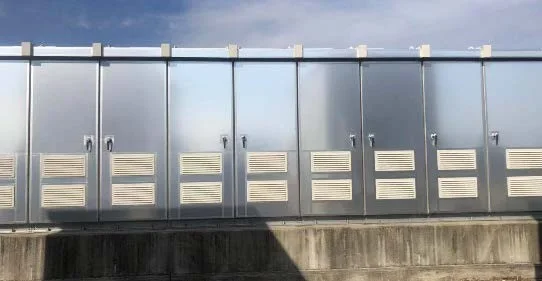
Seven HV substation cabinets at a solar plant in Japan: surface temperature 53.6℃ → 22.0℃.
Manufacturer · thermal imagingFull case →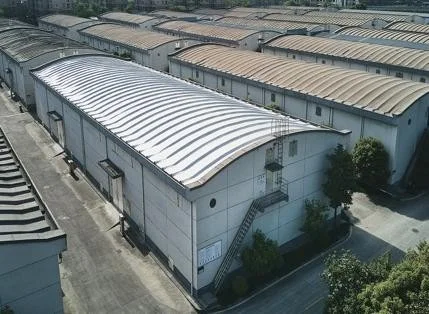
Storage temperature up to 10.4℃ lower and 5℃ lower on average over the year, surface grain 4.5℃ cooler; over 1 million ㎡ applied.
Manufacturer caseFull case →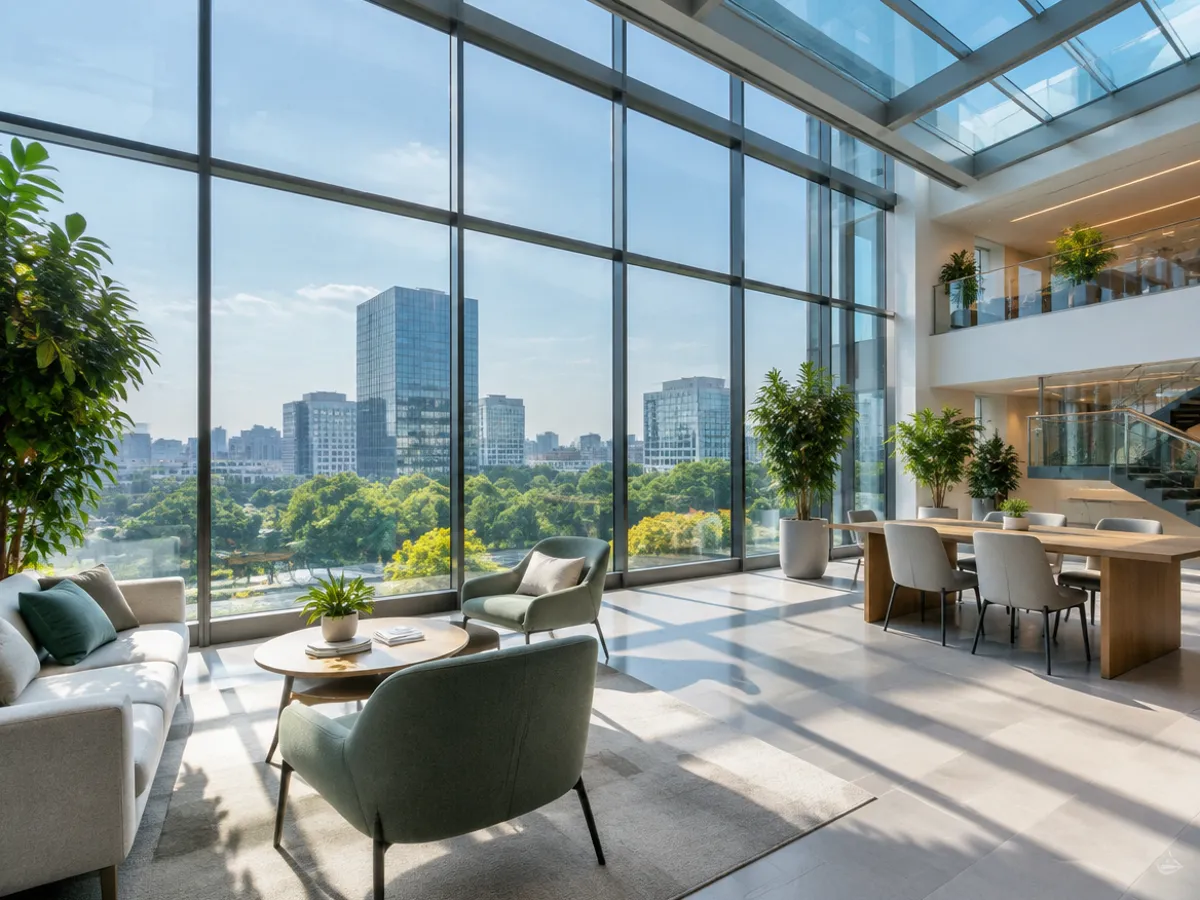
Office building glass with transparent window film: at 38℃ outdoors and 26℃ AC, thermal dissatisfaction near windows fell from 40% to 5%; glass dome mean radiant temperature 33.7 → 26.4℃.
Manufacturer · comfort indexFull case →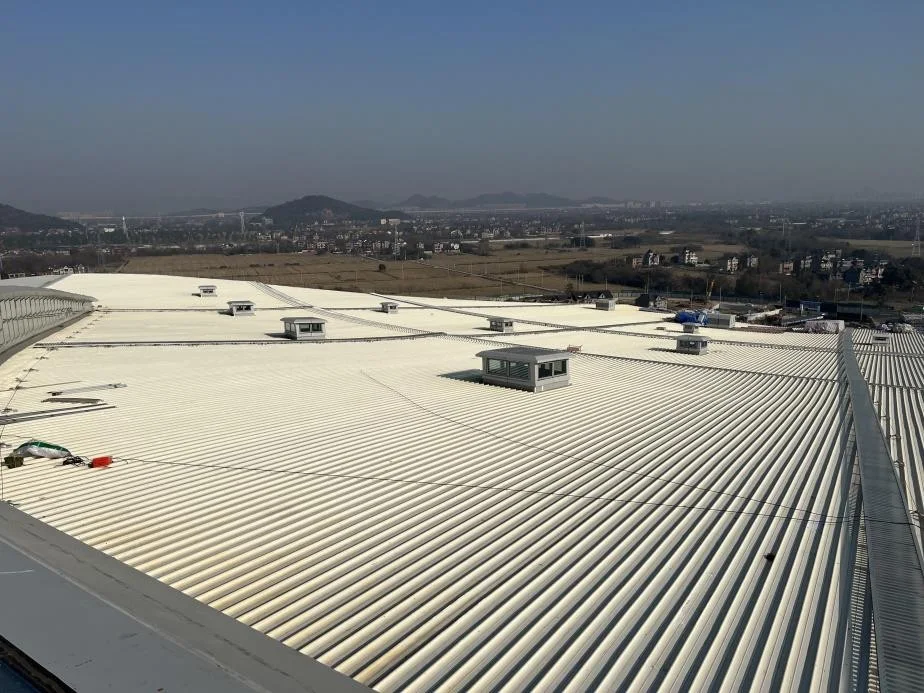
The entire metal roof of a new high-speed rail station in China was covered with reflective film as one of its green building energy measures.
Manufacturer case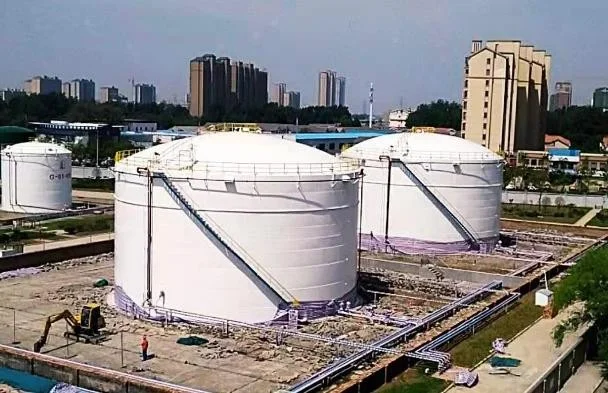
Cooling coating on storage tanks at a petrochemical depot: surface temperature down more than 25℃ and oil temperature down 2℃, reducing evaporation and pressure risks.
Manufacturer caseFull case →Heat-reflective paint and insulation work by absorbing less heat and slowing heat transfer — in the sun, surfaces still end up hotter than the outdoor air. Radiative cooling materials actively shed heat. In the manufacturer's side-by-side test on metal panels in Tokyo, the film was 5.9℃ cooler and the coating 3.7℃ cooler than other brands' products.
| Comparison | Reflective paint | Insulation | Cooling film / paint |
|---|---|---|---|
| Principle | Reflects some sun | Slows heat flow | Reflects sun + radiates heat to space |
| In the sun | Above outdoor air | Above air temp, stuffy | Below air temp |
| Energy use | No electricity | No electricity | No electricity |
| Winter | Little effect | Keeps heat in | Heating up slightly (≤3.2%) |
| Item | Reflective film | Transparent window film | Cooling coating |
|---|---|---|---|
| Thickness | 180 μm | 58 μm | ~120–160 μm total |
| Emissivity at 8–13 μm | >90% | >90% | About 90% |
| Solar reflectance | 83% | 31% | 86% |
| Solar transmittance | 0% | 53% | — |
| Visible light transmittance | 0% | 70% | — |
| Shading coeff. | — | 0.66 | — |
| Roll width × length | 1,225 mm × 50 m | 1,520 mm × 30 m | 3 coats: primer, mid, top |
| Color / finish | Matte silver, white | Transparent | White |
Specifications may change due to improvements; values are measured, not guaranteed.
Radiative cooling film is a surface material applied to roofs, enclosures or glass. It reflects sunlight and radiates heat as 8–13 μm infrared through the atmosphere directly to outer space. Because more heat leaves than comes in, it can keep surfaces below the outdoor air temperature without electricity.
It depends on the building. Boarding bridges at an international airport in Singapore measured a 44% average annual saving over 2 years; a connecting corridor at an airport in Japan is estimated to save about 30% a year; the manufacturer's model houses averaged about 57% with AC on. Typical factories and office buildings will see lower percentages — we recommend a trial application and measurement first.
Slightly, but not by much. In the manufacturer's winter comparison (0–12℃ outdoors, 21℃ indoor heating), the treated model house used at most 3.2% more heating energy. That's because cooling power scales with the fourth power of temperature, so the cooling effect naturally shrinks when it's cold outside.
Heat-reflective paint reduces heat absorption, but in the sun the surface is still hotter than the outdoor air. Radiative cooling materials also actively radiate heat away, so they can get below outdoor air temperature. In the manufacturer's comparison of metal panels under the same conditions, the film was 5.9℃ cooler than other products.
Yes, with transparent window film. Visible light transmittance is about 70%, so daylight is kept while some solar heat is blocked. On a glass dome, mean radiant temperature fell from 33.7℃ to 26.4℃ and thermal dissatisfaction from 28% to 5%.
It works best on clear days with a view of the sky. On cloudy days both sunlight and heat release decrease, so the effect is smaller; at night there's no sun, and the surface keeps radiating heat away.
Data come from manufacturer tests and field results; actual performance depends on sunlight, weather, installation location and building conditions.
Tell us about your equipment, line and what you're seeing. We'll understand the situation first, then give an initial assessment and recommended options.