AC Energy-Saving PanelSits on the AC filter — no power, no install — for better heat exchange
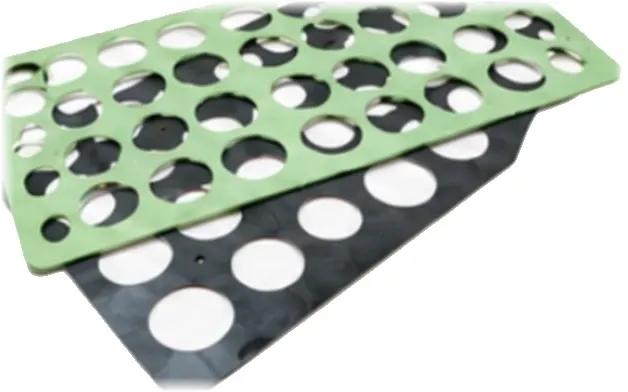
The HVAC energy-saving panel is a 385×180 mm, 2 mm thick perforated panel placed directly on the filter at the indoor unit's air intake. The holes turn incoming airflow from laminar to turbulent and reduce stagnant air inside the unit, so air passes through the heat exchanger more evenly — the supply air reaches temperature sooner and the compressor runs less. No electricity, no AC modification, no new equipment.
ESG positioning: E (Environmental)How DEYly approaches ESG →
- Proven benefits
- Adding it to existing AC improves heat exchange and shortens compressor run time, cutting AC energy and emissions without replacing equipment (E).
- Limits
- Savings depend on AC type, load, operating hours and outdoor temperature; we recommend a small pilot first, judged on condition-matched before/after energy data.
The bottleneckWeak cooling, high bills? Check the coil
About 90% of AC energy goes to the outdoor unit's compressor. The indoor unit's job is to pass air over the heat exchanger and carry heat away; if airflow inside the unit is uneven or stagnant in places, parts of the coil never take part in heat exchange, the supply air won't cool down, and the compressor has to run longer and harder. The energy-saving panel addresses exactly this: how air passes through the heat exchanger.
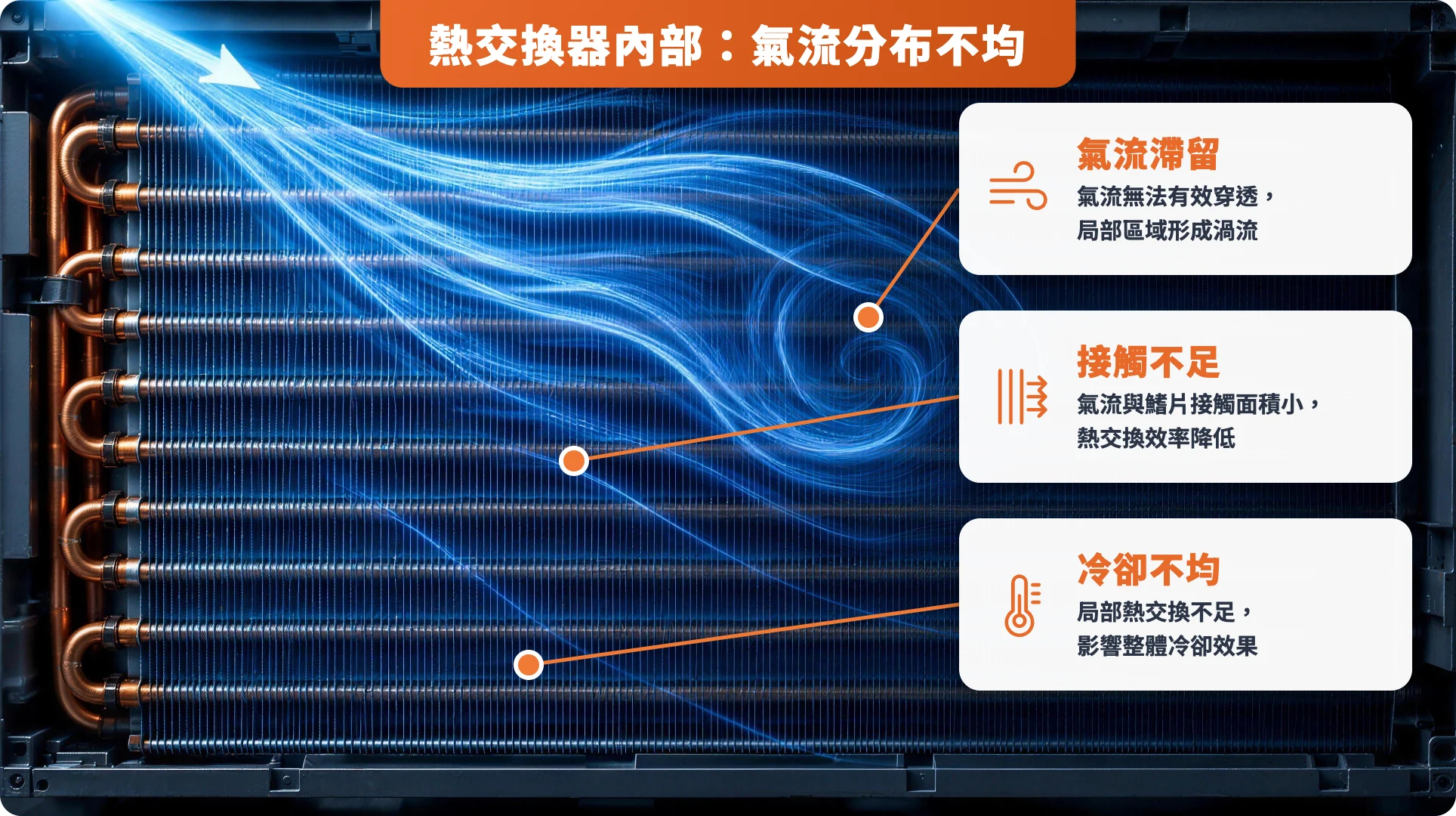
- Stagnant air: air can't pass, eddies form.
- Poor contact: less air on the fins.
- Uneven cooling: weak spots drag down output.
- Result: longer runs, more power, shorter life.
How it worksHoles stir the air for better exchange
The holes are designed from airflow simulations by a Japanese public industrial research institute: without reducing intake airflow, they turn the air entering the indoor unit from orderly laminar flow into turbulent flow and slow it down, breaking up stagnant zones inside the fan, guiding air smoothly to the heat exchanger and extending contact time with the fins.
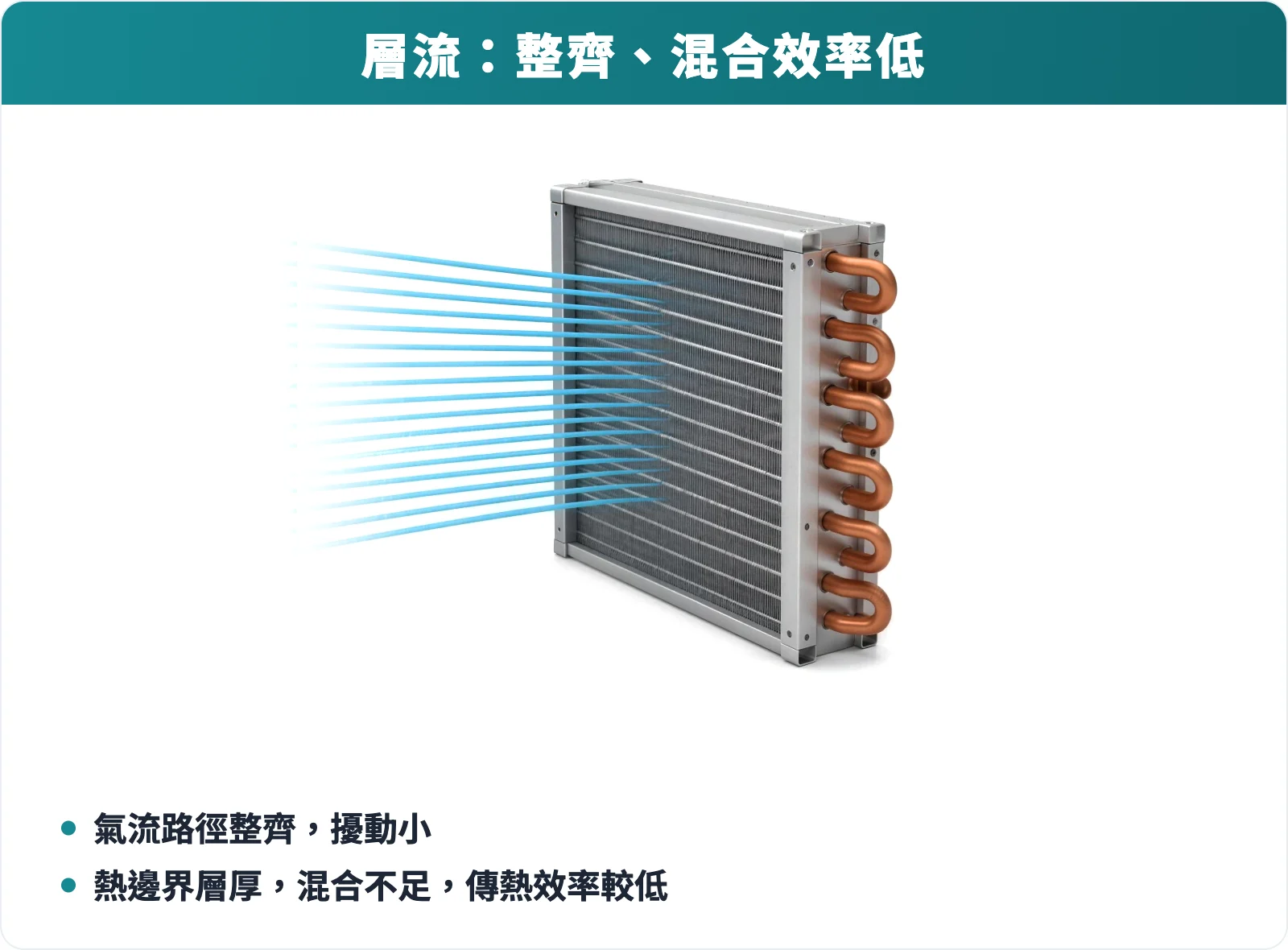
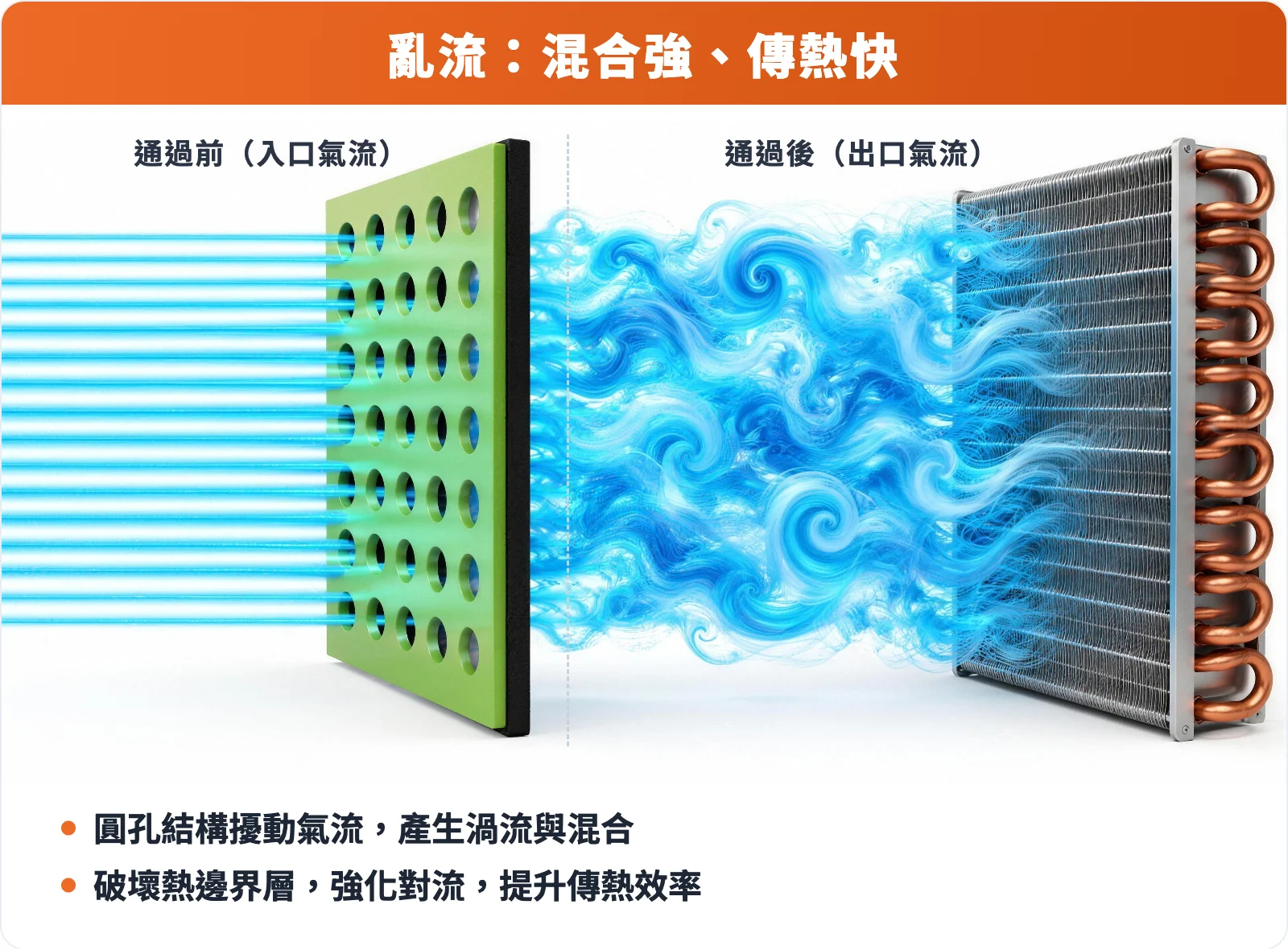
- 01No dead spotsEvens out the coil.
- 02Longer contactSlower air, more time on fins.
- 03More areaMore of the coil does the work.
- 04On targetReaches setpoint sooner.
- OKLess compressor workShorter run time, lower energy use.
The manufacturer also states that the panel contains natural mineral powder and ceramic components that emit 4–20 µm far-infrared radiation, acting on water droplets in the air to promote heat transfer. This is the manufacturer's proposed material mechanism; we have no independent verification, so we don't treat it as a basis for savings. Whether it works is judged solely by measured before/after energy use. See What is an HVAC energy-saving panel?
ResultsHow much did it save?
Across our Taiwan store test and the manufacturer's measurements and standard tests in Japan, savings mostly fall around 7–15%, with more noticeable effects under high summer load.
Taiwan store · summer
Ceiling cassettes, matched by time, outdoor temp and units running; spring was −7.8%.
DEYly test · full caseJapan c-store · full year
Two 4 HP units, one year before vs. after: 18.3 → 15.8 kWh/day.
Manufacturer caseJIS performance test
Tested by a major Japanese utility on a gas heat pump (GHP).
Manufacturer dataCooling supply temp
Indoor 27℃, outdoor 35℃, set 19℃: supply air 13.35 → 11.84℃, power 4.39 → 4.23 kW.
Manufacturer test| Item | Without panel | After |
|---|---|---|
| Power consumption | 4.39 kW | 4.23 kW |
| Intake temperature | 27.00℃ | 27.00℃ |
| Supply air temperature | 13.35℃ | 11.84℃ |
| Drop per kW | 3.11℃ | 3.58℃(+15%) |
| Heating supply temp | 47.4℃ | 49.2℃ |
In the Taiwan store, all 12 outdoor units averaged 13.5% less per hour (11 dropped). Not fully condition-matched — trend only; 7.8% and 12.2% are the matched results.
Manufacturer data are the manufacturer's own track record and tests; Taiwan data come from a single store and don't mean every AC system or site will achieve the same savings.
EstimateRough yearly saving
Enter your annual AC power cost to estimate a possible savings range based on the measured range (7.8%–14.5%). Actual numbers need to be confirmed by pilot measurement.
Reference only, not guaranteed. Depends on AC type, hours, load and upkeep.
CompatibilityWhich AC does it fit?
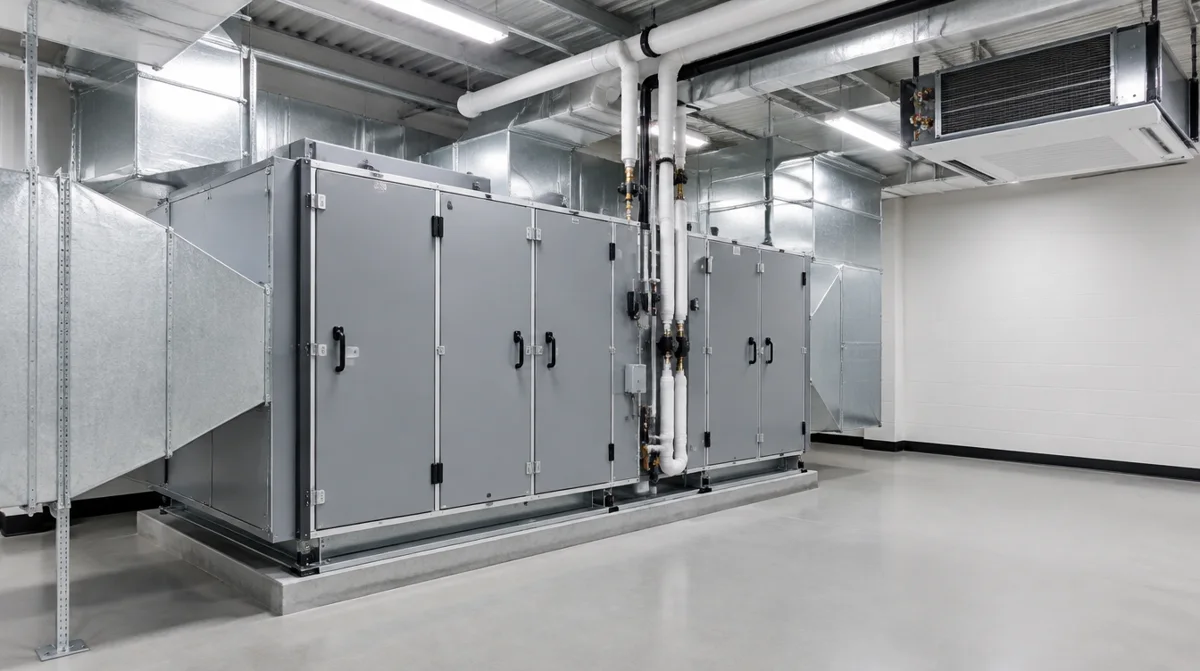
Most indoor units with an air intake and filter can be evaluated; it works in both cooling and heating. Ceiling cassette (recessed) indoor units have completed testing in Taiwan.
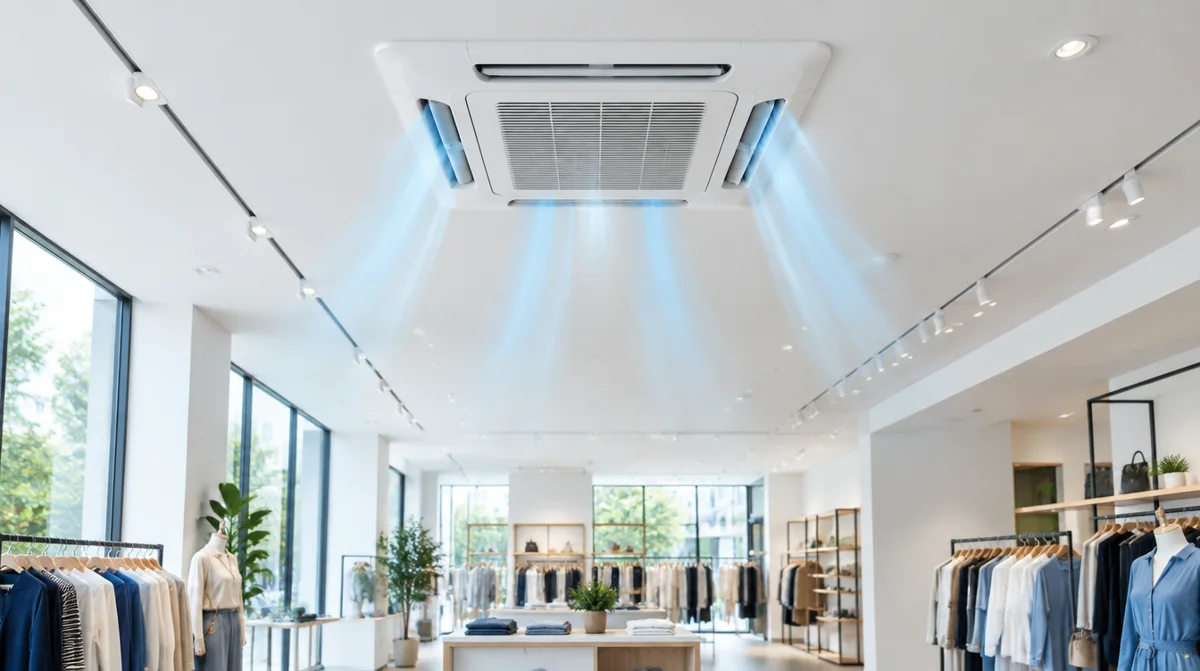
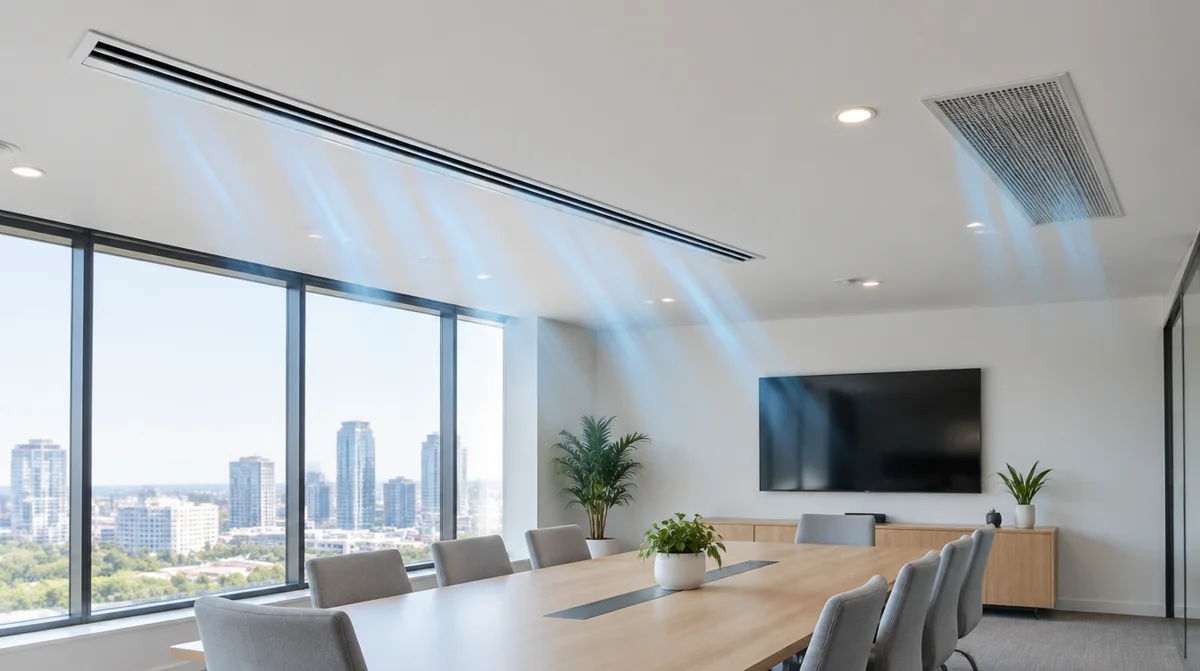
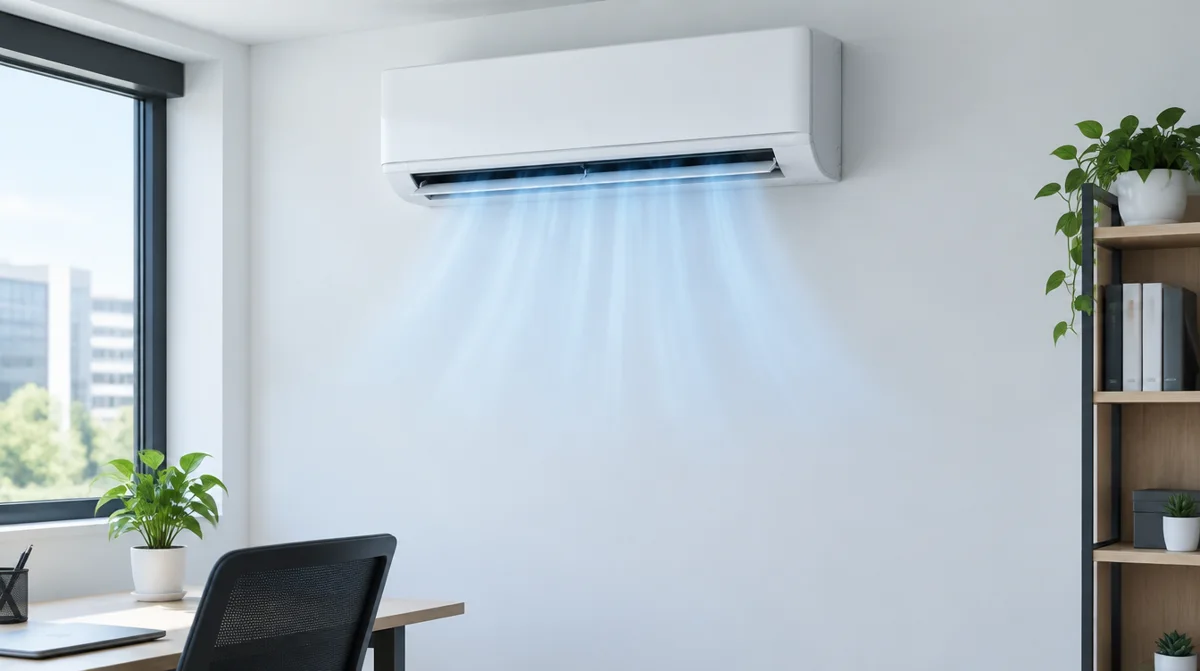
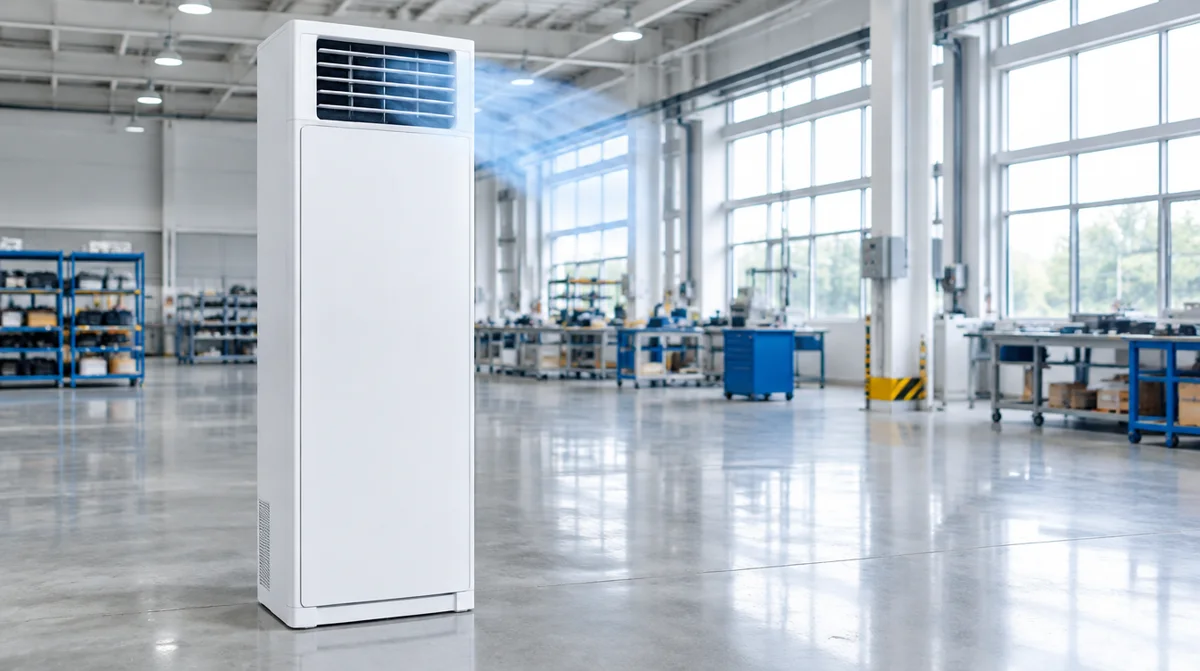

Works best when
- Long daily AC hours (stores, server rooms, hospitals)
- High summer load, compressors near full
- Filters and coils well maintained
May not help when
- AC runs only briefly each day
- Filters and coils neglected (clean first)
- Old or faulty units (repair or replace first)
- No room at the intake for the panel
InstallationJust put it in place
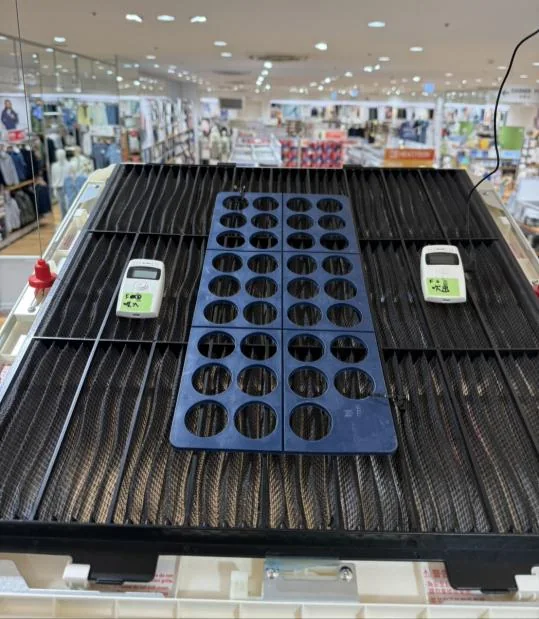
Open the indoor unit's intake panel, lay the panel flat on the filter and close it — done. For units without a guard mesh or filter, secure it to the filter with binder clips or cable ties. No wiring, no shutdown, and no change to the AC's original structure.
- Panels per intake vary (e.g., ~2 for a 6 HP unit)
- No loss of intake airflow in manufacturer tests
- No downtime — install during business hours
Photo: test site at a Taiwan clothing store — panel on the filter of a ceiling cassette indoor unit, next to a temperature data logger.
SpecificationsSpec
| Item | Spec |
|---|---|
| Dimensions | 385 × 180 × 2 mm |
| Weight | ~80 g each |
| Material | LDPE, SEBS elastomer, mineral powder |
| Power | Not required |
| Installation | On the intake filter; clips or ties if no guard mesh |
| Operating modes | Cooling, heating |
| Origin | Made in Japan |
| IP | Japanese patent and utility model |
ImplementationHow to deploy: pilot small, let data decide whether to expand
- 01AC inventoryList units, specs, operating hours and areas served.
- 02Site checkCheck intakes, pick pilot units.
- 03BaselineLog energy with the power meter.
- 04CompareMatched by time and temperature (method).
- 05Report & roll outDecide on other units.
We recommend cleaning filters and heat exchangers before installation, so what you measure is the panel's own effect.
FAQCommon questions
What is an HVAC energy-saving panel?
It's a 385×180 mm, 2 mm thick perforated panel placed on the filter at the AC indoor unit's air intake. The holes make incoming airflow turbulent and reduce stagnant air inside the unit, so air passes through the heat exchanger more evenly, the supply air reaches temperature sooner and the compressor runs less — saving energy. No electricity, no AC modification.
Won't placing it on the filter block airflow and reduce efficiency?
The manufacturer measured no reduction in intake airflow before and after installation. The holes change the airflow pattern (laminar to turbulent) rather than reducing volume, so efficiency isn't affected by blocking air.
How much energy does it actually save?
In condition-matched comparisons at a Taiwan clothing store, 7.8% in spring and 12.2% in summer; the manufacturer's full-year comparison at a convenience store in Japan showed 13.5%, and a JIS-standard performance test 14.5%. Results vary with AC type, operating hours and load — we recommend a small pilot first.
Does it require downtime or an AC contractor?
No. Open the intake panel and place it on the filter — no wiring, no change to the AC structure, and it can be installed during business hours.
Does it work for both cooling and heating?
Yes. In the manufacturer's test, cooling supply air dropped from 13.35℃ to 11.84℃ and heating supply air rose from 47.4℃ to 49.2℃.
How is it different from cleaning and maintenance?
Cleaning and maintenance restore the AC's original efficiency; the panel further improves airflow and heat exchange on well-maintained equipment. One doesn't replace the other — maintain first, then add the panel.
Savings data include DEYly's Taiwan measurements and the manufacturer's own track record and tests; actual results depend on model, load, outdoor temperature and operating conditions.