RFID Asset TrackingTag fixtures, tools and spares; read batches; log every move
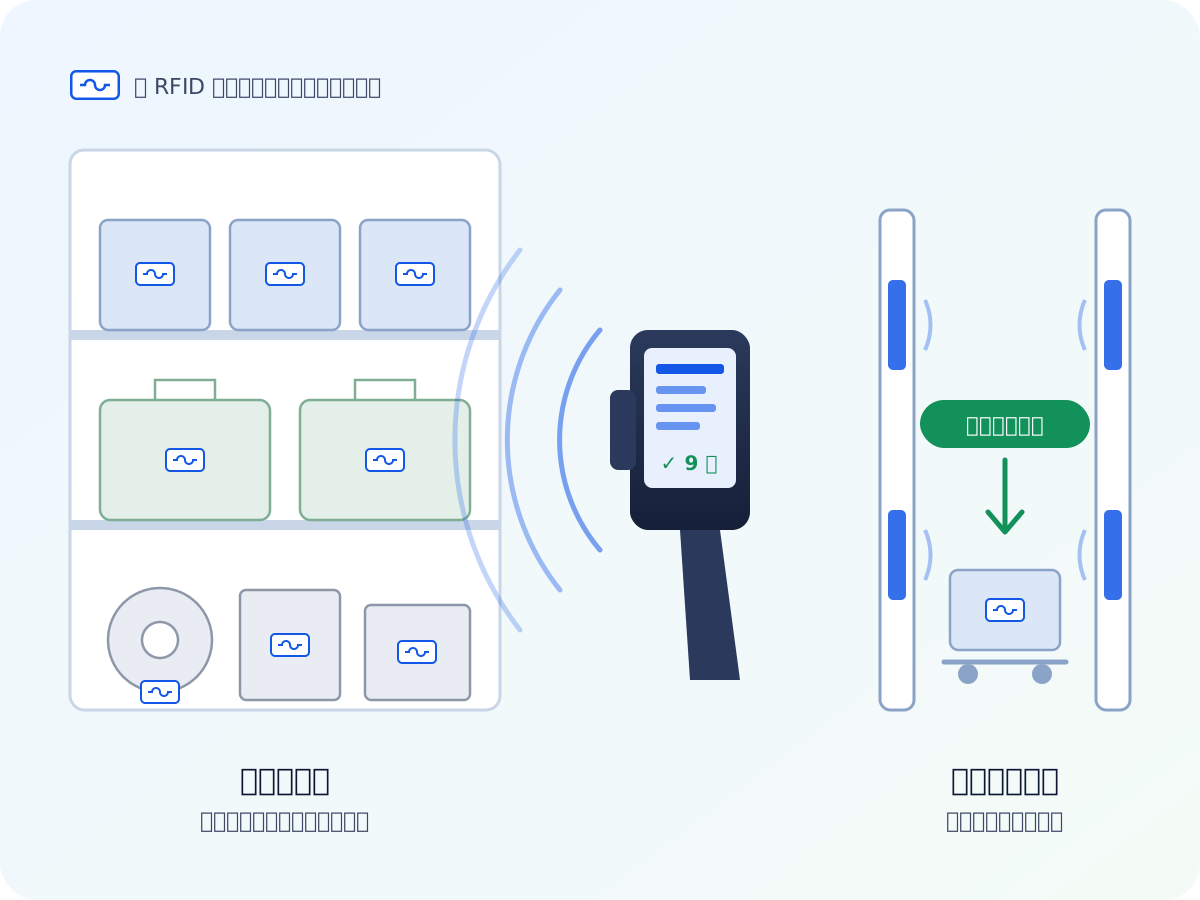
RFID (radio-frequency identification) reads the ID stored in a tag's chip using radio waves. The biggest difference from barcodes: no aiming and no scanning one by one. Walk along a shelf with a reader and every tag in range is read at once; mount a reader at a doorway and items are logged automatically as they pass. DEYly plans tags, handheld and fixed readers for your site conditions and connects them to your existing ERP, MES or warehouse system.
ESG positioning: G (Governance) + S (Social)How DEYly approaches ESG →
- Proven benefits
- Movements and locations of fixtures, tools and spares are recorded, so count discrepancies can be traced (G); no more item-by-item manual counts to take stock or find things (S).
- Limits
- Read rates are affected by metal, liquids and placement, so an on-site read test comes first; benefits use current stocktaking hours, search time and number of lost items as the baseline.
RFID vs barcodeRFID vs. barcode labels
Barcode labels are cheap but must be aimed at and scanned one at a time; RFID tags cost more but let you read a whole batch at once, even through packaging, and log movements at doorways automatically. Neither replaces the other — it depends on whether what you're tracking is worth RFID.
| Comparison | Barcode labels | RFID tags |
|---|---|---|
| How they're read | Aim and scan, one at a time | Reader nearby, many at once |
| Must be visible? | Yes; must be clean and visible | No; reads through boxes |
| Auto movement log | Someone has to scan | Doorway readers log as items pass |
| Tag cost | Low, nearly negligible | Higher; on-metal tags cost several times more |
| Durability | Wear, fade, get dirty | Readable for years |
| Equipment | Scanners and printers you already have | Readers, antennas, integration |
What to tagWhat's worth tagging with RFID? Start with whether it's reused
Whether RFID pays off depends not on the tag price but on how many times one tag gets used. Reusable assets tagged once can be read for years; consumables that are used up need new tags with every new batch, so tag costs recur every year and the scanning time saved often doesn't cover them.
Worth tagging
- Fixtures, probe cards
- Tools, gauges, instruments
- Returnable totes, carriers and bins
- Serialized high-value spares
- Fixed assets: PCs, test gear
Stick with barcodes
- Single-use consumables
- Low-value, high-volume parts
- Items rarely counted and rarely lost
For these, a mobile computer or barcode scanner can speed up scanning without switching to RFID.
The more that apply, the better the fit
SemiconductorHow do semiconductor fabs use RFID asset tracking?
Semiconductor fabs are full of items that are high-value, reused and constantly borrowed — exactly where RFID shines. The point is to keep each item's location and borrowing history in the system rather than in sign-out sheets and memory.
Most wafer carriers (such as FOUPs) already have carrier ID systems read at equipment load ports. This solution doesn't replace existing carrier ID; it focuses on assets beyond carriers that are still logged by hand. Before entering cleanrooms or other controlled areas, check the site's rules on wireless devices and tag materials.
Semiconductor ProcessesWhere is RFID used in semiconductor processes?
① Crystal growth
② Front end
Most used in: wafer probe, wafer intake, kitting, inner-boxing, palletizing, frame cassettes
Click a flowchart to open it with relevant stations outlined in orange; click a box for details. Based on our process flowcharts.
💡 Places you might not expect
- Wafer probe: RFID records probe card usage counts
- Dry cabinets: who put it in, how long
- Kitting: wafer and substrate lots linked
- Palletizing: whole carton read at once
SystemWhat's included
An RFID asset tracking system has four parts. You don't have to do everything at once — a common approach is to start with handheld readers for stocktaking and finding items, confirm the benefit, then add doorway readers.
- 01TagsStandard, on-metal, heat- or chemical-resistant.
- 02HandheldsAndroid terminals with a UHF RFID grip.
- 03Doorway readersLog items passing in or out.
- 04IntegrationInto ERP, MES, WMS — or a simple asset list.
- OKEvery asset trackedWhere, who, last count.
Tags and doorway readers are matched to the results of on-site read tests. Handheld reading currently centers on the Android H-35 with a UHF RFID grip; the H-35 is limited stock, with supply confirmed at quotation.
ImplementationHow to deploy RFID: 5 steps
- 01List the assetsWhat to track, how many, what material, and where it's kept.
- 02Read testOn shelves, machines and doors.
- 03PilotOne store or asset type; track hours saved.
- 04IntegrateInto your ERP, MES or WMS.
- 05Roll outExpand and add doorway readers.
CostEstimating cost
RFID cost has three parts, and only tags grow with the number of items. So with the same equipment, reusable assets need tags only once, while consumables need new tags with every new batch.
Tags
By item count. Standard tags are cheap; on-metal tags cost several times more. Reusable assets are tagged once.
Reading equipment
Handhelds by user count; doorway readers by door count. Start with handhelds.
System integration
With an ERP or WMS, we feed reads back; without one, start with a simple asset list.
In the assessment, we first calculate a baseline from your current stocktaking hours, search time and lost items, then judge whether RFID is worth it; for items where it doesn't pay, we'll recommend staying with barcodes.
FAQCommon questions
What is RFID?
RFID (radio-frequency identification) reads the ID stored in a tag's chip using radio waves. The reader doesn't need to aim at or see the tag and can read many tags in range at once. Asset tracking typically uses UHF RFID, which reads farther than short-range technologies such as NFC.
How is RFID different from barcodes?
Barcodes must be aimed at and scanned one at a time, with very low label cost; RFID needs no aiming, reads a whole batch at once and can log movements at doorways automatically, but tags and readers cost more. Consumables usually stay on barcodes; reusable, high-value assets are the ones worth moving to RFID.
What's worth tagging with RFID?
Items that are reused, high-value or costly to lose, and often searched for or counted — such as fixtures, probe cards, tools, gauges, totes and high-value spares. Consumables and low-value parts used once rack up tag costs every year and usually don't pay off.
Can RFID tags on metal be read?
Standard RFID tags placed directly on metal become unreadable or lose most of their range, so on-metal tags are needed. Metal shelving, machines and liquids also affect reading, which is why tags are tested on site before deployment.
Can semiconductor fabs use RFID?
Yes. Common uses are check-out records for fixtures and probe cards, tool and gauge management, logging high-value spares in and out, and spares warehouse stocktaking. Most wafer carriers already have carrier ID systems, which this solution doesn't replace; before entering cleanrooms or other controlled areas, check the site's rules on wireless devices and tag materials.
Can mobile computers read RFID?
Yes. With a UHF RFID pistol grip, the Android H-35 mobile computer reads UHF RFID tags while keeping barcode scanning. The H-35 is currently limited stock, with supply confirmed at quotation.
Can it connect to our ERP, MES or warehouse system?
We can evaluate it. Read data can be written back to existing ERP, MES, warehouse or asset management systems; without an existing system, a simple asset register can be set up first. The actual integration is evaluated per system.
How is RFID deployment cost estimated?
Mainly three things: the number and material of items to tag (which determines tag type), the number of handheld and doorway readers, and the integration method. Send us your asset list and current stocktaking method; we'll run an on-site read test first, then help plan and estimate.
Read range and read rate depend on tags, readers, mounting surface and site environment; on-site test results prevail.